Ecological Niche Modeling is a great tool for conservation biology, phylogeography and evolutionary biology. However, as
Jeff Lozier and colleagues point out in
a paper in the Journal of Biogeography that the models are only as good as the data they are based on.
The basic premise of the ENM approach is to predict the occurrence of species on a landscape from georeferenced site locality data and sets of spatially explicit environmental data layers that are assumed to correlate with the species’ range.
A Science Of Human Language - Part #9
True Math Genius
This trick will bring a smile to the face of even the most hardened math geek. First, lay matches on a table to form the equation I + II + III = IIII (crossed matches make the plus signs and parallel matches make the equals sign). Challenge your opponent to make this statement true by moving only one match and without messing with the sum after the equals sign. The trick is to pick up one match from the II, and lay it across the middle match in the III, making the full equation read:
I + I + I + I =IIII.
Two Glasses II
If you're like us, you are eagerly awaiting those July 4 fireworks displays because you get to blow stuff up using science (not just the US, Canada too, though they picked the wrong day by using July 1 for Canada Day celebrations) - if only we could have awesome fireworks yet not ruin the planet.
Maybe we can. A new generation of "green" fireworks is trying to take off. Hint: that's "green" as in environmentally friendly. And take off as in ... oh, never mind.
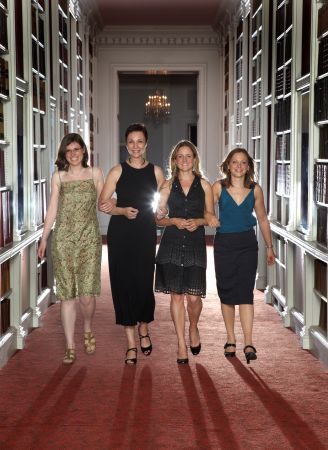
L'Oréal and New Scientist today announced the results of a poll revealing the most inspirational female scientists of all time. Nuclear physicist and chemist Marie Curie topped the poll which was created to celebrate 10 years of the L'Oréal-UNESCO For Women In Science program, with around a quarter (25.1%) of the vote.
Voted for by more than 800 members of the scientific community and visitors to
http://www.NewScientist.com, the poll highlights the absence of modern role models on the list; Astrophysicist Dame Susan Jocelyn Bell Burnell (4.7%), responsible for the discovery of radiopulsars, and Jane Goodall, the primatologist (2.7 per cent) were the only scientists in the top ten to have research published in recent years, polled 4th and 10th, respectively.
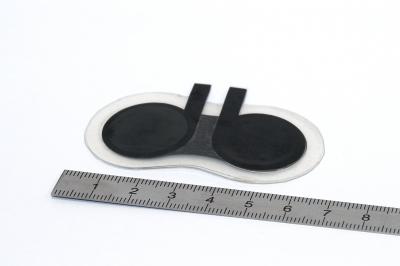
A new printable battery that can be produced cost-effectively on a large scale has been developed by a research team led by Prof. Dr. Reinhard Baumann of the Fraunhofer Research Institution for Electronic Nano Systems ENAS in Chemnitz together with colleagues from TU Chemnitz and Menippos GmbH.
Like your t-shirt, the batteries are printed using a silk-screen method.
They are also different from conventional batteries in that these printable versions weigh less than one gram, are less than a millimeter thick and can even be integrated into bank cards.
When glaciers advanced over much of the planet's surface during the last ice age, what kept Earth from freezing over entirely? Climate scientists are unsure because popular numerical models indicated that over the past 24 million years geological conditions should have caused carbon dioxide levels in the atmosphere to plummet, possibly leading to runaway "icehouse" conditions - yes, we needed CO2-related global warming, they said - but researchers writing in Nature claims plants are a missing piece of the puzzle.
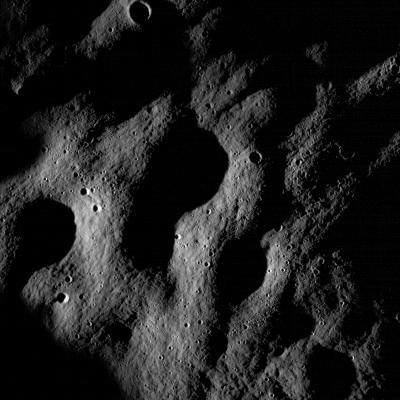
NASA's Lunar Reconnaissance Orbiter has transmitted its first images since reaching the moon on June 23. The spacecraft's two cameras, collectively known as the Lunar Reconnaissance Orbiter Camera, or LROC, were activated June 30. The cameras are working well and have returned images of a region in the lunar highlands south of Mare Nubium (Sea of Clouds).
As the moon rotates beneath LRO, LROC gradually will build up photographic maps of the lunar surface.
Just when you thought evolution couldn't get attacked by anyone else, a zoologist writing in Science and his colleagues are contending that changing winter conditions due to global warming are causing Scotland's wild Soay sheep to get smaller despite the evolutionary benefits of having a large body. Yep, climate change can trump natural selection, it turns out.
So much for adapting to the environment. Too bad Darwin didn't know about CO2.
As a kid, there were few things more satisfying to me that being given a helium balloon... and then almost immediately letting it go for the pure enjoyment of seeing it float out of sight into the sky. For some reason, seeing a small balloon set against a vast blue background gave me a small sense of power simply from knowing that I was the one that put it up there. A silly grin would spread across my face as I stared at the small dot in the sky, knowing that only a minute earlier I held that very same balloon in my own little hand. I felt like a small part of me was launched along with it, and had just started off on a grand adventure. Since I was never able to actually go along for the ride, it was up to the limits of my imagination to envision where the balloon would land.