In Finland, leaders in various fields have taken up the challenge presented by the increasing use of natural resources. Jointly, they have set out to find an answer to the question of how to use natural resources to enhance both national competitiveness and global responsibility. One result of this cooperation is the Natural Resource Strategy for Finland, a unique effort on a global scale.
Ounce for ounce, spinach has more nutritional value than iceberg lettuce; in general, darker colors in leafy vegetables mean more antioxidants and therefore more health benefits.
Knowing that, plant physiologists has developed a way to make lettuce darker and redder — and therefore healthier — using ultraviolet light-emitting diodes (LEDs).
A common blood test for triglycerides – a well-known cardiovascular disease risk factor – may also for the first time allow doctors to predict which patients with diabetes are more likely to develop the serious, common complication of neuropathy.
Triglycerides are a type of lipid, or fat, that the body makes from calories it doesn't need immediately. Triglycerides are stored in fat cells until they are needed to provide energy. When higher-than-normal amounts circulate in the blood, a person is at higher risk of cardiovascular disease.
Researchers comparing the fetal development of
owl monkey eyes with those of the
capuchin monkey have found that only a minor difference in the timing of cell proliferation can explain the multiple anatomical differences in the two kinds of eyes. The findings help scientists understand how a structure as complex as the eye could change gradually through evolution, yet remain functional.
In
a previous article here I considered from a statistical standpoint the signal of Omega_b candidate decays extracted by the DZERO collaboration in a large dataset of proton-antiproton collisions -the ones produced by today's most powerful hadron collider, the Tevatron at the Fermi National Accelerator Laboratory.
A recent study of adult neural stem cells suggests a new route for research and development of treatments for neurodegenerative disease in elderly patients.
Within the last 20 years neuroscientists have shown that new neurons are generated in the brain throughout the lifespan. This finding opened a new area of research aimed at understanding if adult neural stem cells can be used in therapies for neurodegenerative diseases.
A challenge with this approach is that there are fewer neural stem cell in the aged brain and the loss of stem cells occurs at just the time when neurodegenerative diseases are most common. But a new study is providing important information that neural stem from an aged brain still have the capacity to mature into functional neurons.
Before the days of mandatory underseat pet carriers, my airline colleagues received a call from a woman who needed to bring her therapy pet, a pig, on a flight. The airline didn’t see a problem, since Vietnamese pot-bellied pigs are about the size of dogs and just as well behaved. However, the animal that the woman showed up with was no potbellied pig. On the day of the flight, the woman showed up with a 300 pound barnyard pig on a leash. The pig took up the entire aisle, calmly sleeping through the flight.
Astronauts blazed through their third of five spacewalks Saturday as they continued servicing the Hubble Space Telescope, installing the new Cosmic Origins Spectrograph (COS) and repairing the main science camera of the Advanced Camera for Surveys (ACS) which has been disabled since February 2007. Initial tests verified that both instruments were alive and able to communicate with ground control.
(2007 photo: Cariana Nebula imaged with ACS and CTIO; credit: NASA, ESA, N. Smith, STScI, AURA, NOAO, NSF)
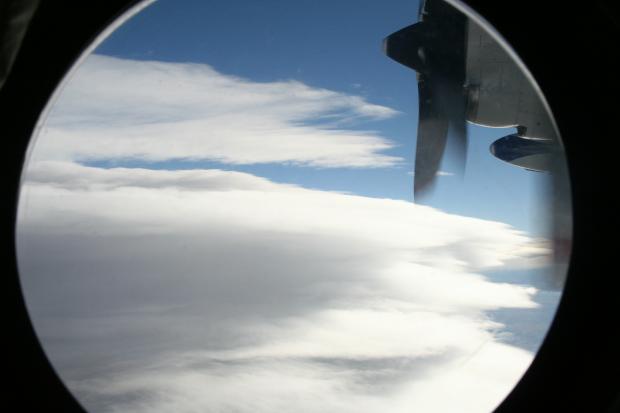
A team of atmospheric chemists say they have moved closer to what is considered the "holy grail" of climate change science; the first-ever direct detections of biological particles within ice clouds. The team, led by Kimberly Prather and Kerri Pratt of the University of California at San Diego, Scripps Institution of Oceanography, sampled water droplet and ice crystal residues at high speeds while flying through clouds in the skies over Wyoming.
Some pregnant women do not wear seat belts due to fear that the belt itself could injure the baby in a car crash. Urban myth or legitimate concern?
It is well established that seat belts save lives but if some pregnant women do not wear seat belts out of fear that the belt could harm the baby in a car crash, are they really helping or just placing themselves in danger? It's difficult to fault mothers for erring on the side of caution when it comes to unborn babies but is it actually the case that the seat belt can put the baby at risk?