As a Senator last year, Obama voted for US$9.6 billion annually in funding for George Bush's Global AIDS Program but as President he wants it cut by almost 50%.
George Bush cares more about AIDS than Barack Obama? Yes, says AIDS Healthcare Foundation (AHF), the largest non-profit HIV/AIDS organization in the US, which currently provides medical care and services to more than 100,000 individuals in 21 countries worldwide in the US, Africa, Latin America/Caribbean and Asia, who today chided President Barack Obama for retreating on his commitment to global AIDS.
Biofuels such as ethanol offer an alternative to petroleum for powering our cars, but growing energy crops to produce them can compete with food crops for farmland, and clearing forests to expand farmland will aggravate the climate change problem. How can we maximize our "miles per acre" from biomass?
Researchers writing in Science magazine say the best bet is to convert the biomass to electricity, rather than ethanol. They calculate that, compared to ethanol used for internal combustion engines, bioelectricity used for battery-powered vehicles would deliver an average of 80% more miles of transportation per acre of crops, while also providing double the greenhouse gas offsets to mitigate climate change.
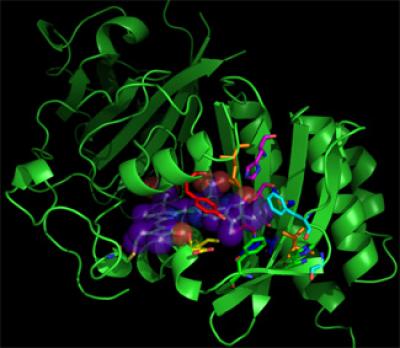
A University of California, San Diego team led by 2008 Nobel-Prize winner Roger Tsien, PhD has shown that bacterial proteins called phytochromes can be engineered into infrared-fluorescent proteins (IFPs). Because the wavelength of IFPs is able to penetrate tissue, these proteins are suitable for whole-body imaging in small animals. Their findings will be published in the May 8 edition of the journal Science.
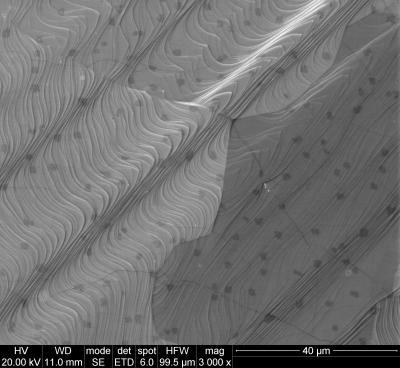
The creation of large-area graphene using copper may enable the manufacture of new graphene-based devices that meet the scaling requirements of the semiconductor industry, leading to faster computers and electronics, according to a team of scientists and engineers at The University of Texas at Austin.
Graphene, an atom-thick layer of carbon atoms bonded to one another in a "chickenwire" arrangement of hexagons, holds great potential for nanoelectronics, including memory, logic, analog, opto-electronic devices and potentially many others. It also shows promise for electrical energy storage for supercapacitors and batteries, for use in composites, for thermal management, in chemical-biological sensing and as a new sensing material for ultra-sensitive pressure sensors.
astric ulcer is an illness that affects a considerable number of people worldwide. Although the introduction of proton-pump inhibitors to the classic anti-ulcer therapy has revolutionized treatment of peptic ulcers and other gastrointestinal disorders, there is still no complete cure for this disease. It has been shown that long term use of these drugs leads to various adverse and side effects. Relapses of the malady, ineffectiveness of different drug regimens and even resistance to drugs are emerging. Thus, there is an urgent requirement to identify more effective and safe anti-ulcer agents.
I was fascinated by the discovery of the dwarfed hominin
Homo floresiensis back in 2004 when it was first announced, but was skeptical that it was really a separate species.
Later when I saw a cast of the skull, I admit to being more enthused with the possibility of a new species. Not being a anthropologist, I couldn't discount the possibility of microcephaly and/or dwarfism.
There's a line that politicians opposed to embryonic stem cell research have been peddling lately: recent breakthroughs in stem cell technology have now made ethically questionable embryonic stem cell research obsolete and unnecessary. This isn't a new line - for years, opponents of embryonic stem cell research have always claimed that the latest research (whatever it happens to be) has obviated the need for embryonic stem cells.
New research led by investigators at Memorial Sloan-Kettering Cancer Center (MSKCC) identifies three genes that specifically mediate the metastasis, or spread, of breast cancer to the brain and illuminates the mechanisms by which this spread occurs. The study was published online today in Nature.
According to the study, COX2 and HB-EGF — genes that induce cancer cell mobility and invasiveness — were found to be genetic mediators in the spread of breast cancer to the brain. A third gene, ST6GALNAC5, was shown to provide cancer cells with the capability of exiting the blood circulation and passing through the blood-brain barrier to enter the brain tissue.
Children who can stay focused and don't sweat the small stuff have a better shot at good health in adulthood -- especially girls, according to findings reported in the May issue of Health Psychology.
A detailed analysis of the feet of Homo floresiensis, the miniature hominins who lived on a remote island in eastern Indonesia until 18,000 years ago, may help settle a question hotly debated among paleontologists: how similar was this population to modern humans? A new research paper in Nature may help answer this question.
While the so-called "hobbits" walked on two legs, they say, several features of their feet were so primitive that their gait was not efficient.