






A leading fungi expert has accidentally stumbled upon a new species in Scotland – as he walked home from work. Dr Andy Taylor, from Aberdeen’s Macaulay Institute, noticed the Xerocomus bubalinus growing near a lime tree in the city’s Albyn Place. This very rare fungus was only described for the first time in 1991 in the Netherlands, and has not previously been recorded before in Scotland.

As well as his city centre find, Dr Taylor, a professional mycologist, also recently discovered a species (Russula vinososordida ) not found in the UK before, and another very rare species (Buchwaldoboletus lignicola) in the very grounds of the Macaulay Institute where he works.

Dr Taylor said: “I couldn’t quite believe it that I had found this species, which isn’t supposed to occur here in Scotland, and that it was living right here under our noses.”

Creatine, a popular nutritional supplement renowned for enhancing athletic performance and muscle strength, does not improve exercise outcomes in patients with chronic obstructive pulmonary disease (COPD), according to a new study. The randomized, placebo-controlled, double-blind study provided the most powerful evidence to date that the effect of creatine (Cr) supplementation was negligible at best among these patients.

"We have evidence to suggest Cr uptake into muscles [in COPD patients] but are unable to explain why an increase in muscle Cr did not enhance training," wrote the study's lead author, Sarah Deacon, M.D., specialist registrar at the Institute for Lung Health at Glenfield Hospital in Leicester, England.

The results were published in the first issue for August of the American Journal of Respiratory and Critical Care Medicine by the American Thoracic Society (ATS).

Sleep-disordered breathing (also known as sleep apnea) is associated with an increased risk of death, according to new results from the Wisconsin Sleep Cohort, an 18-year observational study supported by the National Heart, Lung, and Blood Institute (NHLBI) of the National Institutes of Health.

Researchers found that adults (ages 30 to 60) with sleep-disordered breathing at the start of the study were two to three times more likely to die from any cause compared to those who did not have sleep-disordered breathing. The risk of death was linked to the severity of sleep-disordered breathing and was not attributable to age, gender, body mass index (an indicator of overweight or obesity), or cardiovascular health status.

University of Illinois researchers writing in the journal Behavioral Neuroscience report this week that chronic exposure to estradiol, the main estrogen in the body, diminishes some cognitive functions. Rats exposed to a steady dose of estradiol were impaired on tasks involving working memory and response inhibition, the researchers found.

The researchers made the discovery when studying the effects of estradiol on activities mediated by the prefrontal cortex, a brain region that is vital to working memory and to the ability to plan, respond to changing conditions and moderate or control one's behavior.

A bottle of Chateau Neuf De Pape wine from the Rhone region in France may include constituents of up to 13 grape varietals. Time-zones away, olive oil experts at U.C. Davis work with 100 olive varietals to create cutting-edge olive oil. After all, like wine, olive oil can be made up of multiple varieties of its base fruit.

While olive oil consumption has steadily increased over the past 30 years due to its healthful properties and popularity among celebrity chefs like Rocco DiSpirito, in California producers make keeping up-to-date into an art form.

Low levels of naturally occurring antibodies may represent an increased risk of developing cardiovascular disease, particularly stroke in men. This discovery, published in Atherosclerosis, has now led to attempts to develop an immunization against cardiovascular disease.

Atherosclerosis (hardening of the arteries) is an inflammatory disease in which the walls of the blood vessels are thickened and become less elastic. It can cause blood clots and other cardiovascular diseases. It is not known precisely what causes atherosclerosis, but the immune system probably plays an important role.

Judging by the astonishing increase in journal papers written by scientists in China, China is finding its place as one of the world’s scientific power houses, says Michael Banks, but he also quantifies this surge in scientific output China and measures whether quality matches quantity in August’s Physics World.

Nanoscience, quantum computing and high-temperature superconductivity are three of the cutting-edge areas of physics that have seen particularly large increases. Published journal articles in nanoscience, for example, with at least one co-author based in China, have seen a 10-fold increase since the beginning of the millennium, rising to more than 10,500 in 2007.

China has already overtaken the UK and Germany in the number of physics papers published and is beginning to nip at the heels of the United States. If China’s output continues to increase at its current pace, the country will be publishing more articles in physics - and indeed all of science - than the US by 2012.

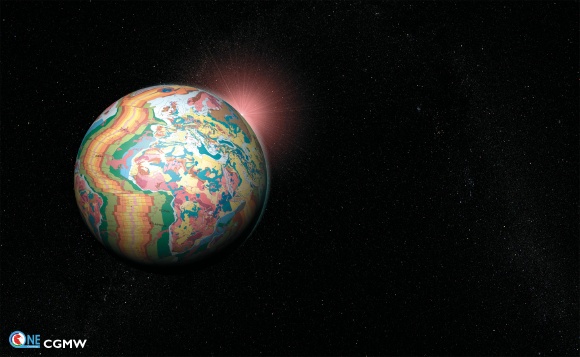
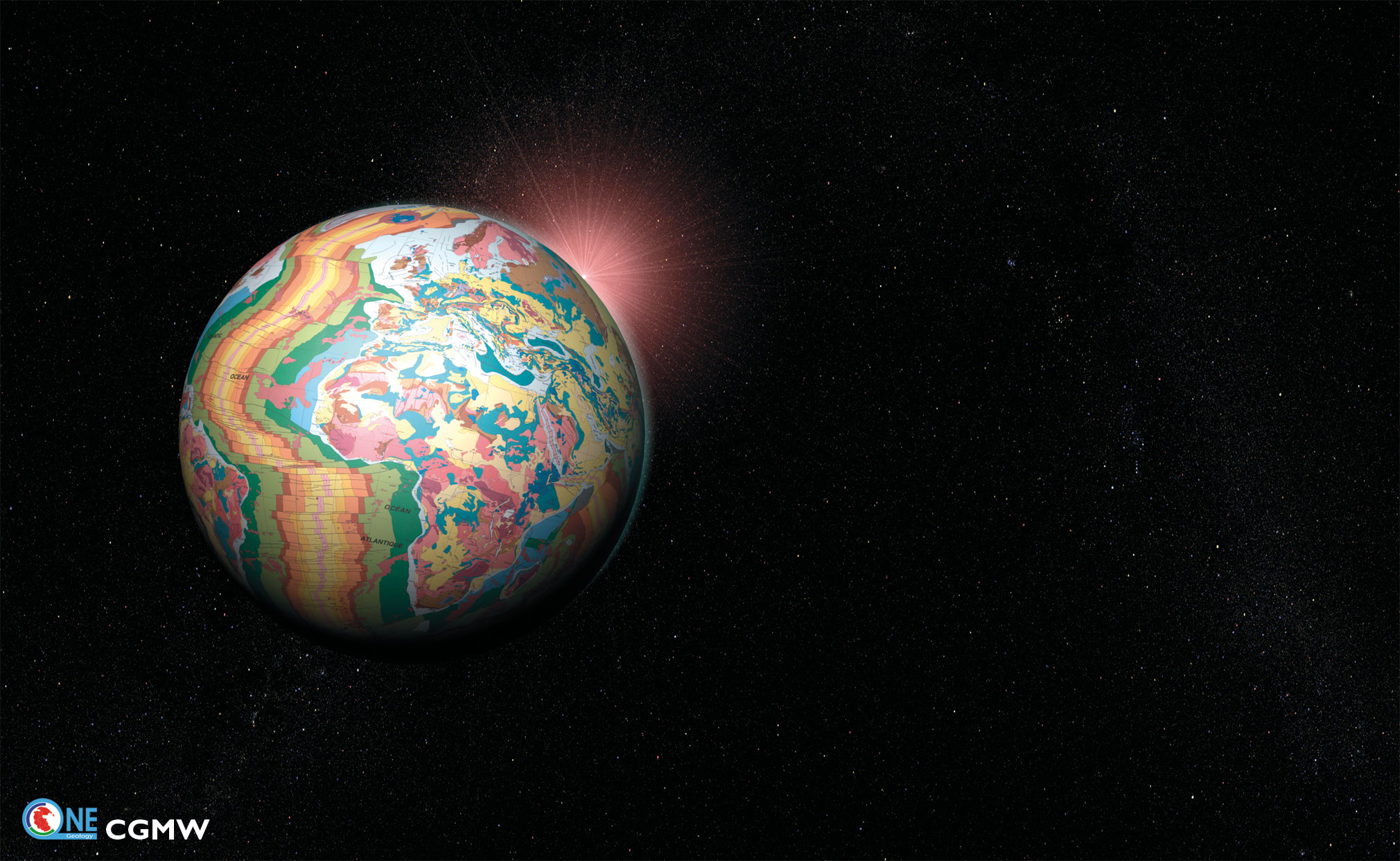
Have you ever wondered what our world would look like stripped bare of all plants, soils, water and man-made structures?

So have earth and computer scientists from 79 nations who are working together on a global project called OneGeology to produce the first digital geological map of the world.

Images of the Earth as never seen before have been unveiled in what is the world’s biggest geological mapping project ever.

Begun just over a year ago, the project is doing for the rocks beneath our feet what Google does for maps of the Earth’s surface. Pretty fast for a science that usually counts time in millions of years.

Brian May CBE, PhD, ARCS, FRAS, and a founding member of Queen, is a world-renowned guitarist, songwriter, producer and performer.

May abandoned his PhD studies at Imperial College London in 1974 when Queen’s popularity first exploded but always retained a keen interest in astronomy, and has been a regular contributor to “The Sky at Night,” BBC TV’s monthly astronomy program hosted by Sir Patrick Moore.

Returning to astrophysical research in 2006, he was awarded his PhD and is now Chancellor of John Moores University, and a patron to a number of charities, including the Mercury Phoenix Trust and the British Bone Marrow Donor Association.

The value of open access is an on-going debate, at least in the science community, with some stating that it leads to greater citations and others concerned that it leads to less rigorous research outside free internet sources.

A new Cornell study says that while "open access" or free online articles get read more often, they don't get cited more often in academic literature, which goes against the conventional wisdom.

The reason, suggest Cornell graduate student Philip Davis and colleagues, is that most researchers probably already have all the access they need to relevant articles.

So free is nice but everyone still gets paid journals anyway.


