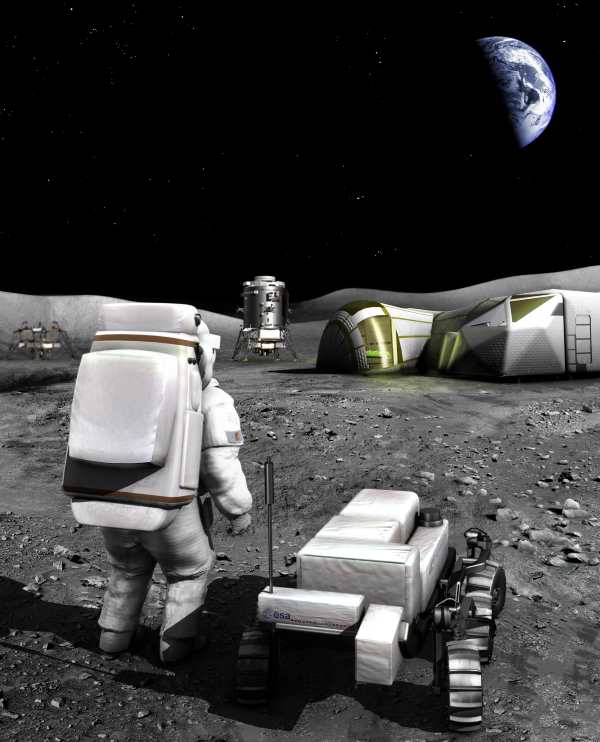


If you are keen on Mars colonization, it is not hard to find a future vision to inspire you. Elon Musk has plans to send a hundred people at a time in his proposed "Mars Colonial Transporter" and found a city of 80,000, and eventually a million. He is due to reveal these plans at the IAC conference this September.

Everyone has known a coworker who wastes time, mismanages resources, and has been known to engage in activities that are conflicts of interest, yet they "do no wrong" in the eyes of the company.

Why?

Because they produce. 

A new paper in Personnel Psychology discusses surveys of why employees' unethical behaviors may be tolerated or rejected. The scholars conducted three studies and surveyed 1,040 people, including more than 300 pairs of supervisors and their employees.


Survey results show:


If you trace our evolutionary tree way back to its roots, before the shedding of gills or the development of opposable thumbs, you will likely find a common ancestor with the amazing ability to regenerate lost body parts. Descendants of this creature, including today's salamanders or zebrafish, can still perform the feat, but humans lost much of their regenerative power over millions of years of evolution. 

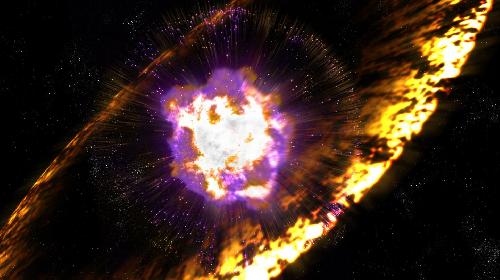
An international team of scientists has found evidence of a series of massive supernova explosions near our solar system, which showered the Earth with radioactive debris.

The scientists found radioactive iron-60 in sediment and crust samples taken from the Pacific, Atlantic and Indian Oceans.

The iron-60 was concentrated in a period between 3.2 and 1.7 million years ago, which is relatively recent in astronomical terms, said research leader Dr Anton Wallner from The Australian National University (ANU).

pic

Artist's impression of supernova. Credit: Greg Stewart, SLAC National Accelerator Lab

The world's soils could store an extra 8 billion tonnes of greenhouse gases, helping to limit the impacts of climate change, research suggests.

Adopting the latest technologies and sustainable land use practices on a global scale could allow more emissions to be stored in farmland and natural wild spaces, the study shows.

Growing crops with deeper root systems, using charcoal-based composts and applying sustainable agriculture practices could help soils retain the equivalent of around four-fifths of annual emissions released by the burning of fossils fuels, the team says.

According to a new study in Nature, the Northern Hemisphere has experienced considerably larger variations in precipitation during the past twelve centuries than in the twentieth century. Researchers from Sweden, Germany, and Switzerland have found that climate models overestimated the increase in wet and dry extremes as temperatures increased during the twentieth century. The new results will enable us to improve the accuracy of climate models and to better predict future precipitation changes.

Variations in decadal to centennial-scale drought and pluvial episodes - across the Northern Hemisphere - have been reliably reconstructed back to the ninth century for the first time.

LAWRENCE -- Two new papers appearing in the journal Nature this week are "slam-dunk" evidence that energies from supernovae have buffeted our planet, according to astrophysicist Adrian Melott of the University of Kansas.

Melott offers his judgment of these studies in an associated letter, entitled "Supernovae in the neighborhood," also appearing this week in Nature.

LA JOLLA--By adolescence, your brain already contains most of the neurons that you'll have for the rest of your life. But a few regions continue to grow new nerve cells--and require the services of cellular sentinels, specialized immune cells that keep the brain safe by getting rid of dead or dysfunctional cells.

Now, Salk scientists have uncovered the surprising extent to which both dying and dead neurons are cleared away, and have identified specific cellular switches that are key to this process. The work was detailed in Nature on April 6, 2016.

Astronomers have uncovered one of the biggest supermassive black holes, with the mass of 17 billion Suns, in an unlikely place: the centre of a galaxy that lies in a quiet backwater of the Universe. The observations, made with the NASA/ESA Hubble Space Telescope and the Gemini Telescope in Hawaii, indicate that these monster objects may be more common than once thought. The results of this study are released in the journal Nature.

Could organs explanted from other mammals save human lives someday? A new study shows that genetically modified pig hearts developed by US and Ludwig-Maximilians-Universitaet (LMU) in Munich researchers can survive for more than up to 2½ years when transplanted into baboons.


