


A new paper has found a significant association between low dietary fiber intake and cardiometabolic risks including metabolic syndrome, cardiovascular inflammation, and obesity.

 In the study, investigators used surveillance data from 23,168 subjects in the National Health and Nutrition Examination Survey (NHANES) 1999-2010  to examine the role dietary fiber plays in heart health, coupled with possible sex, age, racial/ethnic, and socioeconomic disparities in dietary fiber consumption. They also examined the association between dietary fiber intake and various cardiometabolic risk factors.

A dry spring has meant a rampant wildfire season already for Australia.

Hold those fires back? Arguably the largest volunteer fire department in the world.  New South Wales uses volunteer fire services, even newly-elected Prime Minister Tony Abbott is a member. 

"The tragedy is that many of them have lost their own homes while they've been out saving those of others," says Kingston University academic Dr. Neil Thomas, an expert in environmental hazards.

Typhoon Francisco passed by Guam today - on its way to becoming a super typhoon.

Francisco developed in the Western Pacific Ocean on October 16th, 2013 and NASA's Tropical Rainfall Measuring Mission (TRMM) satellite passed over on October 18th, 2013 at 1002 UTC/6:02 a.m. EDT when Typhoon Francisco was located west-northwest of Guam.

Plasmas are a soup of charged particles in an electric field.

While most commonly a part of lightning bolts and stars, the use of high voltage equipment has more practically meant very small plasmas can be used to manipulate fluid flows. Plasma actuators have advanced the promise of controlling flows in new ways that increase lift, reduce drag and improve aerodynamic efficiencies, which may lead to safer, more efficient and more quiet land and air vehicles in the near future.

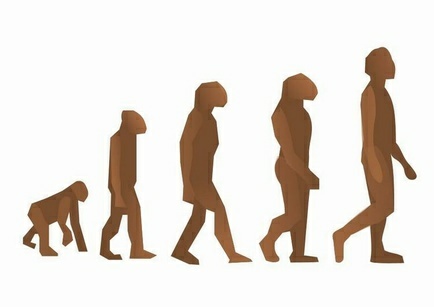
The fifth skull to be discovered in Dmanisi displays a combination of features unknown to researchers before the find - the largest face, the most massively built jaw and teeth and the smallest brain within the Dmanisi group.

Previously, four equally well-preserved hominid skulls as well as some skeletal parts had been found there. Taken as a whole, the finds show that the first representatives of the genus Homo began to expand from Africa through Eurasia as far back as 1,850,000 years ago.

The 'education is terrible' trope made the rounds again last week, along with the predictable 'abysmal' charge leveled at teachers and students and attempts to keep America ahead in a globalized competitive landscape.

A study in mice has found that the space between brain cells may increase during sleep, allowing the brain to flush out toxins that build up during waking hours. 

Get a good night's sleep - it may literally clear your mind.

For centuries, scientists and philosophers alike have wondered why people sleep and how it affects the brain. It has been determined that sleep is important for storing memories and the researchers in the new paper found that sleep may be also be the period when the brain cleanses itself of toxic molecules.  

If you are new to a yoga class, you are stunned by how flexible and strong its participants are - but if you are blind in a visual exercise world, it takes a little more creativity to feel the burn. Technology to the rescue.

Students traditionally watch an instructor to learn how to properly hold a position, not possible for blind people, but University of Washington computer scientists have created a software program that watches a user's movements and gives spoken feedback on what to change to accurately complete a yoga pose.

There was once a perception that nature was somehow unspoiled and humans changed that. It was never really true, it was just an arbitrary naturalistic fallacy, but it caught on among environmentalists who began lobbying for a return to this historical ecosystem.

Actual conservation efforts have to be a little more practical - after all, if keeping things untouched is the goal, environmentalists would be voting for the Tea Party Republicans who kept the US government shut down. Since the president wouldn't let anyone into National Parks, the animals and plants were left alone.

Pigs, jellyfish and zebrafish don't seem to have much in common with each other, much less humans, but the different species are all pieces of a puzzle which is helping to solve the riddles of diseases in humans - like hereditary forms of diseases affecting the nervous system, such as Parkinson's disease, Alzheimer's disease, autism, epilepsy and the motor neurone disease ALS. 

In a new project, Aarhus University scientists focused on a specific gene in pigs. The gene, SYN1, encodes the protein synapsin, which is involved in communication between nerve cells. Synapsin almost exclusively occurs in nerve cells in the brain. Parts of the gene can thus be used to control an expression of genes connected to hereditary versions of the aforementioned disorders.

