

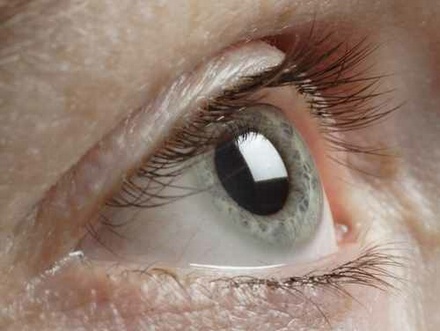
Trisomy 21, commonly called Down syndrome, is a genetic condition in which a person has 47 chromosomes instead of the usual 46 - three of the #21 chromosomes, rather than the usual two.(1) 

Down syndrome  is one of the most common genetic birth defects, affecting approximately one in 800 to 1,000 babies, and includes a combination of mental retardation, characteristic facial features and, often, heart defects, visual and hearing impairment, and other health problems. 
It is very often accompanied by pathologies found in the general population: Alzheimer's disease, leukemia, or cardiac deficiency. 

A group of investigators from San Diego State University's Brain Development Imaging Laboratory say they can see the effects of autism on the brain. They conclude that connectivity between the thalamus, a deep brain structure crucial for sensory and motor functions, and the cerebral cortex, the brain's outer layer, is impaired in children with autism spectrum disorders (ASD).

The largest investigation to-date has found a dramatic increase in the number of hospitalizations for children with inflammatory bowel disease (IBD) during the past decade in the United States. But does that mean there are actually more cases?

A National Renewable Energy Lab researcher at the IEEE Photovoltaic Specialists Conference in Tampa announced a 31.1% conversion efficiency for a two-junction solar cell under one sun of illumination.

A new paper published in
Psychonomic Bulletin and Review and based on a small experiment found that people who are blindfolded employ the same strategy to intercept a running ball carrier as people who can see, which suggests that multiple areas of the brain cooperate to accomplish the task.  Or they do what they learned when they could see.

Either way, chasing down a moving object is not only a matter of sight or of sound, but of mind.

Want to off someone but you are ethically against using anything made by Monsanto?
In September 2006 I was in Ponta Delgada, the main town of the island of San Miguel in the Azores, for a physics conference where I was presenting results of the CDF experiment.

I remember listening to a very nice talk by Guido Martinelli, who was discussing the status of flavour physics, and getting rather depressed at the view of a very consistent picture of agreement between B physics observables and Standard Model predictions. This came at a moment when the CDF experiment had been probing the high-energy frontier with very detailed measurements, none of which appeared to show even the smallest glimpse of a departure from model predictions.
Since posting this I have discovered that the difference signal I was looking at was not daily minimum temp, but daily maximum temp. A new analysis of minimum temps will be found here.
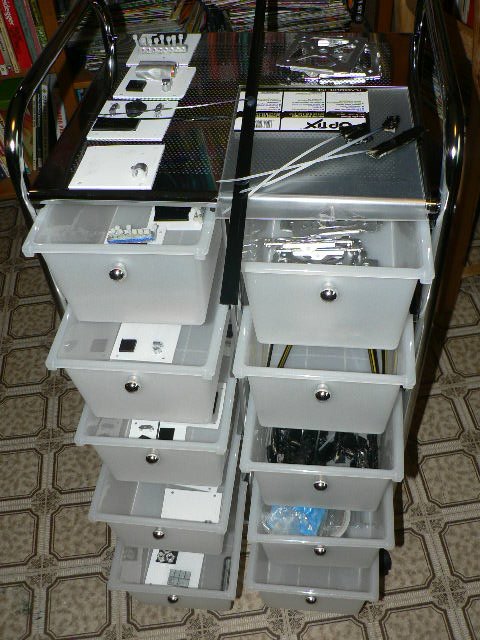
I am a firm believer that simulations improve reality.  If you want to launch a CubeSat, you should start with a fictional CubeSat, a very small orbiting satellite concept.  After deciding what you'd want to orbit the Earth (or Moon), you move to a 1:1 scale mockup.  Only after you've broken a fair amount of plastic and fake hardware should you begin 'bending metal' on the real ones.

The process of prototyping and mockups is a standard part of engineering.  The framework for doing so in an interesting manner is entirely based in the world of games.
The Science of Law

  Scattered throughout the pages of the history of the common law are many references to it being a science.  Science may be called the pursuit of fact by means of well-defined procedures.  Anyone who has ever visited any two courts of common law jurisprudence will have seen at first hand that their procedures inevitably differ somewhat.  The greatest difference will be found between English and American criminal courts.  Whereas in America the trial proper begins when the prosecutor addresses the jury, followed by the defence, in English Crown Courts the defence is not allowed to address the jury until all evidence has been shown or heard.


