The last time you had a cappuccino, did you think 'I bet I can learn something about type-I superconductors here?' Well, a team of Ames Laboratory physicists did and have found that the bubble-like arrangement of magnetic domains in superconducting lead exhibits patterns that are very similar to everyday froths like soap foam or frothed milk on a fancy coffee.

The similarities between the polygonal-shaped patterns in conventional foams and "suprafroths," the patterns created by a magnetic field in a superconductor, establish suprafroths as a model system for the study of froths.

Ruslan Prozorov, Ames Laboratory physicist and primary investigator, discovered the suprafroth pattern last year, seeing an unexpected foam-like design when he applied a magnetic field to a lead sample in a magneto-optics system. Since the term "superfroth" was already in use for an unrelated product, Prozorov coined "suprafroths" in a nod to history: in the 1930s, superconductors were called "supraconductors."

If you're anything like us, you're wondering how shockingly bad films like Battle for the Planet of the Apes get made. The simple reason is that sequels, even bad ones, tend to make more money than original films, according to a new study in the July Journal of Business Research.
And timing is everything – the sooner the period between releases, the better.

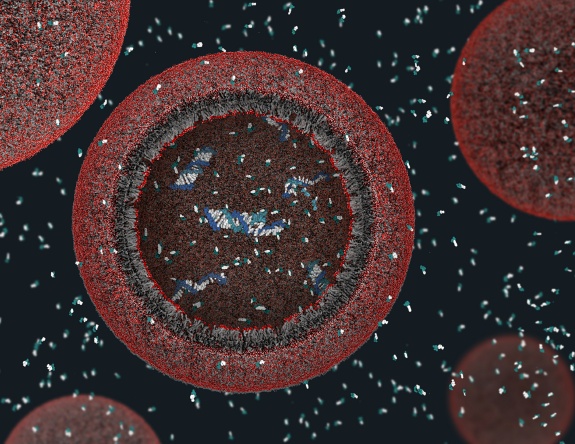
A team of researchers at Harvard University have modeled in the laboratory a primitive cell, or protocell, that is capable of building, copying and containing DNA.

Since there are no physical records of what the first primitive cells on Earth looked like, or how they grew and divided, the research team's protocell project offers a useful way to learn about how Earth's earliest cells may have interacted with their environment approximately 3.5 billion years ago.

The protocell's fatty acid membrane allows chemical compounds, including the building blocks of DNA, to enter into the cell without the assistance of the protein channels and pumps required by today's highly developed cell membranes. Also unlike modern cells, the protocell does not use enzymes for copying its DNA.

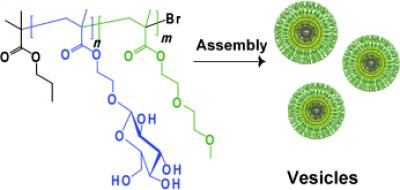
Cameron Alexander and George Pasparakis at the University of Nottingham have been able to facilitate a conversation between bacterial cells and artificial polymer vesicles by way of sugar groups on the vesicle surface.

For an organism to develop and function, the individual cells must exchange information, or communicate, with each other. Is it possible to learn their language and "talk to" the cells?

Apparently so. In the journal Angewandte Chemie Alexander and Pasparakis report that this first communication occurred by way of sugar groups on the vesicle surface. The vesicles subsequently transfer information to the cells—in the form of dye molecules.

Could macro-scale chemical engineering be used to stop a volcanic lava flow in its tracks and save potentially thousands of lives and homes when the next eruption occurs? R.D. Schuiling of Geochem Research BV, based in The Netherlands, thinks so.

During the 1960s, Schuiling pioneered the discipline of geochemical engineering, which involves the use of natural processes to solve environmental and civil engineering problems. He recently turned his attention to the ongoing problem of how to tame volcanic lava flows. Lava flows regularly threaten and sometimes destroy human settlements. In 1973, the Icelanders had some success slowing the advance of lava from Heimaey by dousing the flow with huge volumes of seawater. Meanwhile in Sicily, the town of Zafferana was saved from being ravaged by the 1991-1993 eruption cycle of Etna by huge earth walls built to divert the lava flow.

British scientists are developing a new type of glass that can dissolve and release calcium into the body. This will enable patients to regrow bones and could signal a move away from bone transplants.

The porous glass, originally developed at Imperial College is capable of acting as an active template for new bone growth, dissolving in the body without leaving any trace of itself or any toxic chemicals. As it dissolves it releases calcium and other elements such as silicon into the adjacent body fluids, stimulating bone growth.

Proposals to overhaul the approach to obtaining patient consent lack detail, contain advice that is non-specific, and might prevent doctors from making major changes to their practice warns an editorial in this week's BMJ.

Writing in response to the publication of the General Medical Council (GMC) guidance on patient consent to be implemented in June, Professor Glyn Elwyn argues that although the guidance appears radical and urges a change in the approach to informed consent, it fails to address how doctors will do this in busy clinical settings.

The process of obtaining consent from patients for procedures such as surgical operations often just involves patients signing a piece of paper declaring that they understand the nature of the procedure and its consequences, only a few hours before an operation. This rarely provides time for patients to read or consider the information about harms and benefits. In addition, evidence shows that patients want to be given more information about risks and consequences.

Simplistic and unpiloted NHS reforms are inadvertently damaging patient care in general practice, according to a group of academics writing in this week's BMJ.

Professor Howie, from the University of Edinburgh, writing with colleagues, criticises recent reforms in general practice and says if they "continue unchallenged [it] will result in the dismemberment of a primary care system that has been the envy of other countries."

They argue that the holistic care patients have always received from their GP, and which has worked in the individual patient's favor, is in danger of being harmed by recent changes.

WATERLOO, Ontario, June 5 /PRNewswire/ -- In a new and generous act of personal philanthropy, Mike Lazaridis has provided an additional $50 million (Canadian) to Perimeter Institute for Theoretical Physics (PI). This private donation increases his personal contributions to $150 million in the research institute.

The private funding announcement, delivered by The Honourable John Wilkinson, Ontario Minister of Research and Innovation, was celebrated by over 600 people just prior to a PI Public Lecture. The donation was acknowledged by all dignitaries representing the Province of Ontario and the Government of Canada, important members of a public-private partnership that fund the scientific research and outreach operations.

Many scientists have expressed the belief that if they only had a chance to explain the facts, they could convince intelligent educated people (at least) of the validity of a neo-Darwinian approach to understanding life. As the following email exchange suggests, this conventional assumption is wrong. Not all people - even intelligent ones - have minds that operate according to the same principles of rationality.

The following email conversation took place between me and a reader of an article called "Life 2.0" that I published in Newsweek International about synthetic life.   The reader - a young earth creationist - was only upset by what I wrote in the very first paragraph of a rather long article.  The email exchange that followed is instructive to those of us who want to convince our fellow citizens of the legitimacy of modern science  and its implications for understanding life and the universe as a whole.