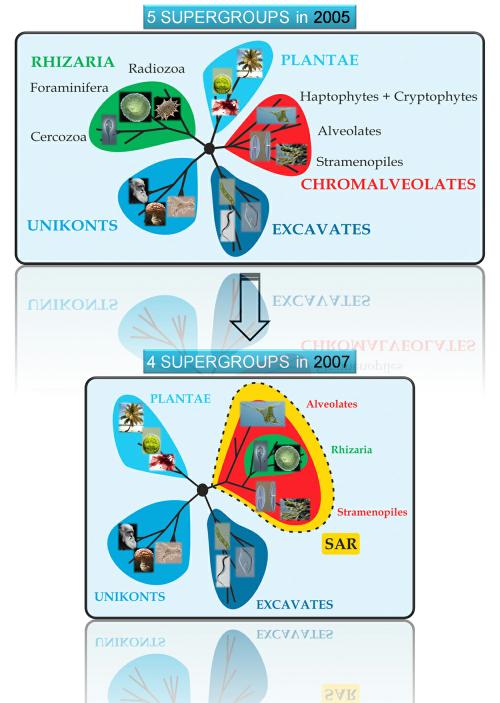






The Tree of Life has lost one of its branches due to the discovery that two formerly separated branches share a similar evolutionary history.

It's more than just re-drawing textbooks.

The discovery by Norwegian and Swiss researchers has gained attention from biologists worldwide. The findings come from the largest ever genetic comparison of higher life forms on the planet. Of 5000 genes examined, researchers identified 123 common genes from all known groups of organisms; these common genes have been studied more closely. The study has required long hours of work from the researchers and an enormous amount of computing resources—supplied through a large network of computers at the University of Oslo.

“The results were pretty astounding.

I wouldn't touch celery without a swath of peanut butter layered on top. I probably wouldn't touch it even then. Celery is not a stand-alone food for me.

But a study in the Journal of Agricultural and Food Chemistry reports identification of the flavor-boosting components in celery - and it reaffirms what cooks have known all along.

In their paper, Kikue Kubota and colleagues note that cooks have long recognized celery’s “remarkable” ability to enchance the complex flavors of soups and broths - it takes on a sweet-spicy flavor after boiling, helping to give food a thick, full-bodied, satisfying taste. Until now, however, scientists have been unable to track down the roots of celery’s effects.

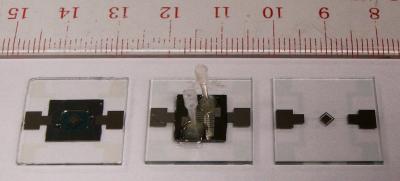
Researchers in Hong Kong have miniaturized technology needed to perform the versatile polymerase chain reaction (PCR) — widely used in criminal investigations, disease diagnosis, and a range of other key applications.

Published in Analytical Chemistry, they report development of a long-sought PCR microchip that could permit use of PCR at crime scenes, in doctors’ offices, and other out-of-lab locations.

I-Ming Hsing and colleagues note that PCR works like a biological copy machine, transforming a few wisps of DNA into billions of copies. However, existing PCR machines are so big and complex that they can be used only in laboratories.

The seminar that I give most often when I am invited to speak at other universities begins with a brief introduction to genomes, sets up some comparisons between bacteria and eukaryotes, and then moves into a short overview of bacterial genome size evolution before spending the remainder of the time on genome size diversity and its importance among animals. The main things that I have to say about bacterial genomes are:

1) Unlike in eukaryotes, bacterial genome size shows a strong positive relationship with gene number (in other words, bacterial genomes contain little non-coding DNA).


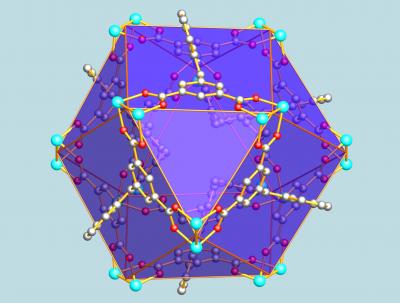
In a major advance in alternative fuel technology, researchers report development of a sponge-like material with the highest methane storage capacity ever measured.

It can hold almost one-third more methane than the U.S. Department of Energy’s (DOE) target level for methane-powered cars, they report in a new study. It is scheduled for the Jan. 23 issue of ACS’ Journal of the American Chemical Society, a weekly publication.

Hong-Cai Zhou and colleagues note that lack of an effective, economical and safe on-board storage system for methane gas has been one of the major hurdles preventing methane-driven automobiles from competing with traditional ones.

Like last year, the North Carolina Science Blogging conference was a hit. I moderated a session on public scientific data with Xan Gregg. Both of our talks were recorded and available here.

Amid growing consumer demand for more environmentally-friendly cleaning products, chemical suppliers are stepping-up their efforts to provide greener ingredients with the same effectiveness of conventional ones, according to an article in Chemical & Engineering News.

Michael McCoy notes that “green” cleaning supplies were once the province of fringe industries but are now attracting the attention of big corporations in the United States and beyond. Increasingly, suppliers are generating consumer cleaning products that contain natural or naturally-derived ingredients, avoid the use of environmentally-harmful chemicals, and generate less carbon dioxide during manufacturing and use, McCoy states.

Researchers in Agricultural and Food Chemistry are reporting impressive new evidence that eating broccoli may protect against heart disease.

Researchers have known for years that broccoli is a rich source of antioxidants, vitamins, and fiber that may protect against cancer, Dipak K. Das and colleagues note. Other studies also suggest that broccoli may benefit the heart, although scientists do not know how it works.

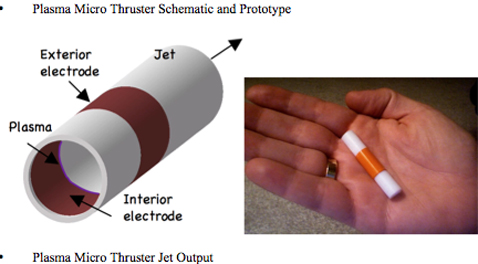
Oklahoma State researchers are developing a state-of-the-art propulsion system for the United States Defense Advanced Research Projects Agency.

If successful, the propulsion system will be featured in sophisticated unmanned aircraft small enough to fit into a soldier’s pocket.

“What we want the infantrymen to be able to do is pull a pack of six or so out of their pocket and have them ready for use,” Jamey Jacob, an associate professor of mechanical and aerospace engineering, said. The aircraft would be used for surveillance purposes and allow soldiers to inspect hostile areas before moving through them.


Credit: Oklahoma State University

An international consortium of scientists has identified multiple genes that are linked to systemic lupus erythematosus, a devastating autoimmune disease that affects between 1 million and 2 million Americans. Reporting in Nature Genetics, the scientists also confirmed earlier findings linking lupus to several other genes – highlighting the role that genetics plays in the disease.

“These findings underscore that numerous genes, which are often immune-function related, contribute to the risk of developing lupus,” said Carl D. Langefeld, Ph.D., senior author from Wake Forest University School of Medicine and co-director of the International Consortium for Systemic Lupus Erythematosus Genetics (www.SLEGEN.org).

