New transcriptome data for underutilized legumes means underappreciated crops could soon become valuable tools in agriculture.
Thousands of species belong to the legume family, the Fabaceae, yet only a few of them are used in mainstream agriculture. Dozens more are underutilized. Unlike soybean, peanut, chickpea, and other chart toppers, the underutilized species can grow in areas of very poor soil with limited water availability. This is because they are equipped with unique variations in plant growth genes that have been lost from mainstream crops through years of breeding.
A new type of methane-based, oxygen-free life form can metabolize and reproduce similar to life on Earth.
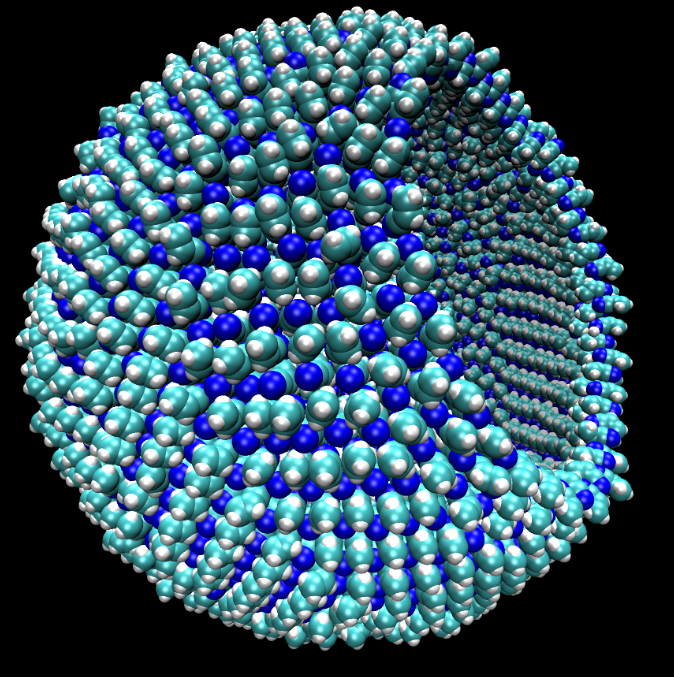
This hypothetical cell membrane, modeled by a team of researchers, is composed of small organic nitrogen compounds and capable of functioning in liquid methane temperatures of 292 degrees below zero - necessary for a harsh, cold world - specifically Titan, the giant moon of Saturn, a planetary body awash with seas not of water, but of liquid methane, Titan could harbor methane-based, oxygen-free cells.
In 1966, when the "Star Trek" television show debuted, it was revolutionary - not just in the ways that are commonly stated, like that it took a stand against racism and petty geopolitics, we had Sidney Poitier and The Man From U.N.C.L.E. by then, but rather what it did for science.
In the post-World War II era, science had gone from being a well-respected endeavor to being 'mad'. This was after Harry Harlow's monkey isolation experiments, after LSD on unwitting subjects, after the atomic bomb and after the forced sterilization of 60,000 people under the label of science.
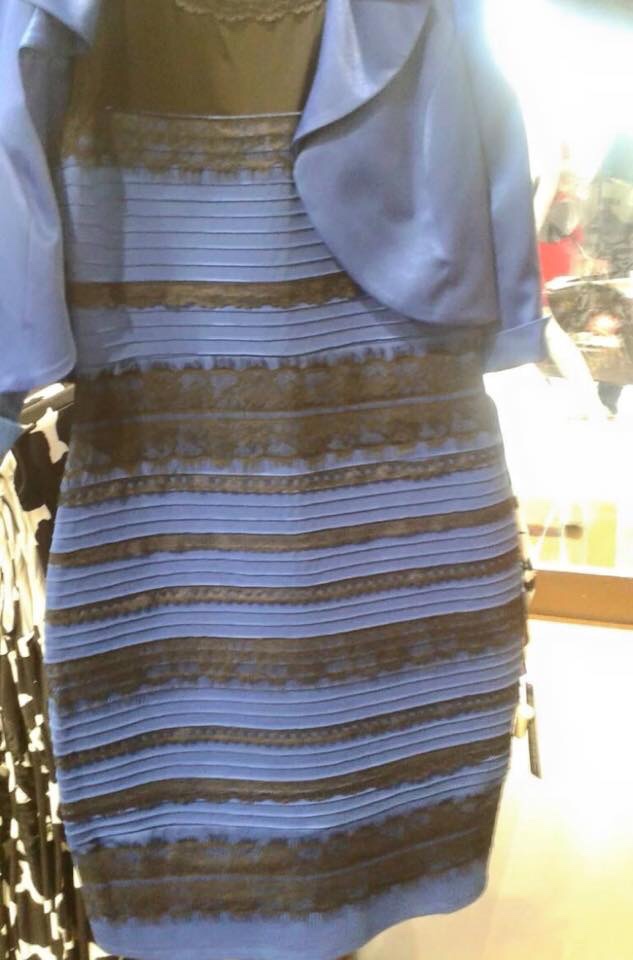
A dress that seems to be different colors to different people has all the Internet intrigued - and that's a good thing. It's a good way to understand science and psychology.
There are two hypotheses as to why people see dramatically different things; one is that our brains are constantly being bombarded by information and so we end up making a lot of assumptions and interpretations based on parameters. If you are looking up close at something and infer a blue background, you see the dress differently than people who assume it has an artificial light background, like yellow.
A new paper challenges a long-accepted hypothesis about the role the hippocampus plays in our unconscious memory.
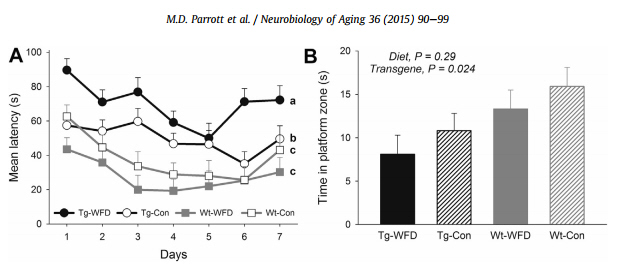
For decades, neuroscientists have believed that this part of the brain is not involved in processing unconscious memory, the type that allows us to do things like button a shirt without having to think about it, but research by University of Texas at Dallas lecturer Dr. Richard Addante raises doubts about that.
Much of the knowledge about the hippocampus and how our brains organize memory comes from research at the Massachusetts Institute of Technology on an amnesia patient known in textbooks as "Patient H.M.", revealed as Henry Molaison, upon his death in 2008.
A strong electric field applied to a section of the Keystone pipeline can smooth oil flow and yield significant pump energy savings, found a new study.
The physics basis is to electrically align particles within the crude oil, which reduces viscosity (thickness) and turbulence. Traditionally, pipeline oil is heated over several miles in order to reduce the oil's viscosity, but this requires a large amount of energy and counter-productively increases turbulence within the flow.
Researchers focusing on a new way to discuss statistical mechanics have modeled "World War Z", an oral history of the first zombie war, to explore how an "actual" zombie outbreak might play out in the U.S.
The National Academy of Sciences is presenting its 2015 Public Welfare Medal to astrophysicist Dr.Neil deGrasse Tyson, Director of the Hayden Planetarium of the American Museum of Natural History, in recognition of his "extraordinary role in exciting the public about the wonders of science, from atoms to the Universe.”
Though adopting a whole-food diet has become popular in some circles, is it really going to help you? Perhaps, perhaps not.
One reason to err on the side of caution and not chase diet fads is that fads tend to be expensive and their benefit is unknown. A gluten-free diet, for example,
will be 242 percent higher cost and the extra sugar, extra fat, hydroxypropyl methyl cellulose and xanthan gum in gluten-free foods are not a health positive.
What about the whole food diet?
It's been over 50 years since the first experimental use of adult stem cells - bone marrow transplants - began, and in that time over 1,000,000 hematopoietic stem cell (HSCT - cells isolated from the blood or bone marrow that can renew themselves and differentiate to a variety of specialized cells) transplantations (have been performed in 75 countries, but there are striking variations between countries and regions in the use of this lifesaving procedure and high unmet need due to a chronic shortage of resources and donors that is putting lives at risk.