




The first systematic analysis of hepatitis E virus (HEV) transmission by blood components indicates that about 1 in 3,000 donors in England have HEV in their plasma. The findings suggest that around 1,200 HEV-containing blood components (eg, red cells, platelets, and fresh frozen plasma) are likely to be transfused every year in England. 

About 15% of adults suffer from fertility problems, primarily due to genetic factors.

This is something of an evolutionary paradox; wouldn't natural selection have caused people with infertility to not reproduce?Various theories explain the survival of harmful mutations: A gene that today causes obesity, for example may have once granted an evolutionary advantage; or a disease-causing gene may persist because it is passed on in a small, relatively isolated population.

This is just a short update on the saga of the anomalous excess of W-boson-pair production that the ATLAS and CMS collaborations have reported in their 7-TeV and 8-TeV proton-proton collision data. A small bit of information which I was unaware of, and which can be added to the picture.

Facebook, Google and just about everyone except Science 2.0 use global distributed computers to mine your web history and learn everything about you to generate revenue. Big data is being led by marketing, like many things are, but early adopters who make money at things create tools that everyone can then use, and that will be a big help for Science 2.0

New technologies for monitoring brain activity are generating unprecedented quantities of information. If it can ever be interpreted, that data may hold new insights into how the brain works. To help make sense of cranial Big Data, neuroscientists can now use Thunder, a library of tools developed at the Howard Hughes Medical Institute's Janelia Research Campus.

Using data from over 18,000 patients, scientists have identified more than two dozen genetic risk factors involved in Parkinson's disease, including six that had not been previously reported. 

Affecting millions of people worldwide, Parkinson's disease is a degenerative disorder that causes movement problems, including trembling of the hands, arms, or legs, stiffness of limbs and trunk, slowed movements and problems with posture. Over time, patients may have difficulty walking, talking, or completing other simple tasks. Although nine genes have been shown to cause rare forms of Parkinson's disease, scientists continue to search for genetic risk factors to provide a complete genetic picture of the disorder.

If you go by stories of epigenetics and the microbiome, we are on the verge of curing all disease. There hasn't been this much hype since human embryonic stem cells and the human genome project were going to cure all ailments in 2000.

But behind the hype there is some science, it is just figuring out what is epigenetics, what is genetics and then what is instead epidemiological matching of correlation and causation that is the struggle.

In some patients, the chronic inflammatory skin diseases psoriasis and eczema are so similar that dermatologists have had to examine tissue samples but a team of researchers at the Helmholtz Zentrum München and the Technical University of Munich (TUM) have now analyzed the molecular processes that occur in both diseases and discovered crucial differences.

This has enabled them to develop a diagnostic procedure which in practice enables psoriasis and eczema to be reliably differentiated from one another on the basis of only two genes. 
In America, where categorization becomes easy because there are two main political parties, it is well-known that right-wing people donate more to charity. This makes sense; people who believe in smaller government should be willing to help their fellow man rather than relying on government to tax and redistribute wealth. Yet right-wing people also espouse individual initiative, so why donate more to charity when recipients have not earned it? 

A new paper in the Journal of Consumer Research explains this seeming inconsistency and suggests that moral identity decreases donations when recipients are deemed to be responsible for their plight.
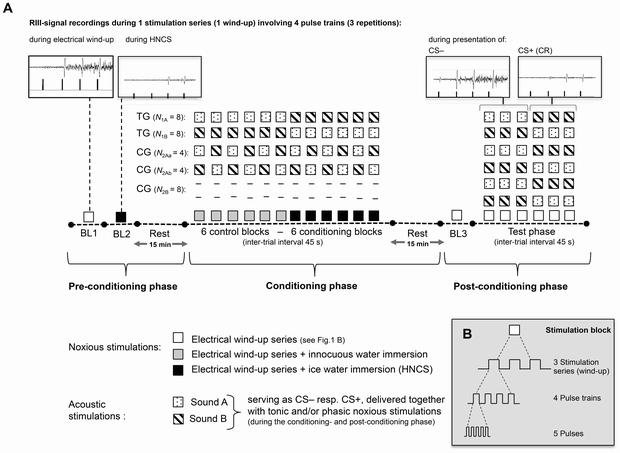
People can be conditioned to feel less pain when they hear a neutral sound, new research from the University of Luxembourg has found. This lends weight to the idea that we can learn to use mind-over-matter to beat pain. 

Scientists have known for many years that on-going pain in one part of the body is reduced when a new pain is inflicted to another part of the body. This pain blocking is a physiological reaction by the nervous system to help the body deal with a potentially more relevant novel threat.
Marketing is something of a game; retailers want you to spend the most money, but not none at all, and cash flow is important, so sometimes they have sales, even at a loss to get you in the door in the belief that you will spend more money. But is that the optimal strategy for a retailer?

A new paper in the Journal of Consumer Research says consumers instead choose retailers they believe offer the lowest prices the majority of the time.  

To simulate 100 weekly purchases from a retail store, participants were asked to purchase products from one of two competing retailers 100 different times. Participants were given a monetary incentive to minimize their total spending and were instructed to base their selections strictly on price.


