



Apple's Siri sounds like she cares about your needs, but she is faking it.  But some research by a team of engineers shown at the IEEE Workshop on Spoken Language Technology describes a new computer program that gauges human feelings through speech with substantially greater accuracy than existing approaches. 

Some day you may have a smart phone that identifies your mood.

Arthrobotrys oligospora doesn't live a charmed life; it survives on a diet of roundworm, which isn't all that appealing, but the discovery of a team led by Mingjun Zhang, an associate professor of biomedical engineering at the University of Tennessee, Knoxville, could give the fungus's life more purpose—as a cancer fighter. 

They discovered that nanoparticles produced by A. oligospora hold promise for stimulating the immune system and killing tumors. 

I like to think of palaeontology as a historical science. We use science as a tool to speculate and test ideas about the history of life on Earth. The alternative is mythology, where we create ideas about the history of life to make a good story, without any grounding in fact.

Take the question, “how did the rhinoceros get its skin”. On the one hand, we have a scientific study in 2009; that compares folding across many rhinoceroses and examines the blood vessel network. They suggest that the skin evolved its folds to help keep the rhino cool. Rudyard Kipling, however, gives us another hypothesis.

Plants grow upward from a tip of undifferentiated tissue called the shoot apical meristem. As the tip extends, stem cells at the center of the meristem divide and increase in numbers and the cells on the periphery differentiate to form plant organs, such as leaves and flowers. In between these two layers, a group of boundary cells go into a quiescent state and form a barrier that not only separates stem cells from differentiating cells, but eventually forms the borders that separate the plant's organs. 

Probiotics are the miracle product of the decade because of the belief they can help cultivate “intestinal flora”, whatever that is supposed to mean.  It's a $32 billion industry by 2014 but there is one species that scientists can confirm have a benefit - zebrafish.

The Institute of Marine and Environmental Technology found that feeding probiotics to baby zebrafish accelerated their development and increased their chances of survival into adulthood.

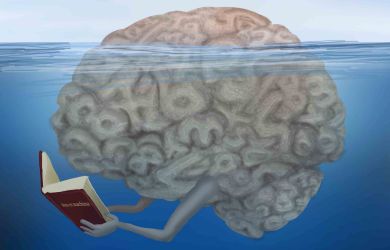
We can read words and phrases and even solve multi-step mathematical problems without conscious awareness, say a team of psychologists at the Hebrew University.

They conducted experiments which they say constitutes a challenge to existing ideas of unconscious processes; namely that reading and solving math problems, complex, rule-based operations, require consciousness. 

Two NASA satellites,  Terra and the Tropical Rainfall Measuring Mission (TRMM) , gathered data as a Super Typhoon passed over Bopha on Dec. 2nd, gathering valuable data for forecasters. Since then, Bopha's maximum sustained winds fluctuated up and down from its previous high of 155 mph and today, Dec. 3rd, the storm reached its strongest point - a Category 5 typhoon on the Saffir-Simpson scale, with sustained winds of 161 mph. Warnings are up for the Philippines as Bopha approaches.

Terra captured a visible image of Bopha showing the extent of the storm and revealing the eye of the storm while TRMM captured rainfall rates, identified areas of heavy rainfall, and measured cloud heights.

One of the silliest tropes in the hyped-up 'controversy' over evolution is that all religious people should be conflated with 'Young Earth Creationists'.  

In 1972, a term related to the parts of a genome sequence that don't have a known function was introduced. Like physicists with the 'God particle', a lot of biologists wish they could take back the term 'junk DNA' because it has been colloquialized to mean something different to the public than what it means biologically. Sometimes it just takes time to know what things do, if they do anything.  A 2004 Nature paper removed 'gene deserts' - 0.1% of the mouse genome - with no effect they could find.

It sounds as suspect as every other lie detector test, but psychologists have used thermography, a technique based on determining body temperature, to determine if someone is telling the truth.

They say a person telling a lie has been shown to undergo a "Pinocchio effect" - their nose changes. But it does not grow, instead they can detect an increase in the temperature around the nose and in the orbital muscle in the inner corner of the eye. Plus, they say when people exert a considerable mental effort the face temperature drops - and the opposite happens during an anxiety attack.


