



A new high-precision 3-D printer at TU Vienna is orders of magnitude faster than similar devices and opens up completely new areas of application, such as in medicine. "Two-photon lithography" means tiny structures on a nanometer scale can be fabricated quicker than ever.

Their 3-D printer uses a liquid resin, which is hardened at precisely the correct spots by a focused laser beam. The focal point of the laser beam is guided through the resin by movable mirrors and leaves behind a polymerized line of solid polymer, just a few hundred nanometers wide. This high resolution enables the creation of intricately structured sculptures as tiny as a grain of sand.

 Researchers from the University of California, San Diego School of Medicine are contending that  consumption of dietary trans fatty acids (dTFAs) is associated with irritability and aggression. 

Their survey of 945 men and women led them to link dTFAs with adverse behaviors that impacted others, ranging from impatience to overt aggression.  Dietary trans fatty acids are primarily products of hydrogenation, which makes unsaturated oils solid at room temperature. They are present at high levels in margarines, shortenings and prepared foods. Adverse health effects of dTFAs have been identified in lipid levels, metabolic function, insulin resistance, oxidation, inflammation, and cardiac health.

Might a person’s preferences for a mate vary according to whether they feel hungry or not?

 Some believe so, prompting professor Terry F. Pettijohn II from the Coastal Carolina University (along with colleagues from Miami University and West Virginia University) to investigate. For, according to the Environmental Security Hypothesis (ESH) individuals’ interpersonal preferences may partially depend on how secure or insecure they feel regarding their surroundings at any given time.

For my book Brain Trust, I chatted with Ian Stewart, mathematician, prolific puzzle author and very fun person to shoot the mathematical breeze with, who explains the following best card trick I’ve ever seen, invented by mathemagician Art Benjamin of Harvey Mudd College.

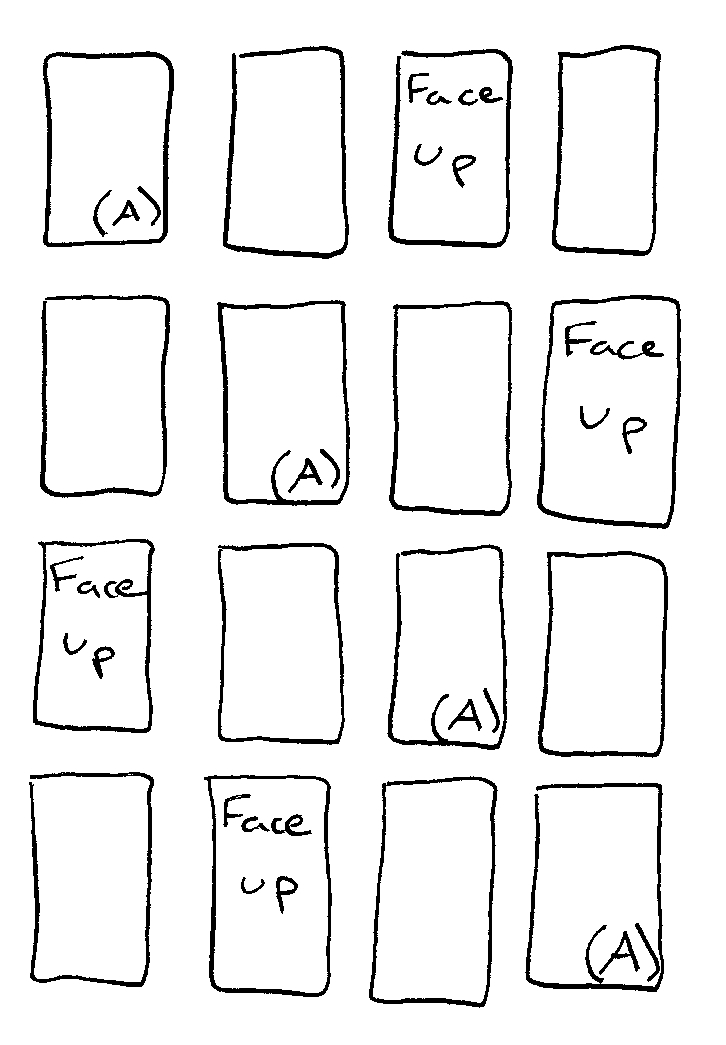
First, Stewart says, prepare a stack of sixteen cards so that cards 1, 6, 11, and 16 are the four aces. Now deal them facedown in four rows of four. Turn up cards 3, 8, 9, and 14 to make the arrangement shown here.

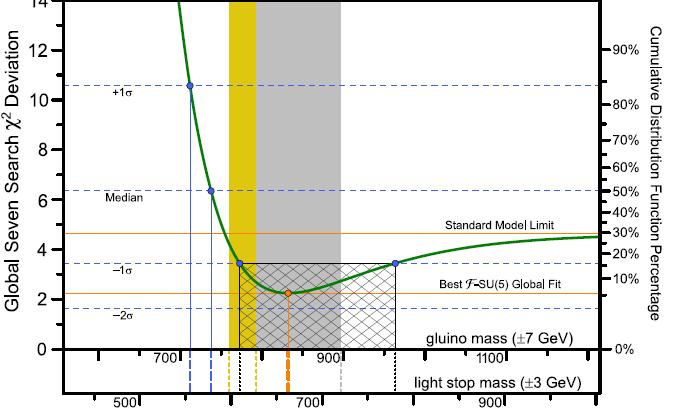
It is a gloomy winter for most SUSY phenomenologists: as they sit and watch, the LHC experiments continue to publish their search results for Supersymmetric particles, producing tighter and tighter direct bounds on the masses of squarks and gluinos for a variety of possible choices of the many free parameters defining the models under test. It looks as if the general feeling is "Today it's your preferred model going down the drain, tomorrow it might be my own".

The question as to how many meanings a word can have came up in the discussion that followed "The Intelligence Paradox". Two excited respondents found the whole thing so alarming that they volunteered the following helpful hints to improve my approach; “hogwash” “pseudo questions” “vacuous sophistry” and “hogwash” again, just in case I missed it the first time. I was also told that intelligence could not be cooperation because cooperation is cooperation.

So let’s see if a word can have two meanings, and a good place to start would be that emotion-charged hot-potato that we know as life.

Put a hand on your widow's peak. About an inch below your fingertips in your medial prefrontal cortex is the home of your sense of self. Julian Keenan, director of the Cognitive Neuroimaging Lab at Montclair State University, did a nifty trick: He used what is effectively an electric Ping-Pong paddle to zap this region in healthy subjects, overexciting every neuron within range, and thus for about a fifth of a second, knocking that one-cubic-centimeter area of the brain off the grid.

And while he did this, he flashed pictures of faces. Blasted subjects retained the ability to recognize faces of loved ones or even learned strangers, but for this fifth of a second, they failed to recognize themselves.

Even one year after the disaster at the Daiichi nuclear plant in Fukushima, Japan, it is still unfolding. It was locally surpassing the severity of Chernobyl relatively soon in the first few weeks. Four out of the six facilities were already no more than a pile of radioactive trash just like Chernobyl and it was clear since then that the future will be also similar to that of Chernobyl: A radioactive monument, still for our grand children’s grandchildren to be concerned about.

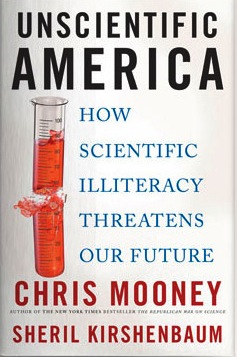
Increasingly, science is failing to influence public policy. Facts, statistics and data appear insufficient to change highly politicized minds...

Hermes is the son of Zeus. He is the messenger. He wears winged sandals, a winged hat,and a magic wand. He is the fastest of the gods. He is the god of thieves and he is the god of commerce. Even when he steals, he does it so gracefully. He is the guide for the dead to go to the underworld. He invented, the pipes, the musical scale, astronomy, weights and measures, boxing, gymnastics and the care of olive trees (*).

