




Could the key to our hydrogen future be a black stain on rocks?

Using sunlight to split water in a cheap, efficient way is the goal of true renewable energy that won't involve ghastly wind vanes or porkbarrelled government funding of ethanol.  The obstacle is splitting water into hydrogen and oxygen and researchers have been looking into complex catalysts that mimic what plants use - but a new study says that there might be much simpler alternatives.
Thrombolytic agents, commonly called "clot-busting" drugs, are frequently used in the treatment patients with blood clots in the lungs but a new study says clot-busting drug are no more effective than traditional blood thinners for the majority of the patients who get them. Thrombolytic agents also appear to increase the risk of death in patients with normal blood pressure.
In a complex system you never know what obscure change can modify things that wouldn't seem to be related.  A new study shows that variation of the scavenger receptor class B type 1 gene (SCARB1) involved in regulating cholesterol in the bloodstream also appears to affect progesterone production in women, making it a likely culprit in a substantial number of cases of their infertility.

 The group has developed a simple blood test for this variation of the scavenger receptor class B type 1 gene (SCARB1) but emphasize there is no approved therapy yet to address the problem in infertile women.
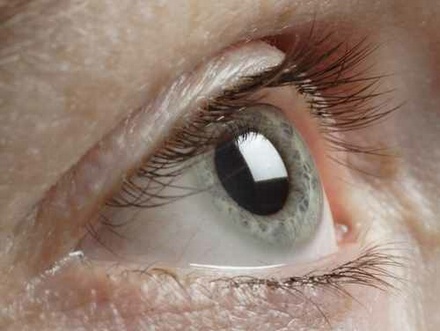
Diseases such as retinitis pigmentosa (RP) and age-related macular degeneration (AMD) are the leading causes of incurable blindness in the western world. In these diseases, retinal cells (photoreceptors) begin to die and limit the eye's ability to capture light and transmit information to the brain. Retinal cells, like other cells of the central nervous system, have limited capacity for endogenous regeneration. 

Now scientists say they can regenerate large areas of damaged retinas and improve visual function using IPS cells (induced pluripotent stem cells) derived from skin.    IPS cells became well-researched, along with ordinary stem cells, due to limitations in the US and Europe regarding use of human embryonic stem cells.   
The presentation of data is a very rich subject, on which there is a whole lot to discuss, even by restricting to the issues relevant to our dear field of experimental high-energy physics. Usually too little thought is given to it, even by expert researchers, so I thought that maybe today I would offer here some ideas on one very basic issue, the one of how to choose the width of the bins of a histogram.
Recently, while I was taking up my normal Saturday position on a youth soccer game sideline, I overheard a conversation between two parents as they watched the players warm-up. “I just love watching Billy play soccer.  He’s just one of those natural talents.” “I agree. Even though his parents never played growing up, he just seems to have inherited all the right genes to be a top player.” 

Time to reveal the solution to the cat killing mystery introduced in “If Schrödinger's Cats All Die, Do the Alive ones go to Hell?” and further explained in “Rotating Schrödinger's Cat to Death”. The solution is a huge letdown for all cat haters. Instead of being send to hell or at least into a parallel universe where they won’t bother no more, the cats stay right here in our lab! (See Nina – I am not as bad as you think.)

The opposing concepts of optimism and pessimism have a long history. Domino and Conway (2002) note that philosophers who viewed the cosmos as generally hospitable to life were optimistic, while those who viewed the cosmos as indifferent or hostile were pessimistic. Descartes was essentially an optimist who viewed human beings as creative participants in the improving of conditions of human life (Domino&Conway). Other philosophers, though, like Schopenhauer and Nietzsche, contributed to pessimistic explanations of the world and human beings‘ place in it, although occasionally offering glimpses of optimism. According to Peterson (2000), Nietzsche believed optimism only served to extend human suffering.
Bright people run into two curses in life that others mistake as blessings.  The first is that many tasks come easy to them.  The second is that they can do okay for a long time without experiencing failure or set-backs.  Both of these lead to a life of underachievement.

In "Patterns of Underachievement in Gifted Students", Carolyn Coil ( notes 3 patterns where smart kids dive into underachieving:

  1) Does well in early grades, then underachieves more as they get older
  2) Sporadic up-and-down pattern
  3) No effort to go beyond the minimum
Beginning in the 1970s, we were taught to keep homes cooler if we want to save energy and therefore both money and the planet.   But systems don't really work that way, as most knew, and a report commissioned by Friends of the Earth and written by Professor Sir Michael Marmot points out that cold homes cost lives and harm the environment in the long run.


