Both the CMS and ATLAS collaborations have already started to exclude meaningful regions of the parameter space of Supersymmetric models with the data they collected in 2010. And Physics World is on the news today with a
online article by Kathy Mc Alpine, the famous rapper physicist who wrote the lirics and interpreted
one of the biggest Youtube hits in the category of science popularization. If you have not watched it yet, please rush to do so now. Six million people (and counting) have done so before you already.
We all do it: we define things from our own perspective. One example I see over and over again is the idea that autism is whatever it looks like in our own kids, or own experience of it, not someone else's. If autism is accompanied with other problems, it's those problems, too.
Our natural tendency is to define things based on our personal experience. Even parents who argue they don't define their children by their autism will have the same tendency to define all symptoms and issues their children have as part of their autism. It's Gregory House writ small: the need to find one cause for all symptoms. The reality is that there are often multiple causes for the myriad of symptoms we may experience.
Some subjects I try to avoid in this blog. But this one seems to become increasingly difficult to escape. Since my
interview at Philosophy-To-Go, I regularly get questions about
the physics of free will. These questions range from
"Does free will exist given that the laws of physics are deterministic?"
to the more suggestive
"Is our free will based on quantum indeterminism?"
and the more confrontational
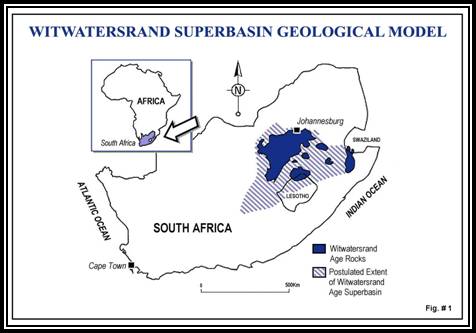
A new study accepted for publication in Chemical Geology says deep saline groundwaters in South Africa's Witwatersrand Basin may have remained isolated for perhaps millions of years.
The Witwatersrand Basin covers approximately 400 kilometers, some of which is subcrop of the Witwatersrand Supergroup sedimentary and sub-ordinate volcanic sequences and is well-known for tourist expeditions to search for gold.
The researchers found the noble gas neon dissolved in water in three-kilometer deep crevices and the unusual neon profile, along with the high salinities and some other unique chemical signatures, is very different from anything seen in molten fluid and gases rising from beneath the Earth's crust.
One of the fairly common things out of the "pro-safe" vaccine crowd insists is that there's inadequate research on vaccines. What better way to look at how information has grown over time than to look at the evolution of a vaccine textbook and how it has grown over five editions.
In 1988,
Vaccines was one third the size of the present edition, published 20 years later.
Product Details (from Amazon)
"Hardcover: 656 pages
Publisher: Saunders (W.B.) Co Ltd; 2nd edition edition (August 1988)
Language: English
ISBN-10: 0721619460
ISBN-13: 978-0721619460"
“Yesterday night I was in my office in the Department of Chemistry at the University of Cambridge packing my stuff, resolved to not go back to research again …”
This sad story is another warning to all those enthusiastic about getting into science. One more outtake:
Science and religion have always been in something of a conflict. Science seeks to explain the world according to natural laws while religion leaves larger questions as articles of faith. There is some overlap - 40% of AAAS member scientists in their recent survey are also religious - but AAAS covers a broad cross-section of scientists whereas biology is ground zero for a conflict with religion over man as we exist today and how we came to be. So there is less overlap in the life sciences but there have been ongoing attempts to reconcile the two camps, usually with scientists conceding that whatever 'sparked' life has no basis in current data so it is left to philosophy or religion as well.
Balancing the demands of work, parenting, blogging, autism advocacy and more can at times be daunting. My mind is a whirring jumble of thoughts, pinching worries that eat away at me, and an apparently failing memory. I'll start with the failing memory, as it, at least, is amusing in a terrifying "oh you might have more on your plate than you can handle" way.
If you've been to Bible study classes, you know the story of Jericho. Actually, if you're an atheist you may know it even better,
since on quizzes atheists seem to know The Bible better than many religious people. In the story, Joshua, successor to Moses, led the Jews across the Jordan to what would be their land. Jericho was clearly sitting on it so using trumpets for seven days and finally their voices they were able to take out the walls of the city and kill most everyone inside.
Wait until the Mythbusters try and tackle that one.
Today I spoke at
a conference on "QCD advances" which is being held in Les Houches, an amiable small town near Chamonix, on the french slopes of Mont Blanc. The content of my talk is
accessible from the conference web site, but I guess that I should provide here a summary of what I discussed.