A number of scientific organizations these days are creating Meet the Scientist programs and sending scientists and engineers out into public schools, science cafes, and other venues with the hope that they can drum up interest in pursuing careers in these fields. The idea is students will come to an assembly or a festival or some other place and be inspired by the excitement of learning how scientists work.
The following is a story written by my fiancee, who has Tourrette's syndrome, regarding a personal experience at a Mental Institution. In my eyes, this is the real reason why healthcare is so expensive. Many primary care givers are resentful to have to give their care. No matter how much their parent institution pays them. The treatment of patients, and the arrogance of staff is common among the healthcare sector. Just ask your first year intern.
----------------------------------
A Loss of Here
“Legal highs: the dark side of medicinal chemistry”, by David Nichols of Purdue University’s pharmacology department, has hardly been published in the prestigious science journal Nature [469, 7 (2011)] and it is already fully exploited for the usual drug war scare tactics bringing anything to do with psychoactive compounds into relation with pure evil - ‘reefer madness’ over and over again [I found some on Yahoo ‘science news’ but I am not going to link to such crap].
The Shell and Mantle (a lovely pan-mollusca blog which regularly reminds me that cephalopods have some very cool cousins) kindly sent me a copy of China Miéville's
Kraken after I
whined about wanting to read it.
I'm only one chapter in, so this is less of a review and more of a public service announcement that, thus far, my two inner geeks are pulling in opposite directions.
There once was a time when the parts you had were all you were going to get; when something went wrong that was that. As science and medicine progressed in leaps during the 20th century replacement parts became available, like artificial joints, and state-of-the-art metal or ceramic implants eliminated pain and gave many relief from arthritic knees, shoulders and hips.
But what once was the future is now old tech and, instead, the goal is to take a patient's own cells and create replacement joints. A team of researchers have found a way to create these biological joints in animals, and they believe biological joint replacements for humans aren't far away.
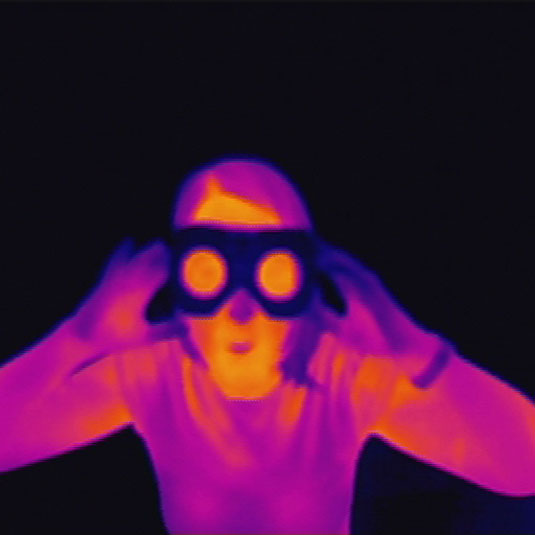
How does an electrical torch or flashlight work? According to the usual description, the lamp inside produces light, this light is shone on the objects we desire to see, partially reflected from their surfaces, and finally some of that light is captured by our eyes. This is not wrong, but it somewhat distorts the fundamentals of visual perception, which is not about perceiving light but about perceiving differences.
Couple-and treatment-specific factors can be used to provide infertile couples with an accurate assessment of the likelihood of having a successful outcome following in-vitro fertilisation (IVF) using a new prediction model created by Scott Nelson from the University of Glasgow, Glasgow, Scotland and Debbie Lawlor from the University of Bristol, Bristol, England.
They say it provides a more accurate and contemporary assessment of likely outcomes after IVF than a previously established model because the new model includes intracytoplasmic sperm injection outcomes.
It's not a cartoon, an ancient flightless bird was actually able to use its wings like a flail - or nunchaku, if your perspective is more Asian.
Paleontologists have discovered that Xenicibis, a member of the ibis family found only in Jamaica and that lived about ten thousand years ago used its specialized wings like a flail, swinging its upper arm and striking its enemies with its thick hand bones.
"No animal has ever evolved anything quite like this," said Nicholas Longrich of Yale, who led the research. "We don't know of any other species that uses its body like a flail. It's the most specialized weaponry of any bird I've ever seen."
Turning and turning in the widening gyre
The falcon cannot hear the falconer;
Things fall apart; the centre cannot hold;
Mere anarchy is loosed upon the world,
The blood-dimmed tide is loosed, and everywhere
The ceremony of innocence is drowned;
The best lack all conviction, while the worst
Are full of passionate intensity.
Randomized, controlled trials have shown the effectiveness of implantable cardioverter-defibrillators (ICDs) for preventing sudden cardiac death in patients with advanced systolic heart failure but a new study shows that far too many patients receiving ICDs do not meet evidence-based guidelines for receipt of an ICD, and that these patients had a significantly higher risk of in-hospital death than individuals who met criteria for receiving an ICD.
The study included more than 100,000 patients who received ICDs and found that about 20 percent did not meet evidence-based guidelines. In times of growing concern about cost versus quality of health care, there will be increased focus on ways to optimize health care, including cost and benefit.