

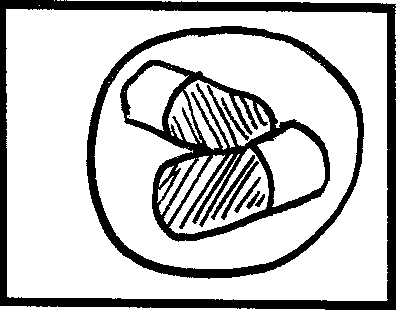
 If only you could ditch that traumatic memory, that craving, that debilitating fear of ventriloquist dummies (autonomatonophobia)! But these tendencies are so deeply ingrained that try as you might, you can't dig them out. Maybe you can drug them out.


 Giorgio Chiarelli is a particle physicist. His research activity has been based largely at the Fermi laboratory near Chicago, US, at the CDF experiment. In 1994-96 he actively participated in the discovery of the top quark and in the first measurements of that particle's properties. Later, after directing the construction of a part of the new CDF detector, he moved its research interests toward the search for the Higgs boson. Currently he is a INFN research director in Pisa, where he leads the CDF-Pisa group. In the most recent years he dealt with problems connected with the communication of science.

Know Science And Want To Write?
Apply for a column: writing@science20.com
Donate or Buy SWAG
Please donate so science experts can write
for the public.
At Science 2.0, scientists are the journalists,
with no political bias or editorial control. We
can't do it alone so please make a difference.
We are a nonprofit science journalism
group operating under Section 501(c)(3)
of the Internal Revenue Code that's
educated over 300 million people.
You can help with a tax-deductible
donation today and 100 percent of your
gift will go toward our programs,
no salaries or offices.

Interesting insights from outside Science 2.0
