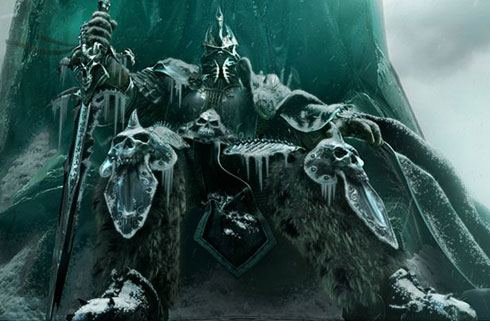



If you're like me, not only do you want to be buried, you want to be buried with your treasure in a vast underground labyrinth dug from the stone, behind a series of traps and secret doors, and your treasure will be in the very last room with my undead Lich guarding it.

Want your inheritance, descendants?  Bring a sword.

Lich

But other people have long been more environmentally responsible and made the 'ashes to ashes, dust to dust' route a little more direct than a decomposing coffin much less a concrete, subterranean bunker.   They get cremated.

Wow; I haven't gotten one of these in a long time:

ATTENTION!

A message you recently sent to a 0Spam.com user with the subject "[redacted]" was not delivered because they are using the 0Spam.com anti-spam service. Please click the link below to confirm that this is not spam. When you confirm, this message and all future messages you send will automatically be accepted.

I wrote about challenge/response anti-spam systems about three years ago, but probably haven't seen a challenge message in at least two years. I thought people had given up on them.

Alas, no.

The CMS experiment has just released a new result which excludes the possibility that quarks have a substructure at energy scales below 4 TeV. The result comes from the analysis of just a handful of inverse picobarns of collision data -2.9 to be precise- and shows excellently just how well suited are the LHC collisions for this business. The limit is extended by over one TeV above the former result of the Tevatron experiments, and some 600 GeV above the results of the ATLAS collaboration, who also recently reported on their search for of quark compositeness in 7 TeV collisions, finding a limit at 3.4 TeV.
Last year, DPR AmSci Journal wrote about a great new citizen science program called Citizen Sky [read from August 26, 2009]. This project is collecting observational data on the current eclipsing of the variable binary star system epsilon Aurigae. The primary star is estimated to be 300 times the diameter of our Sun, and the eclipsing object orbits at about the equivalent distance of Neptune from the Sun.
Quantum cryptography is the technology of the future for military and financial organizations because it sends information as entangled particles of light - anyone who tries to tap into the information changes it in a way that reveals their presence.

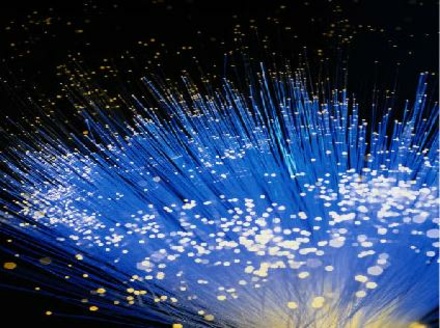
The data is encoded with an encrypted key but one important limitation is range.  The longest distance over which an encrypted key can be sent is approximately 100 kilometers but new technology developed by researchers increases 30-fold the amount of time the memory can hold information, which means that a series of quantum repeaters, arrayed like Christmas lights on a string, could reach distances in excess of 1,000 kilometers.
The Museum of UnNatural History has a page about the Kraken, of course, a pleasant romp through the history of the mythological creature, but unfortunately it does its part to perpetrate a common misunderstanding about the giant squid: that this poor animal is actually capable of taking on a whale.
Though giant squids are considerably less then a mile and a half across, some are thought to be large enough to wrestle with a whale. On at least three occasions in the 1930's they reportedly attacked a ship. While the squids got the worst of these encounters when they slid into the ship's propellers, the fact that they attacked at all shows that it is possible for these creatures to mistake a vessel for a whale.
Week number one of my course on Subnuclear Gauge Physics is over. I think that in the first five hours of lesson I have given to my students a reasonable picture of the early experimental attempts and theoretical developments aimed at understanding the structure of atomic nuclei and individual nucleons with electron scattering. So I thought I might try and simplify the picture further, to reach a wider audience here. Of course, the topic is not terribly entertaining, unless one understands fully just how important these studies are for fundamental physics even nowadays -despite having started over 60 years back.
Yesterday, I posted Game Theory's El Farol Bar problem, with a couple questions. (If you haven't read it yet, go back—the answer's no good without the puzzle.) And the truth is there's no answer, or more precisely, there's no pure strategy that works—if everyone decides to go, the bar's too crowded and it's no fun; if everyone decides to stay home, the bar will be empty and it would've been more fun to go.
Do you fall in love using your heart or your brain?   It depends.    For your brain, says a new analysis by Syracuse University Professor Stephanie Ortigue that won't discourage drug use, falling in love elicits the same euphoric feeling as using cocaine,  but it also affects intellectual areas of the brain.  That's a pretty big endorsement of the brain being number one in romance.
So if love is in the brain and not the heart, is there 'love at first sight' after all?   The science says yes, according to the researchers, who found falling in love only takes about a fifth of a second.
 
Can skin cancer be treated with light? Scientists from the University of California, Irvine say they can treat skin cancer with light - the ability to image cancerous lesions using LEDs might advance a technique for treating cancer called photodynamic therapy (PDT).

In PDT, photosensitizing chemicals that absorb light are injected into a tumor, which is then exposed to light. The chemicals generate oxygen radicals from the light energy, destroying the cancer cells. PDT is currently approved by the U.S. Food and Drug Administration (FDA) for the treatment of esophageal and lung cancer.



