It's a common phrase; money can't buy happiness. But a worldwide survey of more than 136,000 people in 132 countries that included questions about happiness and income revealed that life satisfaction certainly does rise with income, though it seems to depend on how you define happiness because positive feelings don't necessarily follow, the researchers report.
It may be a fundamental part of the human condition that few are content, no matter what they have. The findings, from an analysis of data gathered in the first Gallup World Poll, appear this month in the Journal of Personality and Social Psychology.
Politicians and education activists believe computer access is creating a generation of "have not" students that will be unable to compete in a digital world. Their very expensive solution is to guarantee subsidize home computers and even high-speed Internet service.
It may not only be incredibly expensive but also a bad idea for the poorest kids, according to a new study by Duke University's Sanford School of Public Policy, who say such efforts would actually widen the achievement gap in math and reading scores. Students in grades five through eight, particularly those from disadvantaged families, tend to post lower scores once these technologies arrive in their home.
Biotechnology in the last decade has been continually driven forward by the relentless economical desires of the ever-growing biopharmaceutical industry, creating innovative technologies that have gradually taken root in our society and have transformed our daily lives. These include transgenic rodents used in laboratories worldwide to understand diseases at a molecular level, as well as genetically modified foods that are found today in our salads.
Alien Invasion and Evolutionary Succession
The possibility of human extinction in End of the World sci-fi is sometimes paired with a consideration of our next evolutionary step - a concept that is less scientific than it sounds (evolution shouldn't be considered in such linear terms), but one that does make an effective fictional tool for thinking about human impermanence.
True or false: The cinema was invented in the late 19th century.
It's only true if you consider the cinema to be artificial projection. It turns out that the original idea behind the cinematic experience, the use of visual and audio means to tell a story, extends back to the Chalcolithic period, commonly called the Copper Age, according to the "Prehistoric Picture Project" being carried out by St. Pölten University of Applied Sciences, the University of Cambridge and the Bauhaus-Universität Weimar.
.
If you've watched any World Cup games so far (and a record 15 million in the US watched Saturday's match versus Ghana, so statistically, ummm, 50,000 people in our audience have watched at least one) you may have heard an omnipresent buzzing sound and assumed it was a horde of mutant bees in the broadcast booth or a defect in your television.
It was neither. Instead, it was a vuvuzela ("lepatata"), a B flat plastic horn that is loved by South African sports fans and hated by everyone else. Seriously. During that first World Cup match I watched it was so annoying I was convinced that if the people at Abu Gharaib had access to these things, terrorists would have caved in long ago.
While I'm busy building an instrument to convert the ionosphere to music, this NASA group has
sonified the Sun.
Astronomers at Univ. of Sheffield
"found that huge magnetic loops that have been observed coiling away from the outer layer of the sun's atmosphere, known as coronal loops, vibrate like strings on a musical instrument. [...] Using satellite images of these loops, which can be over 60,000 miles long, the scientists were able to recreate the sound by turning the visible vibrations into noises and speeding up the frequency so it is audible to the human ear. ""It is a sort of music as it has harmonics."Sample this 18 second flare music:
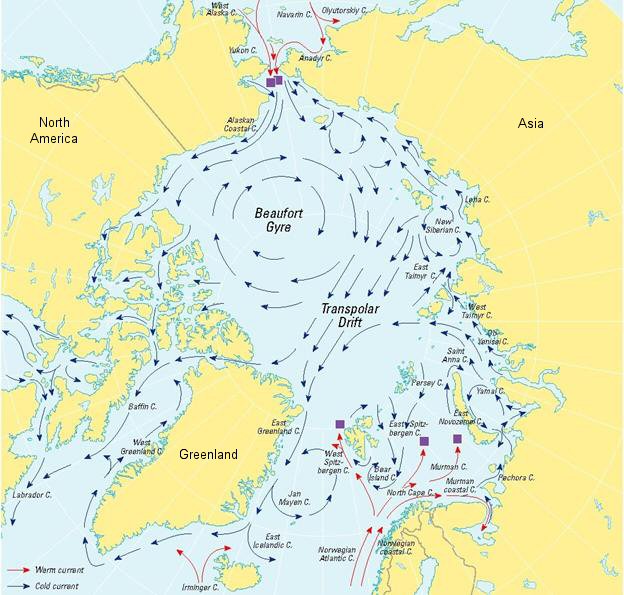
Arctic Ice July 2010
In about a week the National Snow and Ice Data Center - NSIDC - will be publishing its analysis of June's sea ice. I expect them to report another record loss of sea ice.
My prediction for July is that Arctic sea ice loss will accelerate.
Measuring ice behaviour
A survey taken by the Science and Technology Facilities Council says their funded PhD students have high employment rates and above
average salaries.
Since 2007, STFC has funded over 250 new students each year and 200 new students each year prior to that. The latest study provides a snapshot
of the career paths of these former PhD students and an examination of long-term career outcomes after postgraduate training.
The study reveals that 97% of the respondents who gained a PhD with STFC were
in full- or part-time employment and 70% were
still engaged in scientific research in the UK or internationally.
Of the 27% of respondents who decided to go into
the private sector, the majority went into the business or financial
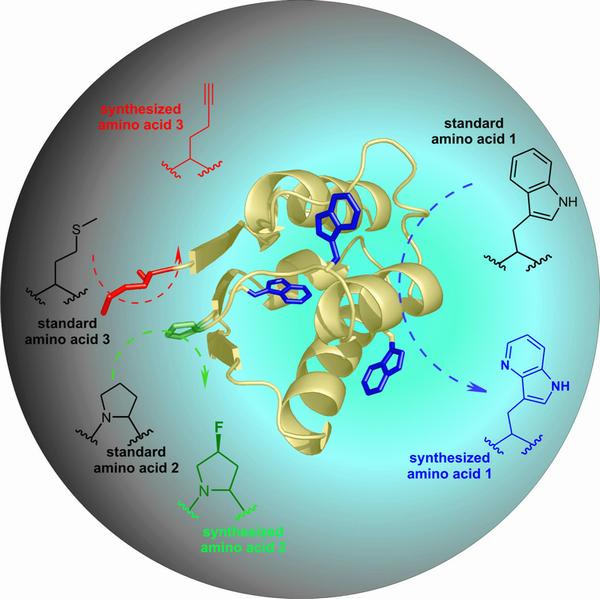
Proteins are the workhorses of our existence. These "helmsmen of the cell" are composed of amino acids, whose sequence is already defined by the heritable information in every living being and transport substances, convey messages and carry out vital processes in their role as molecular machines.
The translation of this information during the production of proteins (protein synthesis) is determined by the genetic code and 20 amino acids form the standard set of which proteins are built.