Arctic Tipping Points - #7: Can The Arctic Recover?
In
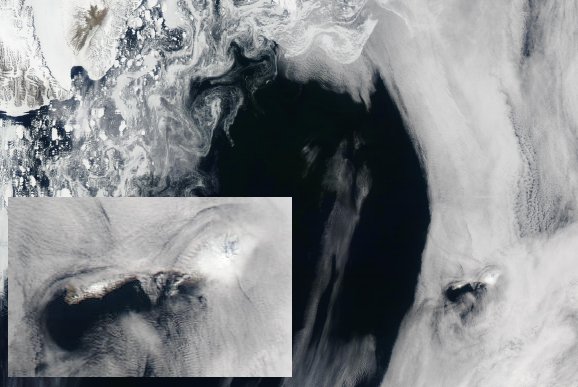
Arctic Tipping Points - #6: Are We There Yet? I attempted to show that there are multiple feedback mechanisms which are capable of causing a composite positive feedback effect in which Arctic sea ice once reduced beyond a limit will disperse very rapidly and will fail to recover.
Since I published that Article - April 29 2010 - I have investigated the matter further. Current satellite data and historical reports combine to suggest that this year's Arctic sea ice loss will be the greatest ever seen in human history.
When light is used to transmit information, modulated light pulses travel along optical fibers, which can become weaker due to optical attenuation in the fiber and so are refreshed in signal regeneration stations along the way, where the signals are amplified and filtered.
But when light itself, or more precisely its optical frequency, is the information, and when this information is to be transmitted with extreme precision, conventional amplification techniques reach their limits.
A neutrino has a mass, physics says, but it is elusive to figure out and extremely hard to measure – a neutrino is capable of passing through a light year (about six trillion miles) of lead without hitting a single atom.
J' Recuse!I must declare my interest right up front.
I am deeply concerned that we are leaving behind us a legacy of planet-wide pollution and despoilation for those who follow us as custodians of our planet.
I am not anti-oil. I do, however, strongly favor regulation of the oil industry on the lines of the aviation industry.
If the aviation regulators grounded all BritAv JingoJets after one such airliner lost its tail in midair, would anyone think it sane to seek a court injunction against that safety notice?
U.S. District Judge Martin Feldman should have recused himself, rather than make statements such as:
"If some drilling equipment parts are flawed, is it rational to say all
The big war in science during this decade has not been Republicans against human embryonic stem cell research or Democrats against agriculture, it has instead been open access publishing versus subscription peer-reviewed journals.
Open access publishing of science results, freely available to all, would clearly kill subscription-based peer-reviewed journals. Right now, those peer reviewed journals are terrifically profitable for multiple companies despite the fact that everyone is saying print is dead. These companies add value to researchers, they say, by having a higher impact than other companies that do less marketing, etc.
What's the best way to swim?
If "best" is the same as "tried and recommended by the majority of fish," then the answer is easy. Think of your basic sardine beating its tail back and forth propel itself forward, and you've got it. This undulatory swimming is used by aquatic animals from the size of a pencil eraser to the size of a house, and it is by far the dominant method of locomotion in the ocean (at macroscopic scales, at least).
But there is one whopping exception to the rule: squid, of course. Although they do have fins, and various species undulate these fins to various degrees, they are only a supplement to the real thrust: jet propulsion. The squid sucks water into its body, and squirts it out through a funnel.
Arctic Ice June 2010 - Solstice Update
This is an update to my articles
Arctic Ice June 2010 and
Arctic Ice June 2010 - Update, part of my ongoing series of articles about the Arctic.
The NSIDC ice extent graph continues to show ice extent well below the 2007 levels.

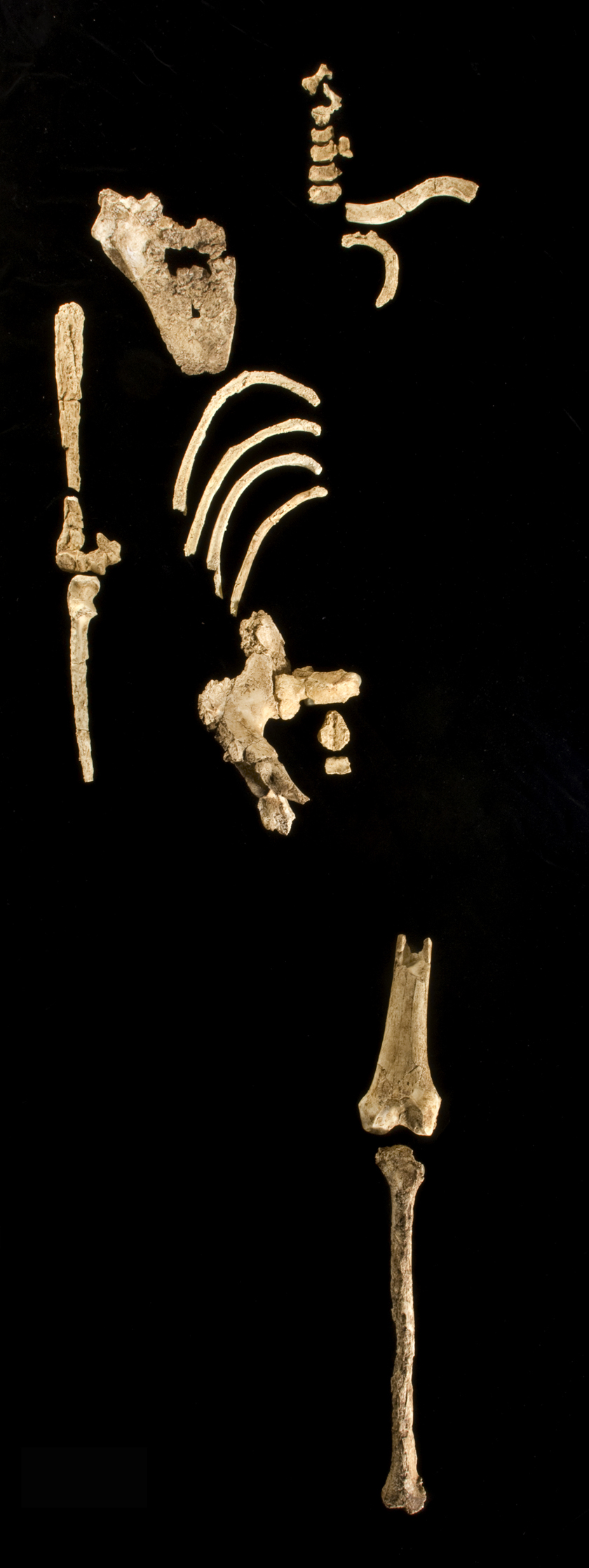
Meet Lucy's 'great-grandfather'. Scientists from The Cleveland Museum of Natural History, Kent State University, Case Western Reserve University, Addis Ababa University and Berkeley Geochronology Center were part of an international team that discovered and analyzed a 3.6 million-year-old partial skeleton found in Ethiopia. They say the early hominid is 400,000 years older than the famous Lucy skeleton and that their research on this new specimen indicates that advanced human-like, upright walking occurred much earlier than previously thought.
The partial skeleton belongs to Lucy's species, Australopithecus afarensis. It was found in the Woranso-Mille area of Ethiopia's Afar region by a team led by first author Dr.
Wilson Tucker’s 1952 The Long Loud Silence is The Road of the 1950’s.
It’s a pure survival story, one about the complete deterioration of society into a vicious, gritty state of no-holds-barred struggle after a nuclear and biological holocaust. Unlike many other post-apocalyptic novelists, Tucker doesn’t envision much society left at all after total destruction: there is no reversion to a pseudo-Native American tribal state, to early rural 19th century agrarianism, to feudalism, to a theocratic dystopia. A total Hobbesian (or Darwinian) state of nature prevails for decades after the catastrophe. Society does not rebuild.