Tangential Science: it's not necessarily science, but it's still funny.
1. Drought is a serious problem in many parts of the world, going well beyond our California 'limit the days you water your lawn' irritation and well into 'We are going to die without rain' territory.
It's boom or bust in parts of India, where they actually look forward to monsoons - and sometimes they can't happen soon enough. But what if the water gods are fickle? Some crafty leaders in male-dominated Bihar think the solution is
to have young girls walk around naked.
In January this year, I finally found some like me out there! I was contacted. By a fellow space enthusiast. Throughout my childhood, I rarely met anyone who shared my curiosity for space and astronomy - and was agitated about it. Then, I finally found one. It was my classmates elder brother who had heard about my space related pursuits through grapevine. He ran his own space advocacy initiative and was looking forward to a consortium of space enthusiasts to observe the International Year of Astronomy.
Clusters, the largest structures in the Universe, are comprised of many galaxies, like the Milky Way. One mystery about clusters is why the gas in the centers of some are rapidly cooling and condensing but not forming into stars. Until recently, no model existed that successfully explained how this was possible.
A team of scientists say they have discovered a method for attaching molecules to semiconducting silicon that may help manufacturers end-run the current limits of Moore's Law in the quest to make microprocessors smaller and more powerful. Moore's Law is named after Intel co-founder Gordon Moore who said in 1965 that the number of transistors that can be placed on an integrated circuit doubles about every two years. But even Moore said the law cannot be sustained indefinitely. Or can it?
Some researchers, and certainly some new businesses, are counting on the fact that the brain imaging technique known as functional magnetic resonance imaging (fMRI) can reveal thoughts and determine if someone is lying or telling the truth - and maybe even their hidden deep desires.
Is there something to it? It depends.
Neuroscientists at UCLA and Rutgers University say they have evidence that fMRI can be used in certain circumstances to determine what a person is thinking but their research suggests that highly accurate "mind reading" using fMRI is still far from reality.
There's a coevolutionary struggle between a New Zealand snail and its worm parasite but it ends up being sexually advantageous for the snail, whose females favor asexual reproduction in the absence of parasites, according to scientists who say their report represents direct experimental evidence for the "Red Queen Hypothesis" of sex, suggesting sexual reproduction allows host species to avoid infection by their coevolving parasites by producing genetically variable offspring.
They say their Current Biology report also supports the "Geographic Mosaic Theory," meaning natural selection need not act uniformly on all members of a species, but can be intense in pockets of a population (hot spots) and absent elsewhere (cold spots).
A group called the Blind Driver Challenge team in Virginia Tech's Robotics and Mechanisms Laboratory has retrofitted a four-wheel dirt buggy with laser range finders, an instant voice command interface and a host of other cutting-edge technologies.
Does it sound like Knight Rider's KITT or something out of a Terminator movie? Only if those drivers are blind.
It's still in the early testing stage but the National Federation of the Blind considers the vehicle a major breakthrough for independent living of the visually impaired.
In Toledo, Ohio on June 26, 1914 -- a star was born. He was named Lyman Strong Spitzer, Jr. for good measure. An asteroid, a space telescope, and a building in the Princeton Plasma Physics Laboratory (PPPL) bear his name today. His theoretical and applied research contributions shaped three fields of science, namely, interstellar matter, the dynamics of star clusters, and the physics of plasmas.
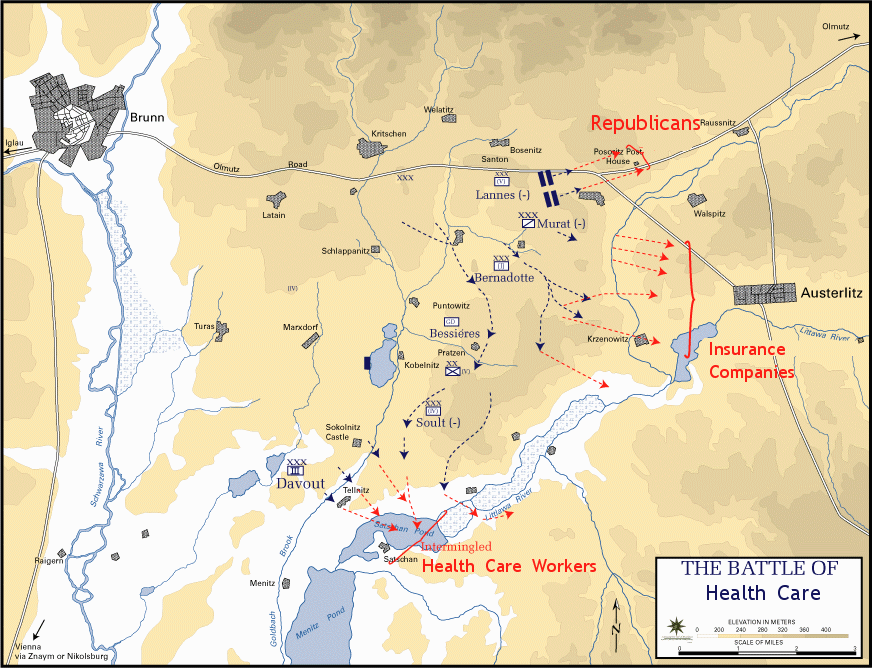
CNN is trying to look like they are impartial by simultaneously only having talking heads who stress how vital government health care is while then proclaiming it Obama's "Waterloo."
If you aren't familiar with military history, or only know the colloquial term, here is a brief summary: Napoleon was a brilliant General during the disastrous French Revolution who made himself Emperor after a coup d'etat. He battered around the continental powers, reinstituted slavery, implemented French modern civil law and tried to invent a new week. Oh, and sold us Louisiana.
One of my recently developed rules: avoid the last minute rush. I don't run to catch the Metro train, and I don't scramble to put my data into some sort of coherent form when I have to give a lab meeting presentation on short notice.
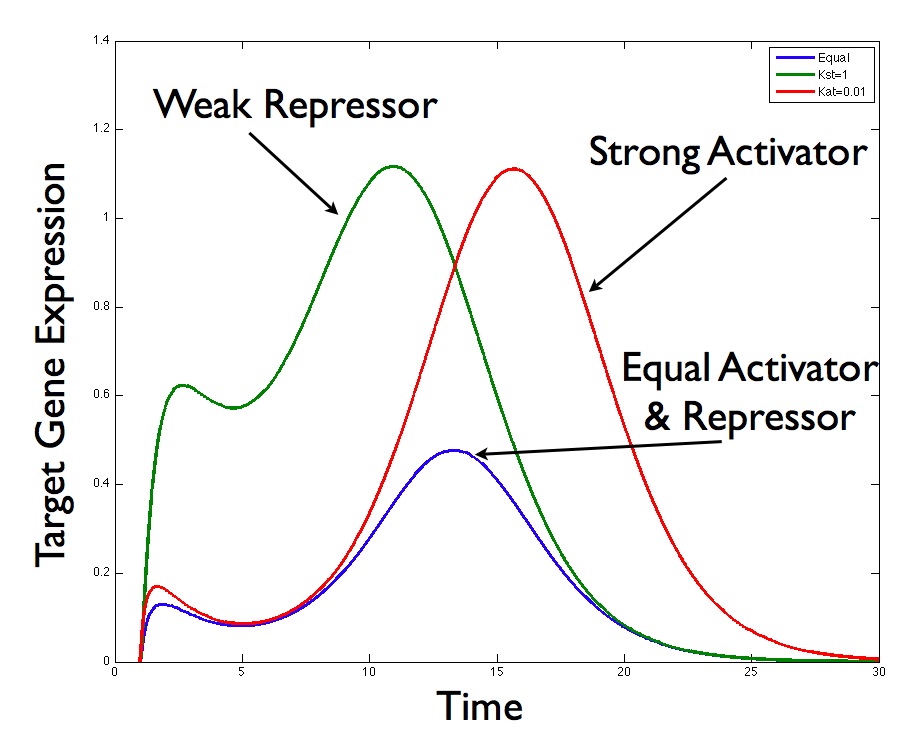
So I'm not scrambling for my lab meeting talk tomorrow. My plan is, in the absence of any solid results to present, to go visionary, saying whatever I want to, without having to back it up with supporting data. And in the spirit of scientific openness, I'm providing a sneak preview of what may tomorrow turn out to be a terrific mess of a lab meeting talk.