Today's tale looks at whether ancient Sufi mystics predicted the current climate for science in the Western World. Some see science as an ivory tower pursuit, others as a way of achieving technological advancement, still others as a path to personal glory. But some of us see more.
A quick look at the top ScientificBlogging stories this week gives us titles seemingly ripped from summer blockbusters and beach reading. Shark Week, Chemistry of Love, Moral Lessons, the Indiana Jones Method of Science, Super Sexy.
A low-cost generator could be a boon for people in the world’s poorest countries. The Score project, led by The University of Nottingham, is developing a biomass-burning cooking stove which also converts heat into acoustic energy and then into electricity, all in one unit.
The £2 million Score project (Stove for Cooking, Refrigeration and Electricity) has brought together experts from across the world to develop the biomass-powered generator. An affordable, versatile domestic appliance like Score aims to address the energy needs of rural communities in Africa and Asia, where access to power is extremely limited.
In the 150 years since the publication of Charles Darwin's 'Origin of Species', despite consistent patterns of biodiversity identified over space, time, organism type and geographical region, there still remain two views of the process of 'speciation', the evolutionary process by which new biological species arise.
The first requires a physical barrier; a glacier, mountain or body of water that separates organisms, enabling groups to diverge until they become separate species. In the second scenario, an environment favors specific characteristics within a species, which encourages divergence as members fill different roles in an ecosystem.
Yesterday I posted a short article whose main purpose was to show a figure I had received from Sven Heinemeyer, a phenomenologist who specializes in the study of Minimal Supersymmetric extensions of the Standard Model (MSSM).
Besides predicting a mirror copy of Standard Model (SM) particles, MSSM models are characterized by containing not just one, but five distinct Higgs bosons; over much of the space of possible parameters of these theories, one of the five Higgs bosons is quite similar to the one and only SM Higgs, so that one can discuss the SM Higgs and the lightest neutral scalar of the MSSM together without generating confusion.
Science is occasionally a life-threatening career choice, particularly for those scientists who risk shipwreck, starvation, disease, and large, arctic carnivores to unlock the mysteries of the life's past.
Sean Carroll, in Remarkable Creatures, looks at how the drive to explore, the itch for discovery that pushed Columbus and Magellan on their great voyages, has worked its magic on those great scientists who have pursued scientific adventures to the most extreme corners of the earth.
Games2Win, an online game company, today announced the launch of Apollo 11: Mission to the Moon, which recreates the historic mission to the moon, without the mind-numbing terror of knowing you were sitting on top of a mess o' solid rocket fuel protected by nothing except parts contracted out to the lowest bidders. The game’s release is schedule to coincide with, and commemorate, the 40th anniversary of Apollo 11’s success on July 20, 1969.
"Apollo 11: Mission to the Moon" is what the vendor calls a "free-to-play Flash game" and you can find at http://www.games2win.com/ap1. The game play mimics pretty small parts of the first manned mission to land on the moon (without the mind-numbing terror of knowing you were sitting on top of a mess o' ...
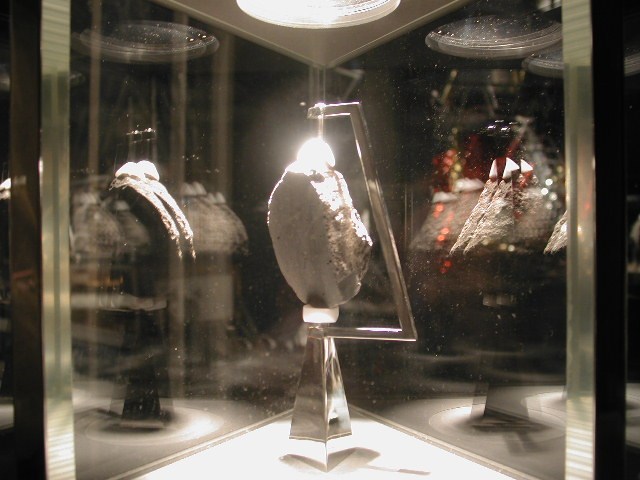
A lunar geochemist at Washington University in St. Louis says that there are still many answers to be found in moon rocks brought back by the Apollo 11 astronauts nearly 40 years ago. And he's been studying them since then, so he should know.
Randy L. Korotev, Ph.D., a research professor in the Department of Earth and Planetary Sciences in Arts&Sciences, has studied lunar samples and their chemical compositions since he was an undergraduate at the University of Wisconsin and "was in the right place at the right time" in 1969 to be a part of a team to study some of the first lunar samples.
The Voynich Manuscript : An Enigma, Part #2
It is nearly 100 years since the Voynich manuscript arrived in America. In that time, not one person or group has managed to decode even a single word of it.
I suggest that decryption of any document requires as much prior knowledge as possible about the physical document, its origin and purpose. For that reason, I am compiling a background to the Voynich manuscript before any discussion of possible encryption schemes.
Synthetic Genomics Inc. (SGI), a privately held company co-founded by Craig Ventner in the business of applying genomic-driven commercial solutions to challenges like energy and the environment, announced a multi-year research and development agreement with ExxonMobil Research and Engineering Company (EMRE) to develop next generation biofuels using photosynthetic algae.
SGI will receive milestone payments for achievements in developing biofuel products. Total funding for SGI in research and development activities and milestone payments could amount to more than US$300 million with the potential for additional income from licensing to third parties.
Scientists in Atlantic Canada say they have found a gene that may play a role in skin aging. Researchers were investigating the genetic cause of a rare disorder known as cutis laxa type 2 (CL2), which causes skin on the hands, feet and face to be loose and older looking, as well as growth and developmental delays including effects on the brain. In the process, researchers found some interesting correlations with the synthesis of proline, a chemical associated with skin and joint health.
Several maritime Canadian families with CL2 were identified by clinicians at the IWK Health Centre’s Maritime Medical Genetics service.