Stirling Energy Systems (SES) and Tessera Solar recently unveiled four newly designed solar power collection dishes at Sandia National Laboratories’ National Solar Thermal Test Facility (NSTTF).
Sandia’s concentrating solar-thermal power (CSP) team has been working closely with SES over the past five years to improve the system design and operation.
I’ve been prompted to write this because of the misconceptions about the concept of the “Selfish Gene” in Evolutionary theory – evident in both blog replies on this site and more widely.
I get really irritated when I see writers in the social sciences characterise evolutionary biology as somehow being based on the same assumptions as rational choice theory. Here is the first paragraph from a book chapter I saw today which motivated me to start this blog and write this entry...
A new public document has been made available on the CMS public web page yesterday morning. It reports on a study of the reach of the CMS detector, with data collectable in 2010, for a signal of large extra dimensions, using the very distinctive signature of a high-energy jet recoiling against -well, recoiling against nothing; or better, something which left our world and entered into another dimension of space.
In light of the popularity of
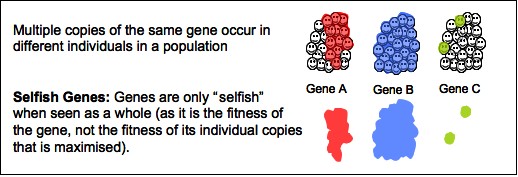
this piece, here are some things to keep in mind about 'selfish' genes:
1. The basic issue is about the unit of selection - does natural selection choose allele, individuals, populations, or species? The answer, like most things in biology, is yes, as Douglas Futuyma puts it in his standard textbook on evolution (p. 354. 3rd edition):
If, then, our concept of levels of selection includes causality, natural selection can act at the level of the gene (as in meiotic drive), organism, and at least in principle, population and species.
Stars and galaxies formed back in the early days of the universe, some 13 billion years ago, were not nearly as massive as originally thought.
Population III stars were not only smaller than believed, they actually formed in binary systems, that is, pairs of stars that orbit a common center, say the results of a new simulation.
"For a long time the common wisdom was that these Population III stars formed alone," said Brian O'Shea, a Michigan State University assistant professor of physics and astronomy who did the research with two colleagues. "Researchers also have believed that these stars were incredibly massive – up to 300 times the size of our own sun. Unfortunately, the observations just didn't jibe with the simulations we created."
For a baseball pitcher, control is critical but shoulder strength remains vital to remaining healthy during a long season. A new study presented at the American Orthopaedic Society for Sports Medicine's (AOSSM) Annual Meeting in Keystone, Colorado, suggested that testing a pitcher's shoulder strength through a series of exercises during the preseason may help prevent serious injury during the season.
The study measured the preseason shoulder strength for all pitchers in a professional baseball organization over a five-year period (2001-2005). Over the course of the five-year period, 144 major and minor league baseball pitchers were analyzed using a specific protocol by a single athletic trainer.
The National Children's Study is an ideal opportunity to get valuable information about pregnant women's health, the most underrepresented population in clinical research, say ethicists at Duke University Medical Center, Johns Hopkins and Georgetown Universities.
The new national study aims to follow children from conception to adulthood.
Although the Institute of Medicine began recommending that pregnant women be included in clinical trials 15 years ago, pregnant women remain excluded from trials for many reasons, primarily ethical concerns raised in the balance between mothers, a consenting group, and babies who have no choice.
Researchers have developed an environmentally-friendly lubricating grease based on ricin oil and cellulose derivatives, according to the journal Green Chemistry. Bonus: the new formula does not include any of the contaminating components used to manufacture traditional industrial lubricants.
Lubricants used in industry are made from non-biodegradable components, such as synthetic oils or petroleum derivatives, and thickeners made with metallic soaps or polyurea derivatives (a family of synthetic polymers). These are currently the best performers, but they also imply more problems from an environmental perspective.
In an article that makes us want to review the "Studies you won't need to read" section, UC San Diego School of Medicine researchers examined HIV infection among male clients of female prostitutes - in Tijuana, of all places - and decided and found that over half of male clients had recently had other risky sexual behavior, like unprotected sex.
Unprotected sex with a tijuana prostitute is what poker players would call a 'tell' when it comes to risky behavior. They also reported a high prevalence of drug use.
The public looks up to scientists but scientists tend to look down on the public; and science journalism gets a lot of the blame. So say the findings of a new report by the Pew Research Center for the People&the Press which finds that overwhelming majorities of Americans believe that science has had a positive effect on society and that science has made life easier for most people. The public - even those skeptical of climate change and evolution - rates scientists highly and believes government investments in science pay off in the long term.