Squirrels are also facing an economic crisis. Apparently,
acorns are disappearing all over the country...or at least on the East Coast. I know some fellow turkey hunters on the East Coast have reported a very spotty acorn crop. Supposedly it's not just acorns, but hickory nuts as well. This is very bad news for woodland creatures. Acorns are a mainstay of their winter diet and are a valuable source of protein after the grasshoppers die in first fall frosts. No acorns or hickories means less food for squirrels, turkeys, etc. That in turn means less food for owls, coyotes, and so on. If this year really is worse than most in terms of acorns, it will be interesting to see how wildlife nu
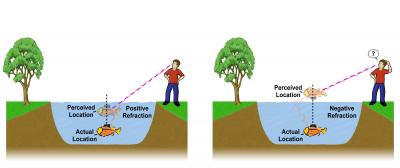
It's an idea that has pervaded a huge amount of science fiction and fantasy stories, from Star Trek to Harry Potter, and there are few of us that would deny a couple of hours with one - but is an invisibility cloak actually possible? Although the lightweight, flowing cloak of Harry Potter may be impossible in the near future, scientists are quickly creating and studying new metamaterials - materials with a negative index of refraction - that are paving the way to making invisibility a reality.
In developing a model to explain the motion of atoms in a magnetic field, scientists have overcome a decades-old obstacle to understanding a key component of magnetic resonance.
The new understanding may eventually lead to better control of magnetic resonance imaging (MRI) and higher resolution MRI diagnoses.
Collaborators at Ohio State University in Columbus and three institutions in France--the Centre National de la Recherche Scientifique, the Université d'Orléans, and the Université de Lyon--presented their findings in a paper published in the Journal of Chemical Physics.
A dual-headed dedicated gamma camera used during molecular breast imaging (MBI) can accurately detect small breast tumors less than 2 cm in size, according to a study performed at the Mayo Clinic in Rochester, MN.
One-hundred fifty patients who had suspicious lesions smaller than 2 cm in size were imaged using dual-head molecular breast imaging. “There were 128 cancers confirmed in 88 patients,” according to Carrie B. Hruska, MD, lead author of the study. “The sensitivity rate of dual-head MBI during the study was 90% (115/128)”, she said.
Are consumers under too much pressure to be healthy? Has the global financial crisis sidelined the promotion of sustainable food? And how much do consumers actually know or care about the subject?
A stunning discovery based on epigenetics (the inheritance of propensities acquired in the womb) reveals that consuming choline—a nutrient found in eggs and other foods—during pregnancy may significantly affect breast cancer outcomes for a mother's offspring. This finding by a team of biologists at Boston University is the first to link choline consumption during pregnancy to breast cancer. It also is the first to identify possible choline-related genetic changes that affect breast cancer survival rates.
"We've known for a long time that some agents taken by pregnant women, such as diethylstibesterol, have adverse consequences for their daughters," said Gerald Weissmann, M.D., Editor-in-Chief of The FASEB Journal. "But there's an upside.
A study published this month in Clinical Immunology, the official journal of the Clinical Immunology Society (CIS), describes a new method that facilitates the induction of a specific type of immune suppressive cells, called 'regulatory T cells' for therapeutic use. These immune suppressive cells show great potential for the treatment of autoimmune diseases and improving transplantation outcomes.
Wouldn't it be great to know if your three-year-old has the potential to be a soccer star or a top marathon runner? One genetic testing company is offering to tell you just that, so that all of you obsessive, controlling parents can get your toddlers in the proper training program right from the start.
I'm sure most of you are probably cringing at the thought of using genetics to decide what sort of future you're going to push your kid into before she can even brush her own teeth. But even if you are a parent who sees nothing wrong using a little prior information to get a head start on your kid's bright athletic career, DON'T DO IT! Leaving ethical arguments aside, there are good reasons to stay away from these tests: they are not good predictors of athletic performance.
Biologists at The University of Nottingham and University College Dublin have announced a major breakthrough in our understanding of the sex life of a microscopic fungus which is a major cause of death in immune deficient patients and also a cause of severe asthma.
The discovery of a sexual cycle in the fungal pathogen Aspergillus fumigatus is highly significant in understanding the biology and evolution of the species and will shed new light on its ability to adapt to new environments and its resistance to antifungal drugs. It is hoped the results of this research will lead to new ways of controlling this deadly disease and improved treatments for patients infected with it.
A super-efficient system that has the potential to power, heat and cool homes across the UK is being developed at Newcastle University.
It works by burning vegetable oil to power a generator and provide electricity for the home. The waste heat from this process is then used to provide heating and hot water and is also converted to cool a fridge.
At each step, the waste heat that is produced from engine gases and cooling is used elsewhere to recover the maximum amount of energy from the system.