




A study published in Journal of the American Water Resources Association states that the "Green Great Wall," a forest shelterbelt project in northern China running nearly parallel to the Great Wall, is likely to improve climatic and hydrological conditions in the area when completed. The project, which relies on afforestation (a process that changes land without dense tree cover into forest), could lead to an increase in precipitation by up to 20 percent and decrease the temperature in the area.
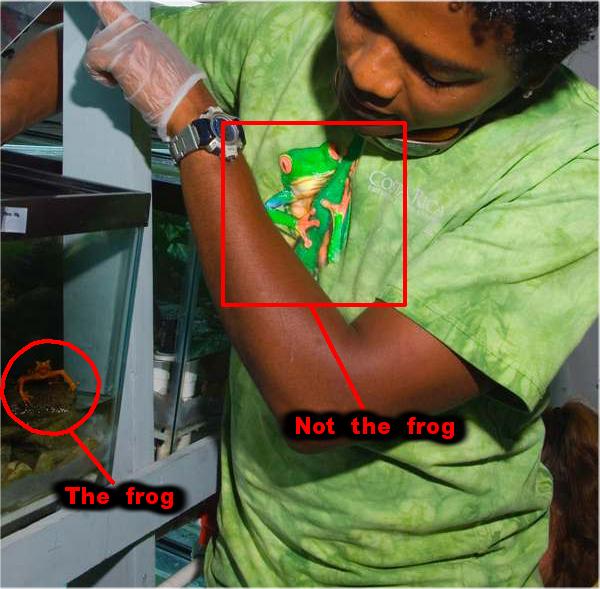
A new frog species has been discovered in Panama and will be announced in the December issue of Journal of Herpetology by a research team led by STRI former visiting scientist Joseph Mendelson, from Zoo Atlanta.

The amphibian, a type of tree frog with bright reddish- and green-colored skin that grows to a length of 122 mm was discovered by Edgardo Griffith while working with Mendelson in El Valle. Mendelson was head of the Amphibian Recovery Project in 2005 under the STRI umbrella. Today, Griffith is the director of the El Níspero zoo's Amphibian Conservation Center in the Valle de Anton, working with the Houston Zoo.

A study of people living with the devastating effects of multiple sclerosis (MS) has provided an idea of the economic cost of living with the incurable, life-long condition.   The independent research is one of the largest ever studies into the financial impact of MS and has revealed that the cost of being diagnosed with MS is on average nearly GBP17,000 per person.

Showing loved ones that you're thinking of them is still the main focus at Christmas time but are traditional cards becoming outmoded by technology?   Results of a survey published today conducted by Christmas video messaging site Christmasee.com shows that whilst cards remain popular, nearly one in four (23 per cent) of those surveyed intend to send fewer cards or no cards at all this Christmas.

As daily use of the internet becomes more commonplace, almost a quarter (24 per cent) of under 45's quizzed view sending Christmas cards as old fashioned and believe that there are more effective ways to share greetings.

Half of those cutting back on the number of cards they'll send this year attribute their decision to the current economic climate.

Bacteria that can cause serious heart disease in humans are being spread by rat fleas, sparking concern that the infections could become a bigger problem in humans. Research published in the December issue of the Journal of Medical Microbiology suggests that brown rats, the biggest and most common rats in Europe, may now be carrying the bacteria.

Since the early 1990s, more than 20 species of Bartonella bacteria have been discovered. They are considered to be emerging zoonotic pathogens, because they can cause serious illness in humans worldwide from heart disease to infection of the spleen and nervous system.

Bacteria that cause stomach ulcers and cancer could also be giving us bad breath, according to research published in the December issue of the Journal of Medical Microbiology. For the first time, scientists have found Helicobacter pylori living in the mouths of people who are not showing signs of stomach disease.

The mouth is home to over 600 different species of bacteria, some of which can cause disease. Helicobacter pylori has recently been shown to cause stomach ulcers and is also responsible for a large proportion of gastric cancers. Scientists estimate that between 20 and 80 % of people in the developed world and over 90 % of people in the developing world carry the bacterium.

New research says that we should be looking to the ground, not the sky, to see where climate change could have its most perilous impact on life on Earth.  Scientists at the University of Toronto Scarborough have published research findings in Nature Geoscience that says global warming actually changes the molecular structure of organic matter in soil.
Only people in the tobacco industry denial mindset realistically state that repeated exposure to sex and violence in the media does not lead to problems in children but television advocates can at least latch on to a study saying they may be the biggest but they aren't the only problem; a new study by Myeshia Price and Dr. Janet Hyde from the University of Wisconsin in the Journal of Youth and Adolescence says low self-esteem, poor relationships with parents, and low academic achievement are some of the other factors that may add up to young people having sex before the age of 15.
Drs. John Sij, Cristine Morgan and Paul DeLaune have studied nitrate levels in irrigation water from the Seymour Aquifer for the past three years, and have found nitrates can be as high as 40 parts per million. Though unacceptable for drinking, the water would benefit agricultural producers who use it for irrigation. 

This high concentration of nitrates is a concern because it exceeds the federal safe drinking water standards as the aquifer is used as a municipal water source for the communities of Vernon, Burkburnett and Electra, as well as some rural families, Sij said. 

A reconstruction of an extreme warm period shows the sensitivity of the climate system to changes in carbon dioxide (CO2) levels as well as the strong influence of ocean temperatures, heat transport from equatorial regions, and greenhouse gases on Earth's temperature.

The researchers say the new data allow for more accurate predictions of future climate and improved understanding of today's warming because past warm periods provide insight into climate change and are natural laboratories for understanding the global climate system.

Scientists from the Pliocene Research, Interpretation and Synoptic Mapping (PRISM) group, led by the U.S. Geological Survey, examined fossils from 3.3 to 3.0 million years ago, known as the mid-Pliocene warm period.


