Yesterday our department hosted
Peter and Rosemary Grant, who spoke about their 30+ years studying natural selection and finches in the Galapagos. (If you're interested in the book version of their work, check out Jonathan Weiner's Pulitzer Prize-winning
The Beak of the Finch.)
While the Grants give a great presentation, full of pictures the Galapagos finches in action, my first impression was that none of this was really groundbreaking. As the Grants mentioned multiple times in the talk, Darwin anticipated so much of what they observe in the Galapagos. In an age of molecular genetics, a long-term, non-molecular field study is bound to seem a little old fashioned, although the Grants have recently been taking DNA samples and incorporating the tools of molecular genetics into their work.
In the end, I came away from the talk satisfied. This work may not be conceptually groundbreaking, but I find it important for at least one reason: this is evolution in detail, in the wild.
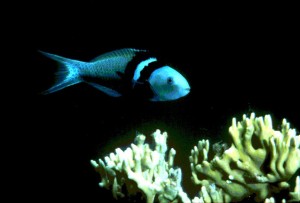
At a younger age I was completely enthralled with undersea life. Since high school biology, the difference between freshwater anatomy and marine physiology led me conduct some not so nice tests on goldfish. Hey, they were only 10 cents each, plus, I wanted to see if osmosis really worked differently with cells from saltwater fish. I couldn't just trust the teachers, after all. As I entered a marine biology course, I found marine life to be even more interesting, particularly due to their evolution.
What always interested me was an organism's ability to manipulate it's sex. Most reef fish have the ability to up and switch sex, but why do they? What is the notion behind this act, and does it propose an evolutionary benefit to the survival of it's species?
Women who are exposed to hairspray in the workplace during pregnancy have more than double the risk of having a son with the genital birth defect
hypospadias, according to a new study published today in the journal
Environmental Health Perspectives.
The study is the first to show a significant link between hairspray and hypospadias, one of the most common birth defects of the male genitalia, where the urinary opening is displaced to the underside of the penis. The causes of the condition are poorly understood.
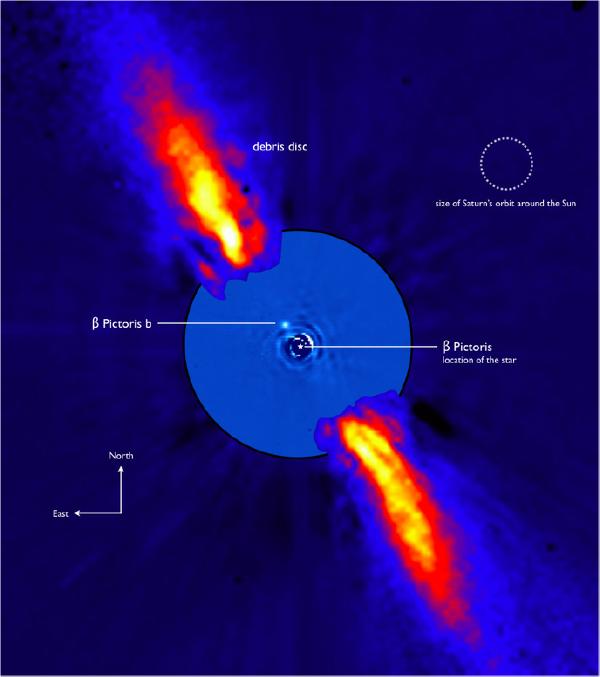
Beta Pictoris is one of the best-known examples of stars surrounded by a dusty 'debris' disc. Only 12 million years old, the 'baby star' Beta Pictoris is located about 70 light-years away towards the constellation Pictor (the Painter).
Debris discs are composed of dust resulting from collisions among larger bodies like planetary embryos or asteroids. They are a bigger version of the zodiacal dust in our Solar System.
When a flow reaches a certain speed, things get turbulent: The fluid or the gas no longer flows in an orderly fashion but whirls around wildly.
Turbulent flows in pipes are of importance for many every-day applications. What they all have in common is their appearance: They travel down the pipe bubbling and gurgling like a mountain stream. The flow only calms down when its speed is reduced. Scientists call this calmer state laminar. Crucial for the difference between laminar and turbulent flow are the inner forces that link the water molecule to each other. Only if the influence of these inner forces is smaller than the influence of the forces that accelerate the flow can turbulence appear.
Slow-moving ocean and river currents could be a new, reliable and affordable alternative energy source. A University of Michigan engineer has made a machine that works like a fish to turn potentially destructive vibrations in fluid flows into clean, renewable power.
The machine is called VIVACE. A paper on it is published in the current issue of the quarterly Journal of Offshore Mechanics and Arctic Engineering.
VIVACE is the first known device that could harness energy from most of the water currents around the globe because it works in flows moving slower than 2 knots (about 2 miles per hour.) Most of the Earth's currents are slower than 3 knots. Turbines and water mills need an average of 5 or 6 knots to operate efficiently.
Cordiality and mutually beneficial arrangements can be more important than hard-negotiated deals when it comes to cementing strong working relationships among supply chain partners, according to the Management Insights feature in the current issue of Management Science.
In their study, the authors observe that people's actions in economic transactions are motivated by more than incentives.
Incentives, say the authors, can cause people to be calculating rather than oriented toward a win-win. Behavior is also influenced emotionally by social preferences. In particular, people care about status ("how much do I have relative to you?") and reciprocity ("if you were nice to me, I want to reciprocate; if you were not nice, I want to retaliate").
It is said that timing is everything, and that certainly appears to be true for autumn infants. Children who are born four months before the height of cold and flu season have a greater risk of developing childhood asthma than children born at any other time of year, according to new research.
The study analyzed the birth and medical records of more than 95,000 children and their mothers in Tennessee to determine whether date of birth in relationship to the peak in winter respiratory viruses posed a higher risk for developing early childhood asthma. They found that while having clinically significant bronchiolitis at any age during infancy was associated with an increased risk of childhood asthma, for autumn babies, that risk was the greatest.
More than a decade ago, Jackie Speier, Jan Yanehiro, Michealene Critini Risley and Deborah Collins Stephens forged a relationship to meet in mutual support. These women credit the friendship and network that included other women of like mind, heart and tenacity as crucial to their subsequent personal and professional stability and triumph. In 2007, the four applied their insight and skills to write "This is not the life I ordered: 50 ways to keep your head above water when life keeps dragging you down," Conari Press.
Scientists writing in PLoS Pathogens have reported the discovery of a new species of Ebola virus, provisionally named Bundibugyo ebolavirus. The virus, which was responsible for a hemorrhagic fever outbreak in western Uganda in 2007, has been characterized by a team of researchers from the Centers for Disease Control and Prevention in Atlanta, Georgia the Uganda Virus Research Institute; the Uganda Ministry of Health; and Columbia University.