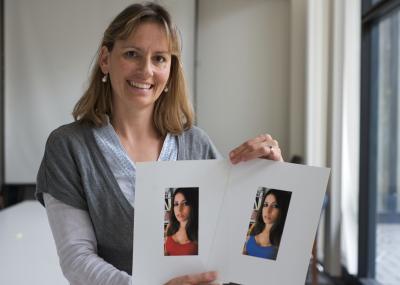
A study by two University of Rochester psychologists in the Journal of Personality and Social Psychology adds color, literally and figuratively, to the age-old question of what attracts men to women.
Through five psychological experiments, Andrew Elliot, professor of psychology, and Daniela Niesta, post-doctoral researcher, demonstrate that the color red makes men feel more amorous toward women. And men are unaware of the role the color plays in their attraction.
A novel cell division mechanism has been discovered in a microorganism that thrives in hot acid. The finding may also result in insights into key processes in human cells, and in a better understanding of the main evolutionary lineages of life on Earth.
The research group at the Department of Molecular Evolution at Uppsala University has identified a completely new cell division machinery. The discovery was made in Sulfolobus acidocaldarius, a microorganism belonging to the third domain of life, the Archaea, which originally was isolated from a hot spring in Yellowstone national park in Wyoming, USA. Because of the extreme conditions, in which the cells grow optimally in acid at 80ºC, the organism is of interest for a wide range of issues.
There's a presidential election happening, in case you didn't know. If you talk to the fringes who are most actively mobilized, they certainly feel the differences are key; if John McCain gets elected, Democrat zealots contend, abortions will be banned and Creationism will be taught in science classes. If Barack Obama is elected, Republican zealots contend, the tax rate will be raised to 100% and gay porn will be taught in science classes.
What's surprising is how the average voter believes one rich politician is more likely than another to enact substantial policy changes, on issues like health care and others, that rely more on Congress than they do the Executive branch of government.
Dublin City University (DCU) researchers, Neill Costigan, PhD student at DCU and funded by the Irish Research Council for Science, Engineering and Technology (IRCSET) and Prof Michael Scott member of the Science Foundation Ireland (SFI)-funded Shannon Institute of Cryptography, have successfully cracked a crypto system published thirty years ago by coding theorist Robert J McEliece.
The crack which was accomplished using resources at the SFI-Funded Irish Centre for High End Computing was announced at the Post-Quantum Cryptography conference in Cincinnati, USA on Saturday 18 October.
NASA's Mars Reconnaissance Orbiter has observed a new category of minerals spread across large regions of Mars. This discovery suggests that liquid water remained on the planet's surface a billion years later than scientists believed, and it played an important role in shaping the planet's surface and possibly hosting life.
Researchers examining data from the orbiter's Compact Reconnaissance Imaging Spectrometer for Mars have found evidence of hydrated silica, commonly known as opal. The hydrated, or water-containing, mineral deposits are telltale signs of where and when water was present on ancient Mars.
Last winter, the thickness of sea ice in large parts of the Arctic fell by nearly half a metre (19 per cent) compared with the average thickness of the previous five winters. This followed the dramatic 2007 summer low when Arctic ice extent dropped to its lowest level since records began.
Up until last winter, the thickness of Arctic sea ice showed a slow downward trend during the previous five winters, but after the summer 2007 record low extent, the thickness of the ice also nose-dived. What is concerning is that sea ice is not just receding but it is also thinning.
Children and adolescents who abuse alcohol or are sexually active are more likely to take methamphetamines (MA), also known as ‘meth’ or ‘speed’. Research published today in the open access journal BMC Pediatrics reveals the risk factors associated with MA use, in both low-risk children (those who don’t take drugs) and high-risk children (those who have taken other drugs or who have ever attended juvenile detention centres).
Applying electrical stimulation to the scalp and the underlying motor regions of the brain could make you more skilled at delicate tasks. Research published today in the open access journal BMC Neuroscience shows that a non-invasive brain-stimulation technique, transcranial direct current stimulation (tDCS), is able to improve the use of a person’s non-dominant hand.
Viruses are nasty opponents, as anyone who has followed the battles against influenza, SARs and HIV/AIDS can attest. They are diverse and in many cases evolve at rates that confound efforts to contain them. Anyone who has gotten a flu shot, and then came down with the flu a few months later because the “strain” of virus that the vaccine was not the same as the “strain” that they were infected with, knows just how fast viruses can evolve. In many cases, medical professional never really know which virus has caused the symptoms in their patients, and this complicates treatment and often leads to the misuse of antibiotics, which, of course, are never effective against viruses.
Since their discovery, stem cells have been hailed as the ultimate answer for crippling and incurable diseases such as Alzheimer’s, Parkinson’s and other conditions that leave vital organs like heart or nerves damaged beyond repair. Researchers from the University of Cambridge, under the leadership of Professor Austin Smith, Director of the Wellcome Trust Centre for Stem Cell Research at the University of Cambridge, recently published a paper(1) detailing a new technology that can transform adult stem cells into induced pluripotent stem cells (iPS). This technique is able to reliably reprogram adult cells into iPS rapidly and can forego the need to rely on mammalian embryos to generate pluripotent stem cells.