





Scientists from the Universities of Bath and Exeter have developed a rapid new way of checking for toxic genes in disease-causing bacteria which infect insects and humans. Their findings could in the future lead to new vaccines and anti-bacterial drugs.

They studied a bacterium called Photorhabdus asymbiotica, which normally infects and kills insects, but which can also cause an unpleasant infection in humans.

By testing groups of genes from the bacteria against three types of invertebrates (insects, worms and amoebae) and mammalian cells, the scientists were able to identify toxins and other molecules, called virulence factors, made by the bacteria that allow it to infect each type of organism.

Sleep in man is divided in two main phases : non-REM sleep, which occupies most of our early sleep night, and REM sleep, during which our dreams prevail. Non-REM sleep is usually considered as a compensatory ‘resting’ state for the brain, following the intense waking brain activity. Indeed, previous brain imaging studies showed that the brain was less active during periods of non-REM sleep as compared to periods of wakefulness.

Although not rejecting this concept, researchers from the Cyclotron Research Centre of the University of Liège in Belgium and from the Department of Neurology of Liege University Hospital demonstrate that, even during its deepest stages (also called ‘slow-wave-sleep’), non-REM sleep should not be viewed as a stage of constant and continuous brain activity decrease, but is also characterized by transient and recurrent activity increases in specific brain areas.

Do females intrinsically have less ability than males to excel in mathematics at the very highest level? That used to be the conventional wisdom. But that has changed in the last few years and more gender equality in math has been the result - but we are still losing too many potential mathematicians, according to "Cross-Cultural Analysis of Students with Exceptional Talent in Mathematical Problem Solving," appearing in the November 2008 issue of the Notices of the American Mathematical Society.

The study brings together decades of data from several extremely high-level mathematics competitions for young people. These data show that there exist many females with profound intrinsic ability in mathematics. What is more, whether this ability is identified and nurtured is highly dependent on socio-cultural, educational, or other environmental factors. In the United States, these factors keep many boys as well as most girls from developing their mathematical talents to the fullest.

Pregnancy and motherhood may make us all go a little gooey, but it's not turning mums' brains into mush, according to mental health researchers at The Australian National University.

The study – conducted by the Centre for Mental Health Research (CMHR) at ANU – suggests that despite fears mothers may have that pregnancy affects their cognitive functions, there is no evidence to suggest that is true. The findings have been released as part of Mental Health Week.

Feeling down? Wondering how to cheer up? Well perhaps all you have to do is sing a song. Hey, it works for birds.


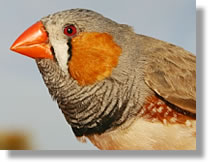
Researchers at the RIKEN Brain Science Institute in Japan have recently uncovered a breakthrough in animal behavior. In their recent study, they concluded that singing by male birds to attract females stimulates reward centers in their brains, reinforcing their behavior. In essence, singing for mates makes male birds really happy.

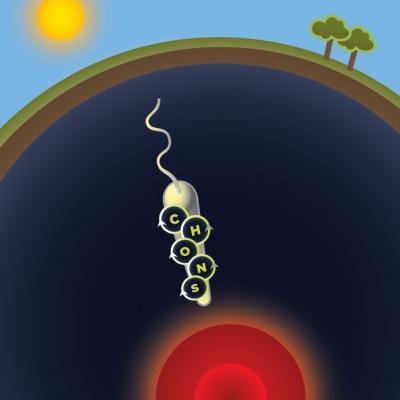
The first ecosystem ever found having only a single biological species has been discovered 2.8 kilometers (1.74 miles) beneath the surface of the earth in the Mponeng gold mine near Johannesburg, South Africa.

There the rod-shaped bacterium Desulforudis audaxviator exists in complete isolation, total darkness, a lack of oxygen, and 60-degree-Celsius heat (140 degrees Fahrenheit).

D. audaxviator survives in a habitat where it gets its energy not from the sun but from hydrogen and sulfate produced by the radioactive decay of uranium. Living alone, D. audaxviator must build its organic molecules by itself out of water, inorganic carbon, and nitrogen from ammonia in the surrounding rocks and fluid. During its long journey to the extreme depths, evolution has equipped the versatile spelunker with genes – many of them shared with archaea, members of a separate domain of life unrelated to bacteria – that allow it to cope with a range of different conditions, including the ability to fix nitrogen directly from elemental nitrogen in the environment.

Biomimetics is the application of biological methods and systems found in nature that could be used to design engineering systems and modern technology. Proponents of bionic technology believe that the transfer of technology between life forms and synthetic constructs is attractive because evolutionary pressure typically forces living organisms to become highly optimized and efficient. Therefore, they contend, designing engineering methods or tools that mimic such biological functions could be extremely efficient.

Examples of biomimetics in engineering include the hulls of boats imitating the thick skin of dolphins, as well as sonar, radar and medical imaging imitating the echolocation of bats. (Echolation involes emitting sound waves and listening to the echo in order to locate objects or to navigate).

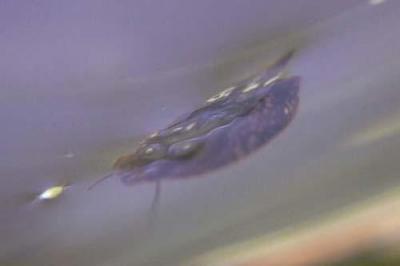
Eric Lauga, an assistant professor of mechanical and aerospace engineering at the Jacobs School of Engineering, recently published a paper in the journal Physics of Fluid called "Crawling Beneath the Free Surface: Water Snail Locomotion," that explains how and why water snails can drag themselves across a fluid surface that they can't even grip.

Scientists have used a technique originally developed for economic study, Granger causality, to become the first to overcome a significant challenge in brain research: determining the flow of information from one part of the brain to another.

For years, scientists have used scanners to identify the brain regions involved in particular mental tasks. But they cannot get that data fast enough to trace the flow of information from one area of the brain to another.

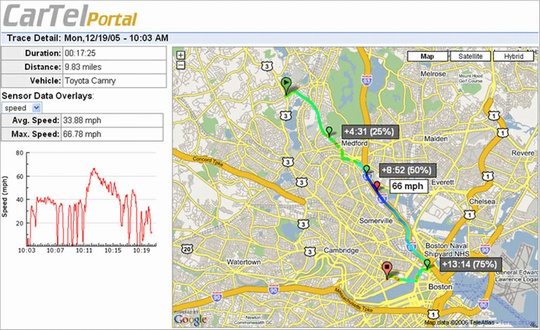
ozens of cars in the Boston area are testing the latest generation of an MIT mobile-sensor network for traffic analysis that could help drivers cut their commuting time, alert them to potential engine problems and more.

In the CarTel project, Professor Hari Balakrishnan and Associate Professor Samuel Madden of MIT's Department of Electrical Engineering and Computer Science use automobiles to monitor their environment by sending data from an onboard computer — which is about the size of a cell phone — to a web server where the data can be visualized and browsed. They do so via pre-existing WiFi networks passed during a trip.

