







Sunnybrook researcher Dr. Donald Redelmeier and Stanford University statistician Robert Tibshirani have found an increased risk of fatal motor vehicle crashes on United States (US) presidential election days.

US presidential elections have large effects on public health by influencing policy, the economy, and military action. "Whether the US presidential electoral process has a direct effect on public health had never been tested despite the endless media commentary and the 1 billion dollars spent on this year's election alone," says Dr. Donald Redelmeier.

It's not what you take but the way that you take it that can produce different results in women who take hormone replacement therapy (HRT), according to new research on the association between HRT and heart attacks, published the European Heart Journal [1] today.

The study is the largest to look at the effects of HRT since the Women's Health Initiative trial was stopped early after finding that HRT increased the risk of women developing a range of conditions including breast cancer and thromboembolism.

The research is an observational study of 698,098 healthy Danish women, aged 51-69, who were followed between 1995-2001. It has found that overall there was no increased risk of heart attacks in current users of HRT compared to women who had never taken it.

The detailed study, called the ACS Nearby Galaxy Survey Treasury (ANGST) program, explored a region called the Local Volume, where galaxy distances range from 6.5 million light-years to 13 million light-years from Earth.

A typical galaxy contains billions of stars but looks smooth when viewed through a conventional telescope because the stars appear blurred together. In contrast, the galaxies observed in this new survey are close enough to Earth that the sharp view provided by Hubble's Advanced Camera for Surveys and Wide Field Planetary Camera 2 can resolve the brightness and colour of some individual stars. This allows scientists to determine the history of star formation within a galaxy and tease out subtle features in a galaxy's shape.

Researchers have identified two new genes – and confirmed the role of a third gene – associated with increased risk of higher levels of uric acid in the blood, which can lead to gout, a common, painful form of arthritis. Combined, the three genetic variations were associated with up to a 40-fold increased risk in developing gout. The findings suggest that genetic testing could one day be used to identify individuals at risk for gout before symptoms develop, as well as determine who might benefit from medications to prevent the development of gout.

The genes were identified using data from two large genome-wide association studies – genetic variations of nearly 7,700 participants from NHLBI's Framingham Heart Study SHARe (SNP Health Association Resource) and more than 4,100 participants in NWO's Rotterdam Study. Researchers then replicated their finding using data from nearly 14,900 participants in NHLBI's Atherosclerosis Risk in Communities Study (ARIC).

The Captain can't freeze smelly fish that's past its best - and Icelandic scientists can now help him out by detecting the levels of stench-making bacteria faster than ever before.

The research in the Royal Society of Chemistry's Journal of Environmental Monitoring reports a new method to detect bacteria that break down dead fish and produce the distasteful smell of rotting fish. It opens the door to a standard of quality control even higher and speedier than the finely-tuned nose of the bushy-bearded Birdseye.

Using a technique based on the polymerase chain reaction (PCR), Eyjófur Reynisson and colleagues from Matis-Icelandic Food Research, Reykjavik, can assess the levels of Pseudomonas bacteria in fish in just five hours. This is four times faster than the current quickest method, which involves traditional cultivation of the bacteria Pseudomonas, the root cause of stinking fish.

There's a lot of truth in the old proverb "experience is the best teacher," and apparently it even applies to 10-month-old infants.

Researchers have found that infants who had an opportunity to use a plastic cane to get an out-of-reach toy were better able to understand the goal of another person's use of a similar tool than were infants who had previously only watched an adult use a cane to retrieve a toy.

According to findings from the October issue of the American Sociological Review, money does matter in education, but not in a way lobbyists want you to believe.

The research, which looked at the mathematical literacy scores of thousands of 15-year-old immigrants to 13 Western nations from 35 different native countries, indicates that economic development and political conditions in an immigrant's home country impact the child's academic success in his or her destination country.

Despite claims that education quality is solely a funding issue, the results say that immigrant children from countries with lower levels of economic development have better scholastic performance than comparable children who emigrate from countries with higher levels of economic development.

With one of the most aggressive submarine cable builds in the world now complete, the first phase of the Trans-Pacific Express submarine cable system directly connecting Mainland China, the United States, South Korea and Taiwan is ready for service. The 18,000 kilometer (more than 11,000 mile) fiber-optic undersea cable will play a significant role in driving new development for international telecommunications in the Asia-Pacific region.

Originally announced as a 5.12 terabit system in December 2006, the cable system has increased in capacity, and when fully deployed when phase two is completed, TPE will be a 6 terabit submarine cable system.

The six international telecommunications carriers initially investing in the Trans-Pacific Express Submarine Cable Consortium -- China NetCom, China Telecom, China Unicom, Chunghwa Telecom, Korea Telecom and Verizon Business -- knew a monumental task was ahead when they set out to build and make ready for service within two years the most advanced submarine cable in the Pacific Ocean.

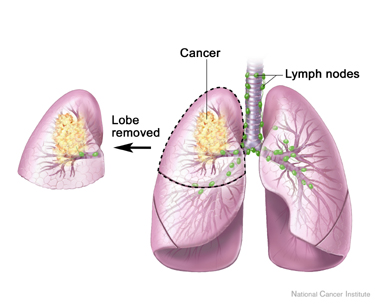
A new method of treatment could mean a dramatic difference in the way we look at and treat lung cancer. Developed over the past decade, a team of researchers at Allegheny General Hospital (AGH) in Pittsburgh has developed a new technique using a mesh of radioactive 'seeds' that is generating significant results.


According to the American Cancer Society (ACS) lung cancer is the leading cause of cancer deaths for both men and women. Deaths from lung cancer exceed those from breast, prostate and colon cancers combined. In 2008 the ACS estimates 162,000 lung cancer deaths in the United States. Currently, after a diagnosis of lung cancer only about 40 percent of people remain alive after the first year.

The U.S. House of Representative’s rejection of the Troubled Assets Relief Program, the proposed $700 billion Wall Street bailout, was a prudent decision, say two University of Arkansas researchers who are closely monitoring the U.S. financial crisis.

“The necessity of passing this particular bill was unclear,” said Tim Yeager, associate professor of finance in the Sam M. Walton College of Business and former economist at the Federal Reserve Bank of St. Louis. “Instead of purchasing mortgages directly at unknown prices, the government would be better off purchasing preferred shares of large financial institutions in crisis. If Wall Street lending truly freezes up over the next several days or months, this bill or another one can be passed by Congress to help alleviate the crisis. So at this point, the rejection of the Wall Street bailout bill is a good thing.”

