







The skeleton of a man discovered by archaeologists in a shallow grave on a construction site at the University of York could be one of one of Britain’s earliest victims of tuberculosis. He was interred in a shallow scoop in a flexed position, on his right side. Radiocarbon dating suggests that he died in the fourth century.

He was aged 26-35 years, suffered from iron deficiency anemia during childhood and was shorter than the average Roman male at 5 feet 4 inches.

Detailed analysis of the skeleton by Malin Holst, of York Osteoarchaeology Ltd, revealed that a likely cause of death was tuberculosis which affected the man’s spine and pelvis. She says that it is possible that he contracted the disease in childhood from infected meat or milk or the infection could have been inhaled into the lungs. The disease then lay dormant until adulthood when the secondary phase took its toll.

Fannie Mae and Freddie Mac, Bear Stearns, Lehman Brothers: As the dominoes of the financial sector continue to fall at an alarming rate and the Federal Reserve attempts to forestall a systemic meltdown of the domestic financial network, University of Arkansas economists find that a network approach to the study of financial “contagion” – the transmission and impact of financial crises – may be applied to understand the current turmoil in the U.S. banking sector and the need for a systemwide response by the Fed.

A new study by Raja Kali and Javier Reyes, economics professors in the Sam M. Walton College of Business at the University of Arkansas, reveals that integration in the global financial network is a double-edged sword. On one hand, being well connected to the network can make a country more vulnerable to systemic shocks. However, this same connectedness also is associated with an increased ability to dissipate economic shocks to the system. Kali and Reyes reached these conclusions by studying how international financial crises travel though the network of global trading relationships.

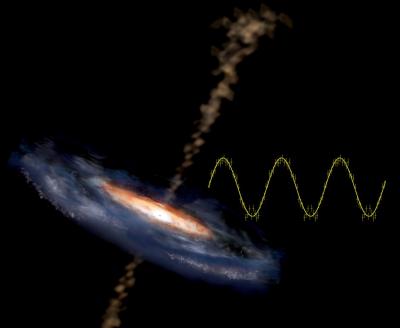
A group of scientists from Durham University say they have found the "missing link" between small and super-massive black holes. The researchers have discovered that a strong X-ray pulse is emitting from a giant black hole in a galaxy 500 million light years from Earth.

The pulse has been created by gas being sucked by gravity on to the black hole at the centre of the REJ1034+396 galaxy.

X-ray pulses are common among smaller black holes, but the Durham research is the first to identify this activity in a super-massive black hole. Most galaxies, including the Milky Way, are believed to contain super-massive black holes at their centers.

St. Jude Medical today announced the first patient implant of an Eon Mini, what they are billing as 'the world’s smallest, longest-lasting, rechargeable neurostimulator' to treat chronic pain of the trunk or limbs and pain from failed back surgery.

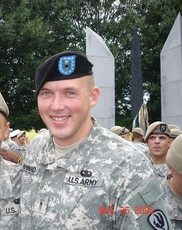
Adam Hammond, the 26-year-old patient, was implanted with the Eon Mini neurostimulator which is slightly larger than a U.S. silver dollar. Similar in function and appearance to a cardiac pacemaker, the neurostimulator delivers mild electrical pulses to the spinal cord, which interrupt or mask the pain signals’ transmission to the brain.

Hammond is a former member of the U.S. Army “Golden Knights” Parachute Team. Hammond was skydiving while on leave in 2006 when his parachute did not deploy correctly. He hit the ground in excess of 45 miles an hour.

Scientists from IBM and the Genome Institute of Singapore (GIS) say their report in Nature shows that microRNAs, those small molecules that are an important regulatory component in the machinery of living cells, have roles that go well beyond what was previously thought.

The work is expected to provide new insights on stem cell differentiation as well as on the role of microRNAs in cell process regulation and the onset of cancer, neurodegenerative disorders, diabetes and other diseases. The research is also expected to suggest future avenues for novel diagnostics and the development of therapeutics.

Plants and soils are 'sponges' for atmospheric carbon dioxide but an abnormally warm year can suppress the amount of carbon dioxide soaked up by some grassland ecosystems for up to two years, say the researchers behind a four-year study of sealed, 12-ton containerized grassland plots at DRI, the nonprofit research campus of the Nevada System of Higher Education.

The plants and soils in ecosystems help modulate the amount of carbon dioxide (CO2) in the atmosphere. Plants need CO2 to survive, and they absorb most CO2 during spring and summer growing seasons, storing the carbon in their leaves, stems and roots. This stored carbon returns to the soil when plants die, and it is released back into the atmosphere when soil bacteria feed on the dead plants and release CO2.

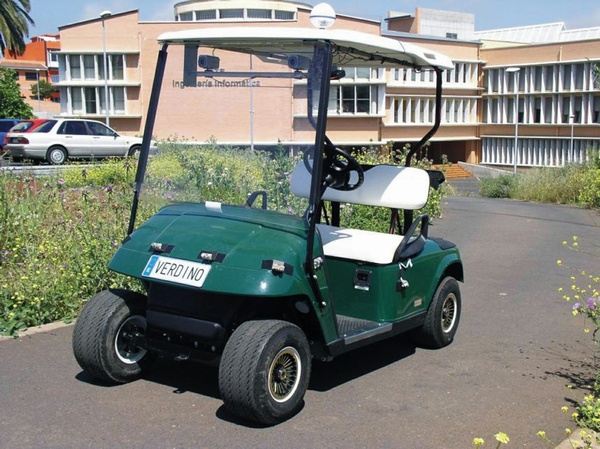
Nothing would make historic sites more fun to visit than a golf cart that drives itself, navigates around obstacles and lets you concentrate on enjoying the scenery.

If the 'Verdino' takes off, you just may have it. A team of engineers from the University of La Laguna (ULL) in the Canary Islands designed the Verdino and have demonstrated it as a self-steering vehicle that can sense the road surface using a technique called Ant Colony Optimization (ACO), based on the behavior used by ants to find the shortest way between their ant hill and sources of food.

The study’s lead author, Rafael Arnay, from the ULL’s Department of Systems and Automatic Engineering and Computer Architecture and Technology, say that the ACO algorithms are used to resolve “problems of combinatory optimization” and were inspired directly by ants.

In sports, the old saying goes that you can fire a coach but you can't fire the whole team. This doesn't mean the coach has all the blame but you still do what you can do. Sometimes a coach with the wrong style for the players is clearly a wrong fit but most of the time the coach is a scapegoat, according to a new study.

Bringing in a new coach rarely solves the problems, regardless of when it is done, according to a study from Mid Sweden University about hiring and firing coaches in the Swedish Elite Series ice-hockey league during the period 1975/76-2005/06. Despite this fact, coaches are nevertheless very publicly fired. The study shows that it is often a mistake to just replace the coach.

Muscle weighs more than fat and that's why it's sometimes the case where you can maintain the same weight but end up a lot less healthy. In the elderly, this effect becomes even more pronounced and the reverse is true. But the 'take home message' remains as always: diet helps but exercise is going to lead to better overall health.

A group of sedentary and overweight older people placed on a four-month exercise program not only became more fit, but burned off more fat, compared to older sedentary people who were placed on a diet but did not exercise.

The superior colliculus has long been thought of as a rapid orienting center of the brain that allows the eyes and head to turn swiftly either toward or away from the sights and sounds in our environment. Now a team of scientists at the Salk Institute for Biological Studies has shown that the superior colliculus does more than send out motor control commands to eye and neck muscles.

Two complementary studies, both led by Richard Krauzlis, Ph.D., an associate professor in the Systems Neurobiology Laboratory at the Salk Institute, have revealed that the superior colliculus performs supervisory functions in addition to the motor control it has long been known for. The results are published in the Aug. 6 and Sept. 17 issues of the Journal of Neuroscience.

"Beyond its classic role in motor control, the primate superior colliculus signals to other brain areas the location of behaviorally relevant visual objects by providing a 'neural pointer' to these objects," says Krauzlis.

