





In 1750, Denis Diderot convinced his publisher to support a vast enterprise, the publication of the Encyclopédie gathering all knowledge into one location.

Dozens of writers worked on thousands of articles for more than 15 years to produce the first summary of all human knowledge and, despite the labour and pains of its birth, its entire contents would barely fill one volume of a contemporary encyclopaedia.

Linking communities and information into a virtual digital library is the 21st century version of the Dictionaire Raisonneé. Better, they can be organised around specific topics, creating vast repositories and networks of experts around a single problem. Best of all, it can be done on demand.

The biggest blow-up in the science community about Al Gore's "An Inconvenient Truth" was not over the 20 foot ocean rises but the images of Hurricane Katrina and the implication that global warming had a hand in it.

Scientists at the Carnegie Institution say there may be something to it, though indirectly.

The Earth’s jet streams, the high-altitude bands of fast winds that strongly influence the paths of storms and other weather systems, are shifting — it could be argued that is in response to global warming.

Is fairness simply a ruse we adopt only when we see an advantage in it for ourselves? Many psychologists have moved away from this utilitarian view, dismissing it as too simplistic, but recent advances in both cognitive science and neuroscience now allow psychologists to approach this question in some different ways, and they are getting some intriguing results.

UCLA psychologist Golnaz Tabibnia, and colleagues Ajay Satpute and Matthew Lieberman, used a psychological test called the “ultimatum game" to explore fairness and self-interest in the laboratory. In this particular version of the test, Person A has a pot of money, say $23, which they can divide in any way they want with Person B. All Person B can do is look at the offer and accept or reject it; there is no negotiation. If Person B rejects the offer, neither of them gets any money.

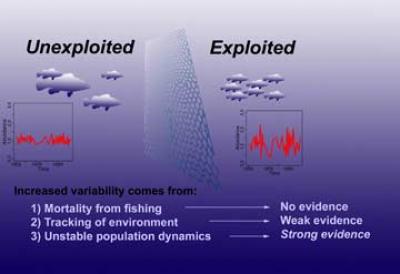
Fishing activities can provoke volatile fluctuations in the populations they target, namely by altering the “age pyramid.” Lopping off the few large, older fish that make up the top of the pyramid leaves a broad base of faster-growing small younglings and the research team found that this rapidly growing and transitory base is dynamically unstable — a finding having profound implications for the ecosystem and the fishing industries built upon it.

Imagine a container of water with a 500-pound fish. With food, it grows a little bigger. Without food it gets a bit smaller. Imagine the same container with 500 one-pound fish. They eat, reproduce and the resulting thousands of fish boom, quickly outstripping the resources and the population crashes.

True agoraphobia is an invalidating disease but a paper by Giovanni A. Fava and associates of the University of Bologna, published in Psychotherapy and Psychosomatics, questions the excessive emphasis on panic which has been attributed in the past decade and the role of pharmaceutical industry in this attribution.

In studying the phenomenology of panic attacks, Argyle and Roth noticed that truly spontaneous attacks, not preceded by anxiety-provoking cognitions, were uncommon.

Patients meeting positive criteria for panic disorder suffered from the whole range of anxiety disorders, and a unique relationship with agoraphobia was not seen. Indeed, other diagnoses (particularly social phobia and generalized anxiety disorder) frequently predated the onset of panic. This was true also for agoraphobia.

People who score high on intelligence tests are also good at keeping time, new Swedish research shows. The team that carried out the study also suspect that accuracy in timing is important to the brain processes responsible for problem solving and reasoning.

Researchers at the medical university Karolinska Institutet and Umeå University have now demonstrated a correlation between general intelligence and the ability to tap out a simple regular rhythm. They stress that the task subjects performed had nothing to do with any musical rhythmic sense but simply measured the capacity for rhythmic accuracy. Those who scored highest on intelligence tests also had least variation in the regular rhythm they tapped out in the experiment.

There is continual debate taking place over whether organisms are the result of intelligent design or evolution. The proponents of intelligent design believe that chance and selection are too casual and slow to allow complex new properties to arise. In particular, they argue that the intermediate steps in shuffling the genes to make something new are likely to scramble the existing system and be bad for the organism, e.g., "half an eye is bad for you."

A study directed by Mark Isalan, leader of the group Gene Network Engineering and Luis Serrano, coordinator of the research programme Systems Biology and leader of the group Design of Biological Systems from the Centre for Genomic Regulation in Barcelona, Spain, says that although it may seem incredible that organisms could be able to face extreme mutation processes and gene reorganization, that is just what happens.

A new study shows that wetland regions emitted significantly less methane during glacial times while methane emissions by forest fire activity remained surprisingly constant from glacial to interglacial times.

Using novel isotopic studies, scientists from the European Project for Ice Coring In Antarctica (EPICA) say this identifies the most important processes responsible for changes in natural methane concentrations over the transition from the last ice age into our warm period.

Ice cores are essential for climate research because they represent the only archive which allows direct measurements of atmospheric composition and greenhouse gas concentrations in the past.

The risk of illegal information access, notably in money transactions, requires more and more advanced cryptographic techniques against criminals and the occasional mischevious teenager.

Quantum cryptography has been regarded as 100-percent protection against attacks on sensitive data traffic but a research team at Linköping University in Sweden has found a hole in even this advanced technology.

When an encrypted message needs to be sent over a computer network, the most difficult problem is how the key should be transmitted. One way is to literally send it by courier (which has its own security risks) or, if it's in your budget, attached to the wrist of James Bond.

Infinity was invented to account for the possibility that in a never-ending universe, anything can happen. Life on other Earth-like planets, for example, is possible in an infinite universe, but not probable, according to a scientist from the University of East Anglia.

The mathematical model produced by Prof Andrew Watson suggests that the odds of finding new life on other Earth-like planets are low because of the time it has taken for beings such as humans to evolve and the remaining life span of the Earth. Structurally complex and intelligent life evolved late on Earth and this process might be governed by a small number of very difficult evolutionary steps.

Prof Watson, from the School of Environmental Sciences, takes this idea further by looking at the probability of each of these critical steps occurring in relation to the life span of the Earth, giving an improved mathematical model for the evolution of intelligent life.


