






A new study by researchers at UC Davis shows how our very short-term "working memory," which allows the brain to stitch together sensory information, operates. The system retains a limited number of high-resolution images for a few seconds, rather than a wider range of fuzzier impressions.

Humans rarely move their eyes smoothly. As our eyes flit from object to object, the visual system briefly shuts off to cut down visual "noise," said Steven J. Luck, professor of psychology at the UC Davis Center for Mind and Brain. So the brain gets a series of snapshots of about a quarter-second, separated by brief gaps.

The working memory system smoothes out this jerky sequence of images by retaining memories from each snapshot so that they can be blended together. These memories typically last just a few seconds, Luck said.

The National Science Foundation (NSF) has awarded a $65 million grant to the University of Tennessee, Knoxville (UTK) to develop Kraken, a state of the art supercomputer. Kraken will enhance the computational power of the TeraGrid, the world's largest, most powerful and comprehensive distributed cyberinfrastructure for open scientific research.

"Like the gargantuan sea monsters Kraken, which inspired the naming of this supercomputer, the possibilities in scientific and engineering advances it enables are enormous, limited only by the confines of human imagination and vision beyond the frontiers of science," said NSF Director Arden L. Bement in a taped message that was played today at a luncheon in Knoxville.

Every two years NSF surveys and collects data on scientists and engineers, defined as people with a bachelor's degree or higher with science, engineering or related degrees or occupations.

NSF collects data on these individuals with three separate national surveys: the National Survey of College Graduates, the National Survey of Recent College Graduates, and the Survey of Doctorate Recipients. Collectively, these surveys are known as the Scientists and Engineers Statistical Data System, or SESTAT.

Anxiety gets a lot of bad press. Dwelling on the negative can lead to chronic stress and anxiety disorders and phobias, but evolutionarily speaking, anxiety holds functional value.

In humans, learning to avoid harm is necessary not only for surviving in the face of basic threats (predators or rotten food), but also for avoiding more complex social or economic threats, like enemies or questionable plans.

A team of psychologists at Stanford University have identified a region of the brain, the anterior insula, which plays a key role in predicting harm and also learning to avoid it. In a new study, Gregory Samanez-Larkin and colleagues scanned the brains of healthy adults while they anticipated losing money.

Preliminary results from DNA analysis of wolverine scat samples collected on the Tahoe National Forest do not match those of historic California wolverine populations, according to U.S. Forest Service scientists.

Geneticists with the agency’s Rocky Mountain Research Station recently began analyzing samples, when wildlife biologists with the Tahoe National Forest and California Department of Fish and Game began sending hair and scat samples they collected from wolverine detection sites on the national forest to a lab in Missoula, Mont.

The interagency effort began in March after an Oregon State University graduate student working on a cooperative project with the U.S. Forest Service’s Pacific Southwest Research Station photographed a wolverine, an animal whose presence has not been confirmed in California since the 1920s.

A biological process taught to every pupil studying science at high school has just become a little more complicated, thanks to a new discovery published today.

Scientists from the University of Bath have found that a protein called RASSF7 is essential for mitosis, the process by which a cell divides in two. In research published in the journal Molecular Biology of the Cell, they show that the protein is essential for building the microtubules that allow the two halves of the cell to slide apart.

“What makes mitosis so interesting is that it is one of the biological processes that everyone remembers from their days at school,” said Dr Andrew Chalmers from the University’s Department of Biology & Biochemistry.

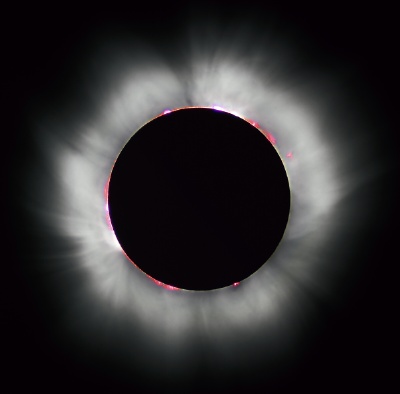
The Sun has a very dynamic atmosphere, with huge fountains of hot gas erupting in the atmosphere, or corona, every few minutes, travelling at tens of thousands of kilometers per hour and reaching great heights.

A team of scientists using the Hinode spacecraft has been searching for the origin and driver of these 'fountains', immense magnetic structures that thread through the solar atmosphere. On Wednesday 2 April at the Royal Astronomical Society National Astronomy Meeting in Belfast (NAM 2008), team leader Dr. Michelle Murray from the Mullard Space Science Laboratory (MSSL, University College London) presented the latest results from Hinode together with computer simulations that model conditions on the Sun.

Research published in the Institute of Physics' Environmental Research Letters shows how a team from Lancaster and Durham Universities sought a means to prove the correlation between the ionizing cosmic rays and the production of low cloud cover.

Previous research had shown a possible correlation, using the results of the International Satellite Cloud Climatology Project, and this had been used to propose that global warming was due to cosmic rays.

The new research shows that change in cloud cover over the Earth does not correlate to changes in cosmic ray intensity. Neither does it show increases and decreases during the sporadic bursts and decreases in the cosmic ray intensity which occur regularly.

A daily dose of caffeine blocks the disruptive effects of high cholesterol that scientists have linked to Alzheimer's disease. A study in the Journal of Neuroinflammation revealed that caffeine equivalent to just one cup of coffee a day could protect the blood-brain barrier (BBB) from damage that occurred with a high-fat diet.

The BBB protects the central nervous system from the rest of the body's circulation, providing the brain with its own regulated microenvironment. Previous studies have shown that high levels of cholesterol break down the BBB which can then no longer protect the central nervous system from the damage caused by blood borne contamination. BBB leakage occurs in a variety of neurological disorders such as Alzheimer's disease.

Heavy water is water (H2O) in which oxygen is bound to atoms of the hydrogen isotope deuterium (2H). Heavy water is so named because it is significantly more dense (>1.1 g/cm3) than ordinary ("light") water, 1H2O (1 gm/cm3).

Heavy water is not radioactive and has the same chemical properties as light water; a person could drink a glass of heavy water without harm. However, heavy water is better than light water at moderating (slowing) neutrons, which makes it useful in some nuclear reactor cores.


