




CRISPR-Cas9 is the go-to technique for knocking out genes in human cell lines to discover what the genes do, but the efficiency with which it disables genes can vary immensely.

University of California, Berkeley researchers have now found a way to boost the efficiency with which CRISPR-Cas9 cuts and disables genes up to fivefold, in most types of human cells, making it easler to create and study knockout cell lines and, potentially, disable a mutant gene as a form of human therapy.

Scientists are constantly discovering new genes or the proteins they code for, but it's much harder to figure out their role in the body or in disease. Key to discovering this role is disabling the gene to see what happens when it's removed.

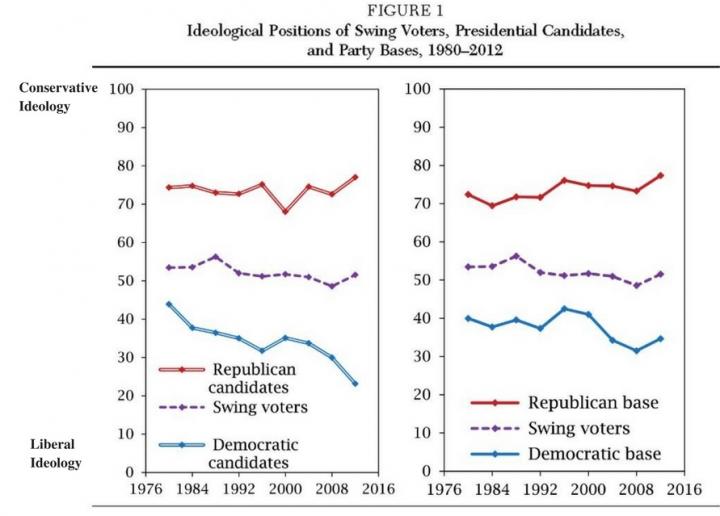
In 2012, Republican Presidential candidate Mitt Romney was criticized for speaking an uncomfortable truth; 47 percent of voters are voting for the same party regardless of the actual policies. In academic science, the turnout will be huge for Democratic nominee Hillary Clinton because her actual science policies are irrelevant. Her stance on science is irrelevant because she does not need to cater to academics, she knows they are never voting for a Republican. 

Pavlov's famous behavioral experiment involved a dog. Dogs want food. Maybe not so clear, according to a paper in Social, Cognitive and Affective Neuroscience.

Given the choice, many dogs prefer praise from their owners over food, suggests the work, which combines brain-imaging data with behavioral experiments to explore canine reward preferences.

In the United States, there used to be a belief that the next generation would always have it better. No more. A lingering economic malaise and non-stop apocalyptic jingo-ism about chemicals, food, medicine and the environment instead have young people suffering from pessimistic green fatigue.

Does free health care or terrific medical treatment make citizens unwilling to change their lifestyle? There is a valid argument it is true. HIV has plummeted among every demographic except gay men, who have been found to engage in risky behavior because treatment is now so good. And free health care may be causing Canadians to not engage in personal responsibility in their lifestyles. 

According to a new study in PLOS Medicine, poor diet, smoking, and unwillingness to exercise contribute to about 50 percent of deaths in Canada.

In December 2006, the USA regulated sodium permanganate, a chemical essential to the manufacture of cocaine. In March 2007, Mexico, the USA's primary source for methamphetamine, closed a chemical company accused of illicitly importing more than 60 tons of pseudoephedrine, a methamphetamine precursor chemical. A study published today by the scientific journal Addiction found that those two events were associated with large, extended reductions in cocaine users and methamphetamine users in the USA -- impacts that have lasted approximately eight years so far.

AURORA, Colo. (Aug. 16, 2016) - Researchers from the University of Colorado School of Medicine have published a new study showing that sleep apnea worsens non-alcoholic fatty liver disease in obese adolescents.

Shikha Sundaram, MD, MSC, associate professor of pediatrics, and her fellow researchers from the University of Colorado Anschutz Medical Campus studied 36 adolescents with non-alcoholic fatty liver disease (NAFLD), along with 14 lean patients, to assess whether sleep apnea and low nighttime oxygen promoted the progression of the disease. The children eligible for the study were at the Children's Hospital Colorado Pediatric Liver Center between June 2009 and January 2014.

The Venus Table of the Dresden Codex, an ancient Mayan book containing astronomical data, has been studied for 120 years, with some confusion and accuracy. If you can recall the Mayan calendar Doomsday prophecy, it stated that at the end of a 13th period of 400 years, known as Baktuns, on the equivalent of Dec. 21, 2012, we would see the return of mysterious Mayan god Bolon Yokte.

 Bisphenol A (BPA) is a component of some plastics and is found in food containers, plastic water bottles, dental sealants, and thermal receipt paper. In the body, BPA is a mild synthetic estrogen, one of the gigantic class of chemicals called "endocrine disruptors", even if they are 1/20,000th able to bind as well as the actual estrogen.

Environmentalists claim that despite the FDA doing an exhaustive four-year study and finding no effects, even in pregnant mice, despite feeding them 1,000 times as much BPA as a human can get, and affirming that humans process and excrete BPA far more efficiently than rodents, that a magical hormesis effect is still causing problems.

The duration of overweight and obesity in women's adult lives is correlated with cancer risk in a PLOS Medicine longitudinal study.

