



Johns Hopkins Bloomberg School of Public Health  graduate student Sara G. Rasmussen, from their Department of Environmental Health Sciences, says that people with asthma who live near bigger or larger numbers of active hydraulic fracturing (fracking) natural gas wells are 1.5 to four times likelier to have asthma attacks than those who live farther away.

Chimeric antigen receptor T cells (CAR T cells) are a promising immunotherapy approach to cancer treatment in which a patient's own immune cells attack tumors by targeting an identifying marker, or antigen, that is displayed at high levels on cancerous cells. However, CAR T cells that target a single antigen have had mixed results in clinical trials, which may be due to ongoing variability in the antigens that tumors display. In this month's issue of the JCI, a team led by Nabil Ahmed at Baylor College of Medicine demonstrated that CAR T cells that were engineered to target two different tumor antigens were more effective at controlling tumors in an animal model than typical CAR T cells, which target a single antigen.

The U.S. Centers for Disease Control and Prevention have recently become concerned about e-cigarette use yet scarcely mention that cigarette uptake has plummeted.

Cigarettes are the killer, not nicotine, but nicotine is what historically turned smoking into what the American Council on Science and Health (ACSH) deems a pediatric disease. Like caffeine, nicotine is addictive. If you smoked caffeine in a cigarette, it would be incredibly toxic whereas nicotine itself is relatively harmless. And because the CDC has overreacted to e-cigarettes, they become a cool rebellious thing for teems, just like cigarettes once were.

No need to head to the movie theater or download the video game app: Angry Birds can be found right in your backyard this summer--if you live in the suburbs, that is.

Virginia Tech researchers recently found that birds that live in suburban areas exhibit significantly higher levels of territorial aggression than their country counterparts. The results were recently published in Biology Letters.

Why do some organisms within a single species have many offspring, while others have relatively few? A new study led by University of Minnesota researcher Emilie Snell-Rood finds that access to some nutrients may be a star player in shaping traits related to fitness such as fecundity and eye size over the long term. Given drastic increases in the availability of many nutrients due to the widespread use of fertilizers and road salts, the finding has important implications for agriculture and ecology.

Whitehead Institute scientists have created a checklist that defines the "naive" state of cultured human embryonic stem cells (hESCs). Such cells can mature into almost any cell type and more closely resemble the unique molecular features of pluripotent cells in the early human embryo than adult stem cells. Since the late 1990s, scientists have been very interested in working with naive stem cells, but they have been more hope than promise; they don't even have a common definition of what makes a cell truly naive.

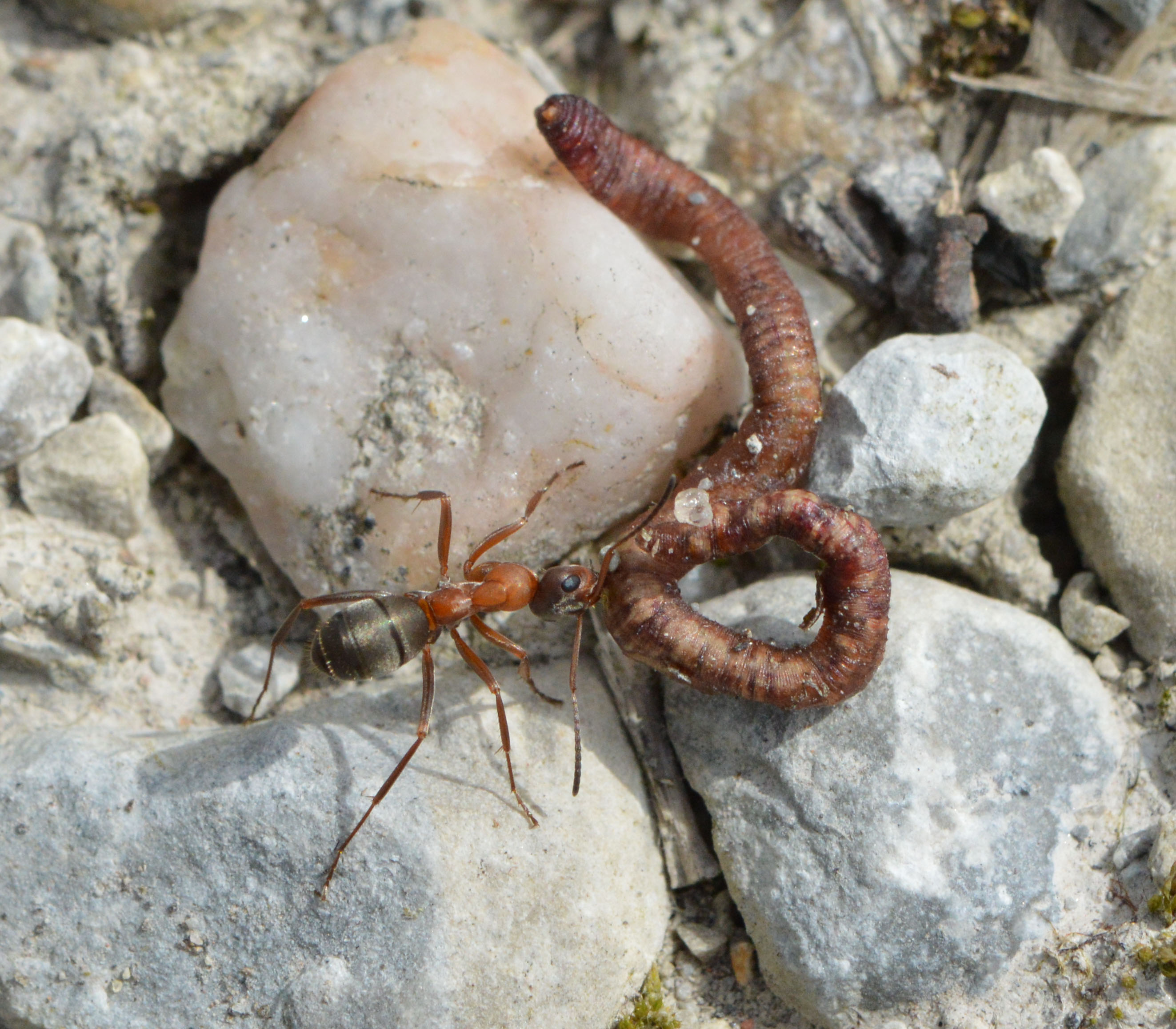
Life isn’t always easy, but some beetles simply behave reckless.Trying to get your eggs inside a colony of murderous all-consuming red woodants (Formica rufa, see the picturebelow) is simply asking for trouble, or is it?

The four spotted leaf beetle larvae build a house of excrement (poo) and earth to survive this hostile environment.

Meet the four spotted leaf beetle (Clytra quadripunctata, see the pictures.) These beetles look like ladybugs that have been stretched on the rack (a torture device from the middle ages). 

Scientists have discovered the switch to harness the power of cord blood and potentially increase the supply of stem cells for cancer patients needing transplantation therapy to fight their disease. 
Stem cells were first discovered in Toronto in 1961 at the
Princess Margaret Cancer Centre
 by Drs. James Till and Ernest McCulloch, a discovery that launched a new field of science and formed the basis of all stem cell research that continues to this day. 

Biophysics: As they age, more and more defects arise in most organisms. Researchers from the Niels Bohr Institute have discovered that microorganisms like bacteria can keep a colony young by practicing a common strategy for propagation. The same may be true for, for example, stem cells in humans. The results have been published in the scientific journal, Cell Systems.

Ala Trusina working in the laboratory, where she studies cell division in bacterial colonies and stem cells. (Photo: Ola Jakup Joensen)

Clear communication between a doctor and patient is essential, especially when patients with advanced cancer wish to participate in decision-making about their medical treatment options, and trade-offs between quality and quantity of life emerge. A new study in JAMA Oncology finds that most of these patients report far more optimistic expectations for survival prognosis than their oncologists, due to patients' misunderstanding of their oncologists' clinical judgment.

"Previous research shows that patients, families and clinicians tend to either avoid prognosis-related conversations altogether or discuss prognosis in unbalanced ways," says first author Robert Gramling, M.D., M.Sc., Holly and Bob Miller Chair in Palliative Medicine at the University of Vermont.

