





The popularity of ziplining has skyrocketed rapidly in recent years. The number of commercial ziplines in the U.S. rose from 10 in 2001 to more than 200 in 2012, in addition to more than 13,000 amateur ziplines which can be found in outdoor education programs, camps, and backyards. The increase in popularity has also increased the number of injuries related to ziplining. A new study by researchers in the Center for Injury Research and Policy of The Research Institute at Nationwide Children's Hospital found that an estimated 16,850 non-fatal zipline-related injuries were treated in U.S. emergency departments from 1997 through 2012.

Although children with high health care needs represent a small percentage of the overall pediatric population, they account for a large percentage of pediatric health care costs, including up to 40% of pediatric hospital charges. In recent years, there has been more information available about the medical care received by these children, but generally studies have been limited to care provided in hospital settings.

Physicians' unconscious attitudes toward special patient populations like disabled and LGBT patients may be partially responsible for poorer overall health observed in these communities, according to a Rowan University professor of family medicine.

Physicians' reluctance to discuss disabilities, sex, work and independence with disabled patients, who comprise nearly 20 percent of Americans, deprives patients of high quality care by leaving important health concerns unaddressed, said Joshua Coren, DO. Primary care providers frequently fail to discuss contraception, sexually transmitted diseases, emotional health and basic wellness concerns like diet, exercise, smoking and alcohol use with patients who have disabilities, Dr. Coren added.

OK, so I'm a 62-year old moron. Like *you're* so perfect?  This probably explains why I couldn't pass on this one. 

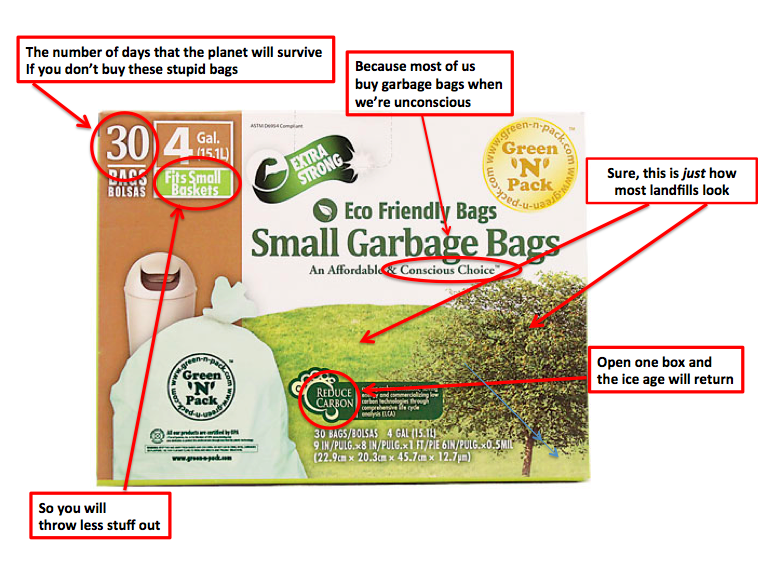
The word "green" has become so ubiquitous that it has become a parody of itself. Everything is green! Especially the vast amounts of green paper, which portrays formers presidents. Which is the type of green that those who sell you green stuff are lining their pockets with. 

It has gone way past crazy. Like green garbage bags:

Although they claim that their bags are made from recycled Winnebagos, I'm suspicious.

New research suggests that upper limb amputees, who typically struggle to learn how to use a new prosthesis, would be more successful if fellow amputees taught them.

Most usually learn by watching a non-amputee demonstrate the device during physical therapy and rehabilitation sessions but a Georgia Institute of Technology study that measured arm movements and analyzed brain patterns found that people do better when they learn from someone who looks like them. 

A significant proportion of medical treatment decisions are not clear-cut. How can patients and doctors know is better for a specific patient -- medication or surgery, therapy, or even no treatment? If medication, which class of drugs? If surgery, what type of surgery?  

Presenting and discussing a menu of treatment options is good for both the patient and the physician according to Regenstrief Institute and VA Center for Health Communication and Information investigator Kurt Kroenke, M.D., writing in a commentary in the Sept. 28 issue of JAMA Internal Medicine.

A new analysis finds tobacco users pay more for a health insurance plan from the Affordable Care Act exchanges than non-tobacco users in nearly every county of the 37 states that used healthcare.gov to sell their plans in 2015. 

In some instances, up to 46% more. The authors say future research may determine how many enrollees facing these surcharges will simply decide not to be truthful about their smoking status, or perhaps avoid buying health insurance altogether. 

The majority of adolescents in grades 7-12 would prefer to know the results of unanticipated findings found in whole exome sequencing genetic testing, even if the findings are not medically actionable until adulthood, according to survey data presented at the American Society of Human Genetics (ASHG) 2015 Annual Meeting in Baltimore.

The survey addressed secondary findings - genetic findings unrelated to the initial indication that prompted the test - gleaned from sequencing the protein-coding regions of a person's genome.

Hormonal treatments administered as part of the procedures for sex reassignment have well-known and well-documented effects on the secondary sexual characteristics of the adult body, shifting a recipient's physical appearance to that of the opposite sex.

New research published in the current issue of Biological Psychiatry indicates that these hormonal treatments also alter brain chemistry.

Researchers at the Medical University of Vienna, led by senior authors Dr. Siegfried Kasper and Dr. Rupert Lanzenberger, show that administration of the male hormone testosterone in female-to-male transsexuals raises brain levels of SERT, the protein that transports the chemical messenger serotonin into nerve cells.

This warning in the London "Tube" could apply to organic farming

