







Everyone inherits two copies of most genes, one copy from each parent. In a recent study, researchers found in a rare mutation, people with one inactive copy of the gene NPC1L1 appeared to be protected against high LDL cholesterol, commonly called the "bad" cholesterol, and coronary heart disease, a narrowing of the heart's arteries that can lead to heart attacks. 

This mutation meant a 50 percent reduction in the risk of heart attack, at least epidemiologically, according to the paper
in The New England Journal of Medicine. NPC1L1 is of interest because it is the target of the drug ezetimibe, often prescribed to lower cholesterol.

Uranus is generally boring but it recently got interesting. It has become so stormy, with enormous cloud systems so bright, that for the first time ever amateur astronomers are able to see details in the planet's hazy blue-green atmosphere.

This one is definitely too juicy to ignore - I need to join the crowd of bystanders-in-awe. 
As you may have heard, ESA's ROSETTA spacecraft successfully landed yesterday on the solid nucleus of comet 67/P, Churyumov-Gerasimenko - a 2.5 mile long conglomerate of rock and ice. I refrain from giving detail of that enormous achievement for humankind, because I rather want to comment on this rather funny twist of the whole story. But still let's first enjoy at least one nice picture of the surface of that distant solar system body...


An analysis of two African tribes has led anthropologists to suggest that men evolved better navigation ability than women because men with better spatial skills - the ability to mentally manipulate objects - can roam farther and have children with more mates.

Driving to work is routine, you might even forget you are doing it, but how aware would you be if you had to doit in reverse?

We're used to seeing objects pass behind us as we go forward. Moving backwards feels unnatural and a new study finds why that is: Moving forward actually trains the brain to perceive the world normally. The relationship between neurons in the eye and the brain is more complicated than previously thought--in fact, the order in which we see things could help the brain calibrate how we perceive time, as well as the objects around us.

Reversing the Map

Supplement marketers have been aggressively claiming that vitamin B12 and folic acid reduce the risk of memory loss, but a large study on long-term use of supplements found no benefits.   

The study involved people with high blood levels of homocysteine, an amino acid. High levels of homocysteine have been linked to memory loss and Alzheimer's disease. Early observational studies claimed there may be some benefit to thinking and memory skills in taking folic acid and vitamin B12, but the results were not duplicated in later randomized, controlled trials. 


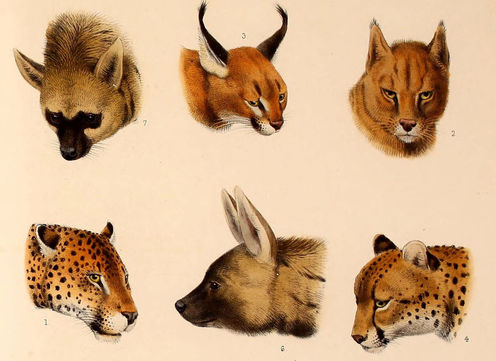
When is a cat not a cat? Biodiversity Heritage Library (adapted), CC BY

By Ben Holt, Imperial College London and Knud Andreas Jønsson, Imperial College London

The yellow fever mosquito sustains its taste for human blood thanks to a genetic tweak that makes it more sensitive to human odor, according to a paper in Nature. They have a version of an odor-detecting gene in its antennae that is highly attuned to sulcatone, a compound prevalent in human odor.

The gene, AaegOr4, is more abundant and more sensitive in the human-preferring "domestic" form of the yellow fever mosquito than in its ancestral "forest" form that prefers the blood of non-human animals. 


Different people behave in different ways behind the wheel of a car. Flickr/Nuno Sousa, CC BY-NC-ND

By Vanessa Beanland, Australian National University and Martin Sellbom, Australian National University

In the fight against HIV, microbicides, which are chemical compounds applied topically to the female genital tract to protect against sexually transmitted infections, are touted as an alternative to condoms.

There's just one problem. They don't work outside a petri dish. Clinical trials using microbicides have failed and a new study from the Gladstone Institutes and the University of Ulm finds that this may be due to the primary mode of transportation of the virus during sexual transmission, semen.

