



If you ask any journalist who writes a science article, or a PR person pitching one, if they would rather have a blurb about their work or get mentioned on Twitter, every single one will go for the link from Science 2.0.

The mitochondrial DNA of the first Near Eastern farmers has been sequenced for the first time. In the research, experts analysed samples from three sites located in the birthplace of Neolithic agricultural practices: the Middle Euphrates basin and the oasis of Damascus, located in today's Syria and date at about 8,000 BC.

The study is focused on the analysis of mitochondrial DNA --a type of non-Mendelian maternally inherited DNA-- from the first Neolithic farmers, by means of samples obtained by the Universitat Autònoma de Barcelona (UAB) research group which were first processed by the University of Barcelona (UB) research group.

For decades, physicists have searched for exotic bound states comprising more than three quarks.

In 2011, over 120 scientists from eight countries discovered strong indications for the existence of an exotic dibaryon made up of six quarks. Now, experiments performed at Jülich's accelerator COSY have shown that uch complex particles do exist in nature. This discovery by the WASA-at-COSY collaboration goes beyond what had been done before. Physicists were only able to reliably verify two different classes of hadrons: volatile mesons comprising one quark and one antiquark and baryons consisting of three quarks.

A new study finds that seminal fluid - semen - contains biomarkers for prostate cancer, the most common cancer in men. 

University of Adelaide research fellow and lead author Dr Luke Selth says the commonly used PSA (prostate specific antigen) test is by itself not ideal to test for the cancer.
But the results in Endocrine-Related Cancer show that their new test finds presence of certain molecules in seminal fluid and indicates not only whether a man has prostate cancer, but also the severity of the cancer.

When South America split from Africa 150 to 120 million years ago, the South Atlantic formed and separated Brazil from Angola. The continental margins formed through this separation are surprisingly different. Along offshore Angola 200 km wide, very thin slivers of continental crust have been detected, whereas the Brazilian counterpart margin features an abrupt transition between continental and oceanic crust.

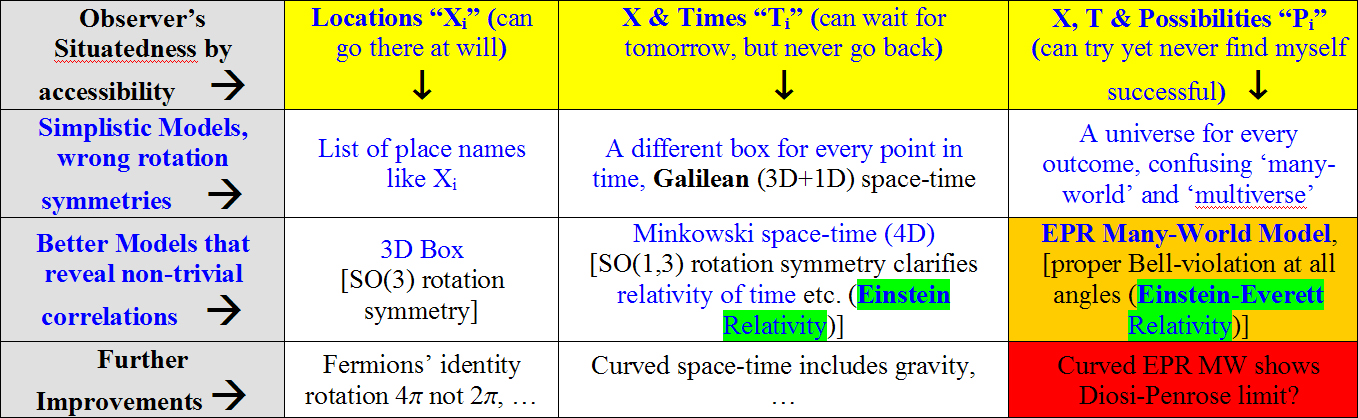
Space seems like an empty box that lives through time. This can already be classified as a “better model”, as you can see in the table below. However, this tacitly held model makes people wonder: If I toss a coin and find myself with the result being “tails”, where is the other me, the one who found “heads”, the other possibility which physics can no longer ignore, and which good philosophy has always known to be equivalent?

Has a universe popped up next door to this one?

Shenzhen, June 5, 2014--- The latest study, led by scientists from Kunming Institute of Zoology, Chinese Academy of Sciences, BGI and other institutes, presents a high-quality sheep genome and reveals genomic and transcriptomic events that may be associated with rumen evolution and lipid metabolism that have relevance to both diet and wool. The work was published online today in Science.

(Garrison, NY) Many of the legal and ethical options for refusing unwanted interventions are not available to people with dementia because they lack decision-making capacity. But one way for these people to ensure that they do not live for years with severe dementia is to use an advance directive to instruct caregivers to stop giving them food and water by mouth. This is an ethical and legal gray area explored in commentaries and a case study in the Hastings Center Report.

People with decision-making capacity have the legal right to refuse treatment of any kind and to voluntarily stop eating and drinking.

A molecular pathway called mTORC1 controls the conversion of unhealthy white fat into beige fat, an appealing target for increasing energy expenditure and reducing obesity, according to a new study. The team also found that a protein, Grb10, serves as the on-off switch for mTORC1 signaling and the "beigeing" of fat.

Phytoplankton are tiny, photosynthetic organisms and essential to life on Earth, supplying us with roughly half the oxygen we breathe.

Phytoplankton have their own requirements to carry out critical cellular activity
- the element phosphorus. But in some parts of the world's ocean, P is in limited supply. How do phytoplankton survive when phosphorus is difficult to find?

