


Human brains have tripled in size over the past 2 million years,  growing much faster than those of other mammals.

What might the reasons be for such dramatic brain expansion?

University of Missouri researchers studied three hypotheses for brain growth: ecological demand,  social competition and climate change.

Yes, climate change.   They're not stupid.   An entire presidential cabinet is stuffed with carbon dioxide true believers so it's good diplomacy to at least consider global warming may make us devolve - that would be terrific marketing for a carbon trading scheme.   Luckily, the much more likely social competition was determined in their analysis as the major cause of increased cranial capacity.
The largest animals ever to have walked the face of the earth just got a little smaller, according to a paper published today in the Zoological Society of London's Journal of Zoology.

Why aren't they as big as previously thought?   The researchers say that the original statistical model used to calculate dinosaur mass is flawed, which led to them suggesting dinosaurs have been oversized.  Widely cited estimates for the mass of Apatosaurus louisae, one of the largest of the dinosaurs, may be double that of its actual mass instead of the commonly cited 33-38 tons it may be as light as 18 tons. 
University of Georgia researchers have developed a successful way to grow molecular wire brushes that conduct electrical charges, a first step in developing biological fuel cells that could power pacemakers, cochlear implants and prosthetic limbs.

UGA chemist Jason Locklin and graduate students Nicholas Marshall and Kyle Sontag grew polymer brushes, made up of chains of thiophene and benzene, aromatic molecules sometimes used as solvents, attached to metal surfaces as ultra-thin films. 
Stem cell research is a major challenge for medicine. Recently, asymmetric cell division was filmed in vivo in fruit fly germinal stem cells for the first time by the team of Jean-René Huynh at the Institut Jacques Monod (CNRS/Université Paris Diderot), now working at the ‘Génétique du développement et cancer' laboratory (Institut Curie/CNRS/UPMC/Inserm). This paper on stem cell behavior was published in Nature Cell Biology.
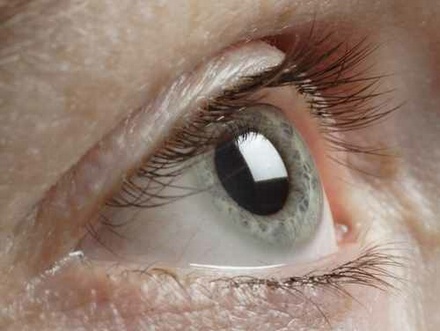
Your color vision is not for seeing red sunsets or green grass; rather, it evolved as a kind of empath sense, optimized to detect the changes in blood physiology in the skin of the faces (and rumps) of others, thereby sensing their emotions.

Your forward-facing eyes are not for seeing in depth, but, rather, for significantly enhancing how much you can see in the cluttered forest habitats of your ancestors.


The islands of the Aegean are peaks of underwater mountains that extend out from the mainland. Crete is the last of this range and boasts a diverse beauty from its high mountains of Psiloritis, Lefka Ori, Dikti, to its ocean caressed pink sand beaches.

Feeling increasingly uncomfortable on this blog, as it seems to be becoming an outlet for the Anti-God Squad, I nevertheless want to share with my friends this interesting news item which I first spotted in the Times of India Health&Science Section, where it was headlined

Cabbage fuel reduces carbon release.
WASHINGTON: Jet fuel's grave carbon emissions can be reduced by about 84 per cent by refining it from the seeds of a lowly weed, which is a cousin to the cabbage, says a Michigan Technological University researcher.

D'you dig the Geek Off? Did you email your answers to geekoff@gmail.com? If not, too late sucka! That is, too late until Monday morning, when we play another round of the feud. Yep, every week there's a Geek Off and every week you can win a free Geeks' Guide to World Domination: Be Afraid, Beautiful People. Check the quiz Monday, email your answers 'til Friday at midnight EST, then check the answers and fight about corrections starting Saturday
morning.

Here are the answers to last week's geek off:
1. Geek Culture/Ephemera
Blackbeard: 4, C, d
Black Bart: 2, B, b
Mary Read: 4, D, a
Jean Lafitte: 1, A, c
A Science Of Human Language - Part #2


Quistic Grammar : A New Universal Grammar

In
Part #1 of this series, I suggested that a grammar heavily based in syntax was not sufficiently scientific as a general theory of how language functions.  In developing the current theory I shall try to demonstrate that various observations about human language can be tied together into an inclusive theory of how language functions.  The first, and to my mind most important observation about human language is its redundancy, its apparent inefficiency in the use of the resources of sounds and symbols.

That DNA evidence that could exonerate you? You don't have a right to it, says the US Supreme Court.

Actually, not being a lawyer or constitutional scholar, I don't know what kinds of evidence you have a constitutional right to when you go on trial, so I'm not going to comment on the correctness of the decision. But legal scholarship aside, two things are obvious:

1) When we try someone for a crime, we want the best, most reliable evidence possible. It's probably reasonably safe to say that most people with at least some wisps of sanity would like our criminal justice system to convict the guilty and acquit the innocent.

