Now that I am officially a philosopher (i.e., my salary is going to be paid by a philosophy, instead of a biology, department), I can indulge full time in reading philosophy without feeling guilty. I haven’t mastered the skill (of not feeling guilty) yet, but I’m working on it.
This is also why I’m starting an occasional series of blog posts devoted to individual philosophers, picked among those that strike my fancy for one reason or another. Obviously, a blog post is not the appropriate venue for even a superficial look at the entire body of work of a major philosopher, so what I’ll do instead is to briefly comment on a number of major themes relevant to each particular case, and hope to stimulate people to read more about that philosopher.
Below I offer a preview of the slides I will show tomorrow at an invited seminar on the rather technical topic of "The b-jet energy calibration with Z-->bb decays", which I have come to CERN to give at a meeting of the LHCb collaboration. As I mentioned already in the first part of this two-part article, the topic is rather technical, and I do not expect a large audience -but I will nonetheless make an attempt at explaining the meaning of the slides pasted below. Then, of course, I am available to provide some additional light on any specific issue among those dealt below which you may want to understand more about.
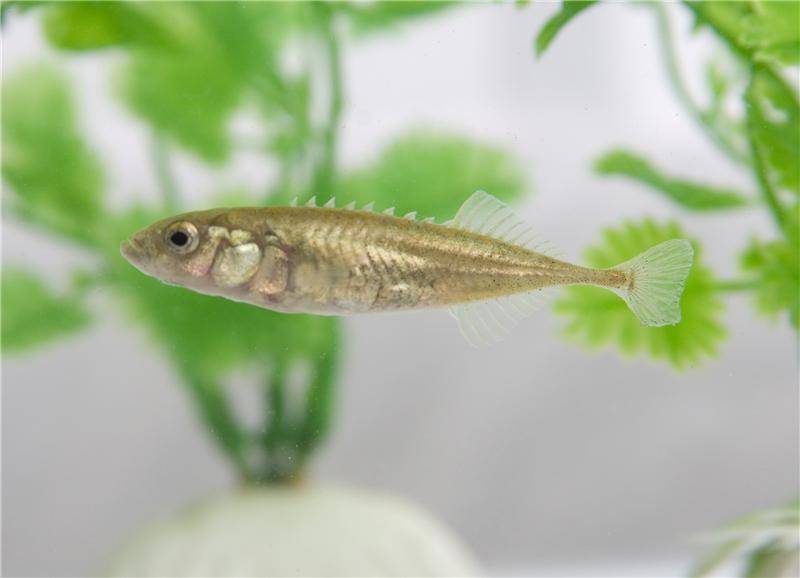
Humans aren't all that close to each other in a modern sense but in one way we may be a little closer than previously realized: the way fish learn could be closer to humans, suggests a new research study.
A common species of fish which is found across Europe called the nine-spined stickleback could be the first animal shown to exhibit an important human 'social learning' strategy. Sticklebacks can compare the behavior of other sticklebacks with their own experience and make choices that lead to better food supplies, according to the study by St Andrews and Durham universities.
Can you fly a house with balloons? The recent Pixar movie "Up" does, but it's animated. In the
"Up" production notes, Steve May, the film's supervising technical director, writes
"It was important to the film to have fairly realistic balloon simulations. The balloons behave in a realistic way, although the notion of being able to fly a hosue with balloons is pretty preposterous. We're not physicists but one of our technical directors calculated that it would take on the order of 20 to 30 million balloons to actually life Carl's house. We ended up using [...] 20,622 when it actually lifts off."
Same-sex behavior has been extensively documented in the non-human animal kingdom, concludes a new review of existing research.
Yep, homosexual behavior is common across species, from worms to frogs to birds - but there's a catch. Same-sex 'behaviors' are not the same across species and researchers may be calling qualitatively different phenomena by the same name.
In revisiting a chemical reaction that's been in the literature for several decades and adding a new wrinkle of their own, researchers with Berkeley Lab and the University of California (UC) Berkeley have discovered a mild and relatively inexpensive procedure for removing oxygen from biomass. This procedure, if it can be effectively industrialized, could allow many of today's petrochemical products, including plastics, to instead be made from biomass.
"We've found and optimized a selective, one-pot deoxygenation technique based on a formic acid treatment," said Robert Bergman, a co-principal investigator on this project who holds a joint appointment with Berkeley Lab's Chemical Sciences Division and the UC Berkeley Chemistry Department.
Fire drills are conducted to know what it will be like in an actual fire incident. The main objective of fire drills are to asses how fast can people evacuate the buildings safely, if ever they catch fire.
I think the swine flu virus is just like that. It is not as deadly as the Ebola Zaire, which are known cause 90% fatalities, nor as resilient as HIV, but the fact that it is a flu virus makes it as valuable as a fire drill - a life saving drill . We now know how fast a flu or at least a flu-like virus can be transmitted. In Canada earlier this month, 265 cases have been reported in just 72 hours. Cases have been confirmed for 75 countries world wide. And here in the Philippines, cases rose to 193.
Neurological diseases including Parkinson's, Tourette's, attention deficit hyperactivity disorder (ADHD), Alzheimer's, and schizophrenia are all associated with alterations in dopamine-driven function involving the dopamine transporter (DAT). Research published today BMC Neuroscience suggests that a number of estrogens acting through their receptors affect the DAT, which may explain trends in timing of women's susceptibility to these diseases.
University of Louisville neurologist Robert P. Friedland, M.D., questions the safety of eating farmed fish in the June issue of the Journal of Alzheimer's Disease. A legitimate worry about the nation's food supply or a case of an anti-farmed fish agenda?
Friedland and co-authors suggest, despite any evidence or anything outside their own speculation, that farmed fish byproducts rendered from cows, like bone meal, could transmit Creutzfeldt Jakob disease, commonly known as mad cow disease, to humans. Despite the lack of evidence, they are urging government regulators to ban feeding cow meat or bone meal to fish until the safety of this common practice can be confirmed. How can you further prove something is safe that has been in use for decades without issue?
University of Leicester researchers writing in the journal Chemical Research in Toxicology say they have found "convincing evidence" that cannabis smoke damages DNA and it could potentially increase the risk of cancer development in humans.
Using a newly developed highly sensitive liquid chromatography-tandem mass spectrometry method, the University of Leicester scientists say they have found clear indication that cannabis smoke damages DNA under laboratory conditions.
The researchers are Rajinder Singh, Jatinderpal Sandhu, Balvinder Kaur, Tina Juren, William P. Steward, Dan Segerback and Peter B. Farmer from the Cancer Biomarkers and Prevention Group, Department of Cancer Studies and Molecular Medicine and Karolinska Institute, Sweden.