Boys who carry a particular variation of the gene Monoamine oxidase A (MAOA), called the 'warrior' gene by some, are more likely to join gangs and be among their most violent members, according to a study from a Florida State University criminologist that associates MAOA to gangs and guns.
Findings apply only to males, which makes an unsubstantiated allele argument necessary. Girls with the same variant of the MAOA gene don't show any propensity toward gang membership or weapon use. MAOA has also been implicated in ADHD, bipolar disorder, cancer and smoking. Basically, if you don't have any other explanation for something, MAOA is the way to go.
Children with Angelman Syndrome develop normally until about 1 year of age and then their intellectual development stops. They fail to develop language and other cognitive skills, are severely mentally handicapped, but have a happy disposition, laughing, smiling and enjoying social interaction. What could be behind this syndrome?
A new study of Angelman Syndrome shows that an interaction between the genetic defect and sensory activity robs cortical synapses of their normal plasticity. Simply using the synapses depletes them of plasticity. This leaves neural connections in the cortex rigid, unable to be fine tuned and to develop normal function.
It feels good, for a die-hard sceptic like I am, to live and let unexplained phenomena die. The phenomena in question are measured deviations from the predictions of the Standard Model (SM), our wonderful theory of subnuclear interactions, which has been condemned to fail by theorists soon after its construction, but continues, disappointingly for many, to succeed in explaining experimental results.
The encouragement (or requirement) of diversity sometimes gets labeled reverse racism, under the assumption that encourgaing diversity is only about somehow making up for past injustices by discriminating against today's white men who may never have themselves committed such injustices.
I'm not trying to step into the touchy issue of Supreme Court politics (nor am I arguing that quotas are always a good thing), but I've run across this interesting observation in several contexts recently:
"Participants push themselves to formulate better arguments when they know they will have to justify them."
In the last few columns, I described how laboratory simulations of a volcanic prebiotic environment showed that interesting organic reactions can be driven by the heat and pressure associated with vulcanism. I also described my own studies of volcanic sites on the present Earth, which we call prebiotic analogue environments, and pointed out some of the problems that arise when we try to duplicate laboratory experiments in the real world geothermal conditions. In the comments following the column, Gerhard Adam suggested that ice might be a plausible alternative to a hot site for the origin of life.
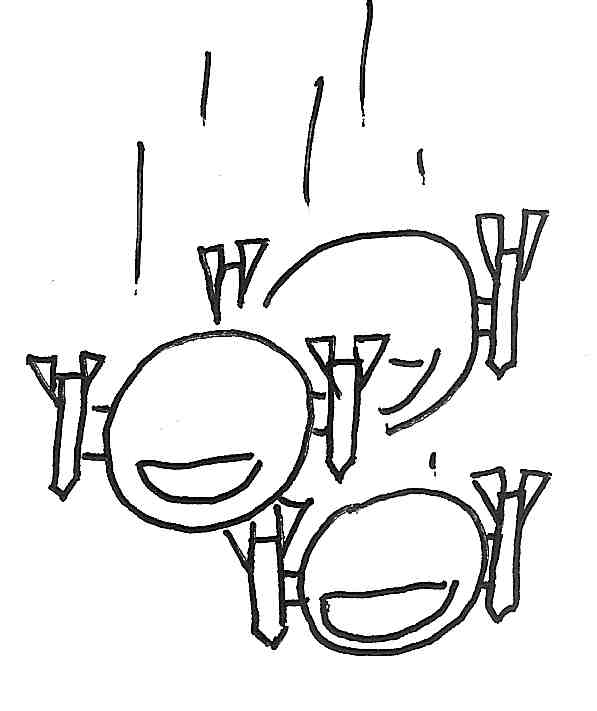 Chicago O’Hare Incident
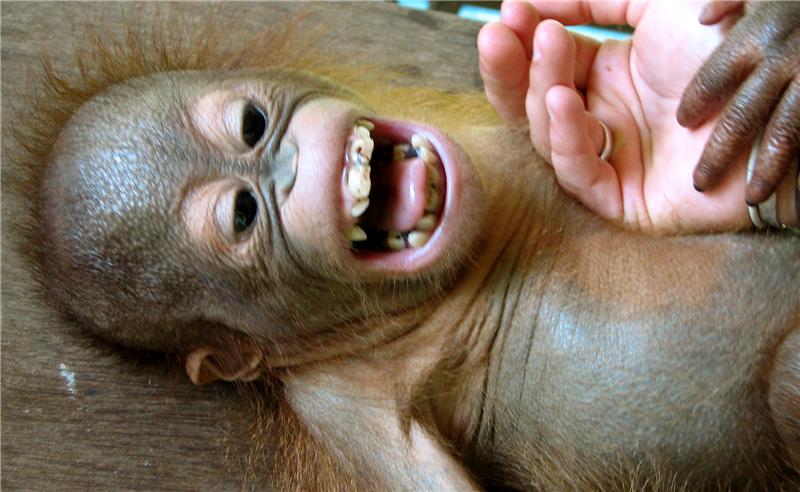
Human laughter can be traced back 10-16 million years to the last common ancestor of humans and great apes, according to new research published today. Dr Marina Davila Ross, a primatologist of the psychology department at the University of Portsmouth, reconstructed the origins of human laughter by mapping the laughter sounds of great apes and humans on an evolutionary tree.
In Davila Ross’s reconstructed evolutionary tree, humans were closest to bonobos and chimpanzees, more distant from gorillas and most distant from orangutans.
Biologists always love when researchers in psychology departments reconfigure the evolutionary tree for them.
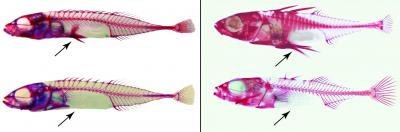
New research shows that when two species of stickleback fish evolved, different genes in each species caused the loss of their pelvises and body armor. Researchers say they were surprised because they expected the same genes would control the same changes in both related fish.
Thank you. Thank you very much.
Using single-molecule manipulation, researchers at Harvard University say they have uncovered a fundamental feedback mechanism that the body uses in regulating the clotting of blood. A new physical, quantitative, and predictive model of how the body works to respond to injury could improve treatment of bleeding disorders.
It also gives insight into how bleeding disorders, such as type 2A von Willebrand disease, disrupt this regulation system, potentially leading to new avenues for treatment and diagnosis.
Dating human migration has always been something of a guess, especially without corroborating archaeological evidence.
Researchers at the University of Leeds say they have devised a more accurate method . That's good news, because the most widely used genetic method works back to find the last common ancestor of any particular set of lineages using samples of mitochondrial DNA (mtDNA), but this method has recently been shown to be unreliable, throwing 20 years of research into doubt.