In these days of jaw-dropping trillion-dollar budgets and deficits along with current retirement obligations 7X the size of our economy, $6.3 billion may not sound like much. But, hey, a billion here and a billion there, and pretty soon you are talking about real money.
$6.3 billion what the United States potentially could save on each group of adolescents who enter foster care every year - and get better results.
Mercury, closest planet to the sun, is as hot as you would expect, with daytime temperatures of 800 degrees Fahrenheit/450 degrees Celsius and because of its small size, its gravity is weak, only about 38 percent of Earth's.
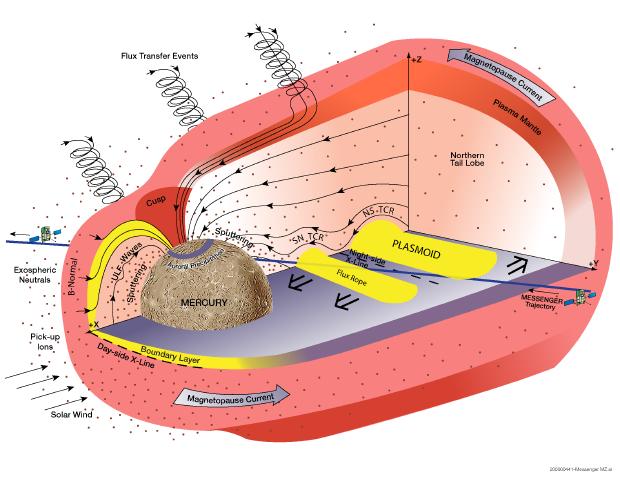
These conditions make it hard for the planet to hold on to its extremely thin atmosphere, which can can only be seen by special instruments attached to telescopes and spacecraft like MESSENGER (MErcury Surface, Space ENvironment, GEochemistry, and Ranging). Even then it's not easy because Mercury's magnetic field gets in the way. MESSENGER's first flyby on January 14, 2008, confirmed that the planet has a global magnetic field, as first discovered by the Mariner 10 spacecraft during its flybys of the planet in 1974 and 1975.

There is beauty in strange places. An ordinary life can leave traces of us that gather into something oddly appealing. Something more than the sum of its parts.
At the opening of last week’s Nobel Laureate symposium, US Energy Secretary
Steven Chu endorsed a low-tech tool to keep climate change at bay: white paint. According to Chu’s colleague
Art Rosenfeld, lightening our planet’s dark roofs and roads would be enough to offset the carbon emissions of cars for the next 11 years.
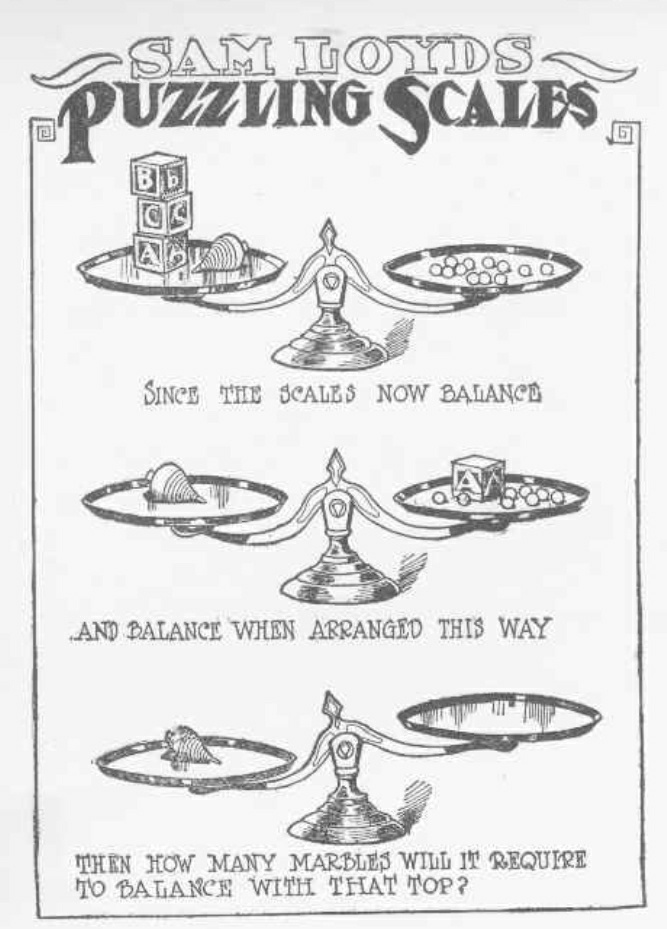
Do you have what it takes to be Scientific Blogging's alpha geek? Well it’s time put your geek where your mouth is…IF YOU CAN!
But first a warning: yes, you could Google for these answers, but then, deep down, you’ll know you’re a bad person. Then again, you might win a free
Geeks’ Guide to World Domination. So you’ll have to balance total loss of self worth with free geek schwag. It’s up to you.
Sequence gaps in human chromosome 15 have been closed by the application of 454 technology. Researchers writing in Genome Biology have described a simple and scalable method for finishing non-structural gaps in genome assemblies.
Manuel Garber worked with a team of researchers from the Broad Institute of MIT and Harvard, Massachusetts, USA, to develop an approach for closing class III gaps, those non-structural gaps that are refractory to clone-based approaches, using 454 sequencing.
We're somewhat lost in how to meet future carbon footprint goals. Heck, Germany should have been able to just close a few Soviet-era East German factories and hit their Kyoto protocol targets but even they couldn't do it.
The answer, as always, may be in nature. Some parts of outer space are great at getting rid of excess carbon, including an unusual carbon-rich star that was part of a mystery stellar explosion recorded in 2006.
"We were on a break," is just an excuse likely to get you yelled at today but a new study at the Smithsonian Tropical Research Institute in Gamboa, Panama says there may be some long-term value in it - at least if you are an ant.
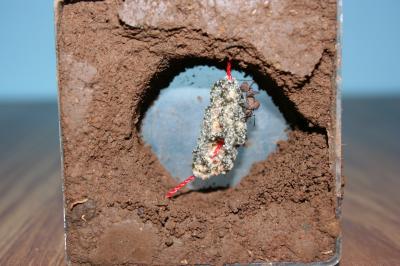
Fungus-farming ants have cultivated the same fungal crops for 50 million years, they say. Each young ant queen carries a bit of fungus garden with her when she flies away to mate and establish a new nest. Short breaks in the ants' relationship with the fungus during nest establishment may contribute to the stability of this long-term mutualism.
African-Americans are significantly more likely to be sanctioned by the United States welfare system than Caucasians, according to research published in the June issue of the American Sociological Review, but is there bias? Welfare sanctions in response to rules violations should be applied, in both law and principle, according to behavior and not characteristics like race, yet Sanford F. Schram, a professor of social theory and policy at Bryn Mawr College's Graduate School of Social Work and Social Research, says that is exactly what happens.
"This study provides powerful evidence that race and stereotype-consistent traits interact to shape the allocation of punishment at the frontlines of welfare reform," according to Schram.
The terms 'athlete' and 'jock' are sometimes used interchangeably - especially be people who dislike athletes. And it's usually negative. Due to that, only 18 percent of students in a recent study strongly identified with the identity of "jock," while 55 percent strongly identified with the identity of "athlete." Students were twice as likely to reject the jock label.