Investigators from the Harvard School of Public Health and the University of Puerto Rico evaluated the association between different measures of obesity and risk of periodontal disease. They analyzed data from 36,903 men from the Health Professionals Follow-Up Study who were free of reported periodontal disease at the start of follow-up, and followed them for up to 16 years (1986-2002).
Older people can dance their way towards improved health and happiness, according to a report from the Changing Ageing Partnership (CAP). The research, by Dr Jonathan Skinner from Queen’s University Belfast, reveals the social, mental and physical benefits of social dancing for older people. It suggests that dancing staves of illness, and even counteracts decline in aging.
Recommendations include the expansion of social dance provision for older people in order to aid successful aging and help older people enjoy longer and healthier lives.
Jonathan Skinner, Lecturer in Social Anthropology at the School of History and Anthropology at Queen’s, studied the effects of social dancing amongst older people in Northern Ireland, Blackpool and Sacramento.
Does the stress of being a parent lead to decay in children's teeth?
A team of scientists from The Ohio State University has examined the stress levels of parents whose young children either had no cavities or so many cavities that the children had receive anesthesia before undergoing dental treatment.
The investigators presented their findings today during the 87th General Session of the International Association for Dental Research.
The team also looked at the parents' education levels and income, and noted if they were single parents. Finally, they measured the parents' stress levels again after the children had received dental treatment.
A small, dense object only twelve miles in diameter is responsible for this beautiful X-ray nebula that spans 150 light years. At the center of this image made by NASA's Chandra X-ray Observatory is a very young and powerful pulsar, known as PSR B1509-58, or B1509 for short.
The pulsar is a rapidly spinning neutron star which is spewing energy out into the space around it to create complex and intriguing structures, including one that resembles a large cosmic hand. In this image, the lowest energy X-rays that Chandra detects are red, the medium range is green, and the most energetic ones are colored blue. Astronomers think that B1509 is about 1,700 years old and is located about 17,000 light years away.
Remember when Bugs Bunny dressed as Brunhilda to mess with opera viking Elmer Fudd? If the
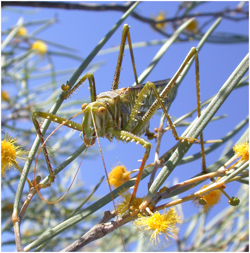
What's Opera, Doc? ended with Bugs biting off half of Elmer Fudd’s head to keep him hanging around as an immobile food source, then the "Kill The Wabbit" cartoon would essentially tell the story of the Spotted Predatory Katydid. This bug-of-prey lures lovesick male cicadas by decoding the complex cicada mating duet and imitating a lusty cicada female. As soon as the male cicada gets in grabbing range, the duet becomes a lot less romantic.
Some regions of our genomes are under permanent lockdown because they are hazardous to our health - or at least the health of our future offspring. These secured regions include large swaths of parasite-infested DNA - DNA that contains transposable elements, virus-like genetic parasites that have the ability to hop around the genome and cause harmful mutations.
Because out of control transposable elements are a major danger, cells (ours and those of most other organisms) have an elaborate maximum-security system for shutting these bad boys down. Just how this lockdown system works is an active area of research, and a recent
paper revealed how plant cells enforce security and prevent prison breaks by these DNA parasites.
Integral has captured one of the brightest gamma-ray bursts ever seen. A meticulous analysis of the data has allowed astronomers to investigate the initial phases of this giant stellar explosion, which led to the ejection of matter at velocities close to the speed of light. In particular, the astronomers believe that the explosion lifted a piece of the central engine’s magnetic field into space.
On 19 December 2004, the blast from an exploding star arrived at Earth. ESA’s Integral satellite, an orbiting gamma-ray observatory, recorded the entire event, providing information for what may prove to be one of the most important gamma-ray bursts (GRBs) seen in recent years. As the data was collected, astronomers saw the 500-second-long burst rise to extraordinary brilliance.
While sipping on sports drinks all day may provide an energy boost, this popular practice is also exposing people to levels of acid that can cause tooth erosion and hypersensitivity, NYU dental researchers have found.
In a recent study, the researchers found that prolonged consumption of sports drinks may be linked to a condition known as erosive tooth wear, in which acids eat away the tooth's smooth hard enamel coating and trickle into the bonelike material underneath, causing the tooth to soften and weaken. The condition affects one in 15 Americans and can result in severe tooth damage and even tooth loss if left untreated.
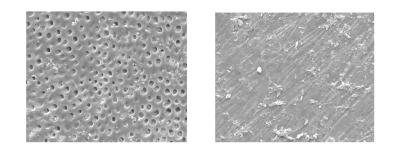
A team of researchers from the Massachusetts General Hospital Center for Engineering in Medicine (MGH-CEM) has found the first evidence of cell-to-cell communication by amino acids, the building blocks of proteins, rather than by known protein signaling agents such as growth factors or cytokines. Their report will appear in an upcoming issue of the FASEB Journal and has been released online.
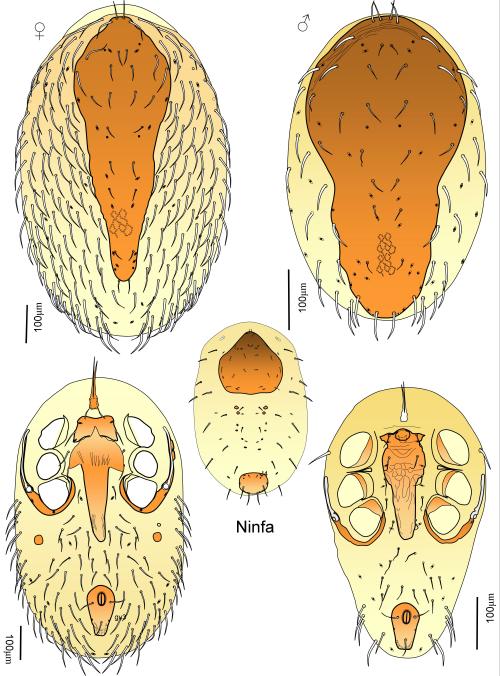
An international team of scientists has discovered a new acarine species (Ophionyssus schreibericolus) that lives off black green lizards from the Iberian Peninsula. This involves the first recording of the Ophionyssus genus that feeds off and lives on animals endemic to the peninsula. The researchers now think that these parasites could be found in other reptiles in the region.
The new acarine species is an ectoparasite that belongs to the Macronyssidae (Mesostigmata) family.