Cells keep up with the Joneses. The peer pressure of signals from complementary cells tells a stem cell how and when to differentiate and grow.
Dr. Carolyn Bertozzi and her team at Lawrence Berkeley laboratory are using molecular self-organization tendencies to give cells the orderly neighborhoods they desire. However, this microscopic community has an unusual dress code-- the cells display DNA on the outside of their membranes, which allows them to keep each other in line.
No, that isn't a New York Times headline(1), Swedish researchers really do say their studies of twins have showed significant genetic differences between men and women who smoke and develop lung disease - women are more susceptible to the consequences of smoking than men.
The team, led by Professor Magnus Svartengren from the Karolinska Institute, has been looking at the interaction of the environment with the genes of nearly 45,000 twins over 40 years old. They were interested in twins with chronic bronchitis or emphysema.
Pleasure and desire are essential to all human behavior, says Oxford University neuroscientist Morten Kringelbach , and he challenges us to trust our animal instincts in pursuit of those.
Pleasure and our sense of reward are produced by the interaction of many different brain regions, processed consciously or unconsciously. In the day-to-day routine of life, we may feel we are continually fighting our desires for what we really want. But doing so, he argues, is irrational and a huge waste of energy and resources, for it is pleasure and desire that underlie all our decisions and actions, and, therefore, our experiences.
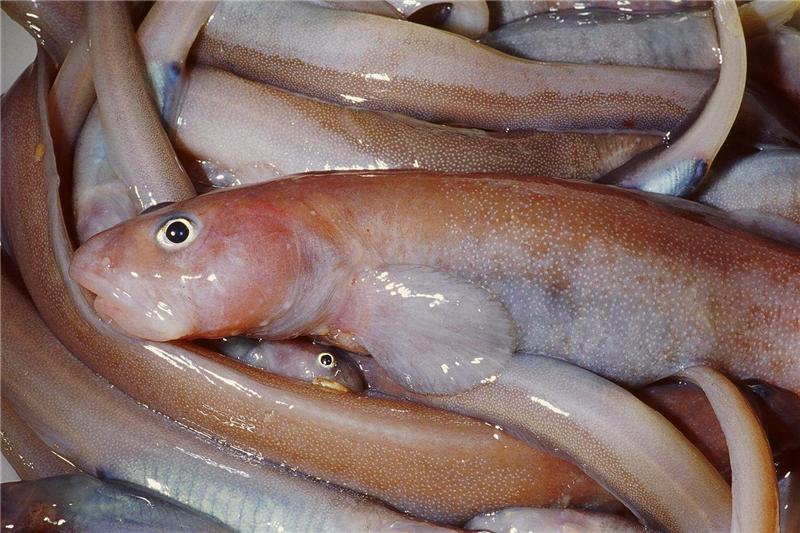
A new species of Antarctic fish, Gosztonyia antarctica, has been discovered at a depth of 650 meters in the Bellingshausen Sea in the Antarctic Ocean, an area which had not been studied since 1904 and where the fauna is "completely" unknown. Jesús Matallanas, the Spanish researcher responsible for the find, collected four specimens of the new species during Spanish Institute of Oceanography (IEO) campaigns in the southern hemisphere summers of 2003 and 2006.
Gamers caught an early glimpse of the future of serious games aimed at the health sector during the PlayMancer project’s demos at the latest Vienna Science Fair. The European PlayMancer project is working hard to improve the technology for serious game engines and tools for 3-D networked gaming.
The platform is being tested and validated physical rehabilitation and behavioral and addictive disorders with the inclusion of innovative multimodal I/O devices.
“We want to build actual games, serious games, around serious health-related problems like bulimia and chronic pain,” PlayMancer’s project manager Elias Kalapanidas tells ICT Results. “Using gaming in this way is really breaking new ground.”
Revered in India as "holy powder", the marigold-colored spice known as turmeric has been used for centuries to treat wounds, infections and other health problems. In recent years, research into the healing powers of turmeric's main ingredient, curcumin, has increased as scientists have examined claims of antioxidant, anti-cancer, antibiotic, antiviral and other properties, though little has been learned about exactly how curcumin works inside the body.
University of Michigan researchers led by Ayyalusamy Ramamoorthy now say that curcumin acts as a disciplinarian, inserting itself into cell membranes and making them more orderly, a move that improves cells' resistance to infection and malignancy.
During the television program Ulysses which aired in Italy on Saturday the 28th of February, the well-known scientific divulgator Piero Angela stated that a secret drawing, a youthful self-portrait of Leonardo da Vinci, had just been discovered. Actually, the Leonardo3 ( http://www.leonardo3.net) research center in Milan, Italy, had published its own edition of the Codex of Flight (book interactive software) in the October of 2007: this work included the digital restoration of page 10, revealing the underlying portrait. The same center had also created a 3D reconstruction of the image.
At the beginning of 2007, within the Leonardo3 research center, Massimiliano Lisa (the center's President) had noted the resemblance between the Self-Portrait and the sanguine at page 10.
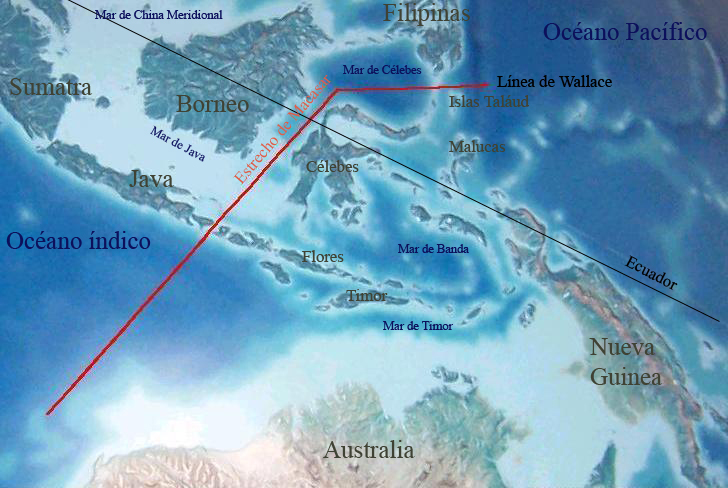
The Wallace Line is called such because when Alfred Russel Wallace made his way to the East Indies to tackle the secrets of biology, he found there was a 'line' in the Malay Archipelago that divides Indonesia into two parts and west of it the species were Asian while to the east they were more Australian.
Since the distance is short in places, Bali and Lombok are only about 35 km apart, it was a prime example of species distinction and biogeography and he wrote on it in The Malay Archipelago.
The abrupt switch in the kinds of mammals found along the Malay Peninsula, from mainland species to island species, in the absence of any daunting geographical barrier has fascinated scientists since then.
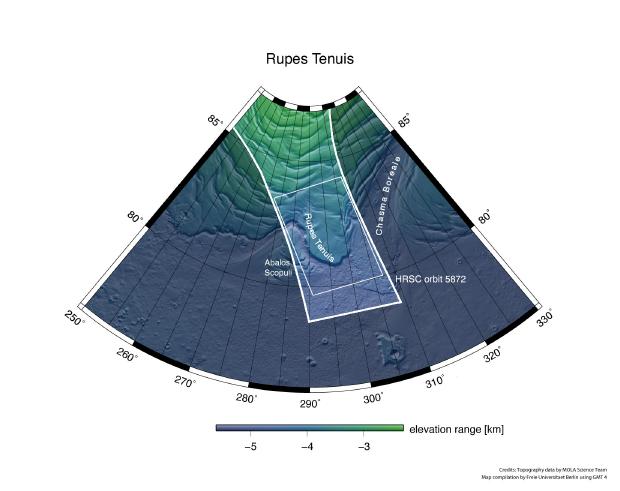
The snow-laden region of Rupes Tenuis on the martian north pole got some images courtesy of ESA’s Mars Express orbiter. The images are centred around 81° north and 297° east and have a ground resolution of 41 m/pixel. They cover an area of about 44 000 km2, almost as large as the Netherlands.
Rupes Tenuis is located at the southern edge of the martian north polar cap, approximately 5500 km northeast of the Tharsis volcanic region.
At present, polar caps contain the largest water reservoir on the Red Planet. Recent data from the Mars Advanced Radar for Subsurface and Ionosphere Sounding (MARSIS) on board Mars Express has revealed that both polar ice caps are 3.5 km thick.
Artemisinin is the most powerful anti-malaria drug in use today and it commonly obtained by extracting the drug from Artemsisia annua, the sweet wormwood tree.