






The American Institute of Physics (AIP) announced the winners of its 2008 Science Writing Awards today. The winners -- two scientists, a journalist, a children's book author, and a public television producer -- will receive four prizes of $3,000, engraved Windsor chairs, and certificates of recognition.

"These outstanding science communicators have each improved the general public's appreciation of physics, astronomy, and related sciences through their wonderfully creative endeavors," says Catherine O'Riordan, AIP Vice President, Physics Resources.

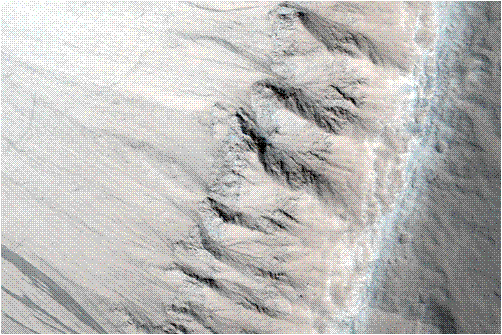
Unique fractures in lavas on ancient Mars suggest water occasionally flooded portions of the planet's surface.   The fractures, known as "columnar joints," are the first that have been observed on a planet other than Earth. 

The characteristics of the column-like fractures can help scientists understand the role of water in geologic processes on Mars, said Moses Milazzo, a geophysicist with the U. S. Geological Survey Astrogeology Team in Flagstaff and lead author on a paper on the discovery recently published in the journal Geology.

"Columnar joints form as cooling lava contracts," said Milazzo. 

Internet phenomena has long been used by advertisers to gather data, form hypotheses, and test them in the form of ad serving—science is starting to get smart to the data-gathering possibilities spawned by voluntary internet activity. 

The most recent headline to this effect is Everquest 2 research at U of Minnesota. Jaideep Srivastava, et al are using Everquest chat logs for social network analysis, similar to the way community interactions among flesh-and-blood people. 


To the historian, English is a fascinating language.  Unlike most of the languages of Europe, it underwent an almost complete makeover following the Norman invasion (1066 and All That).  As a result, although or basic words and grammar are basically like German and especially Dutch, the lion’s share of our vocabulary is from French and Latin.  
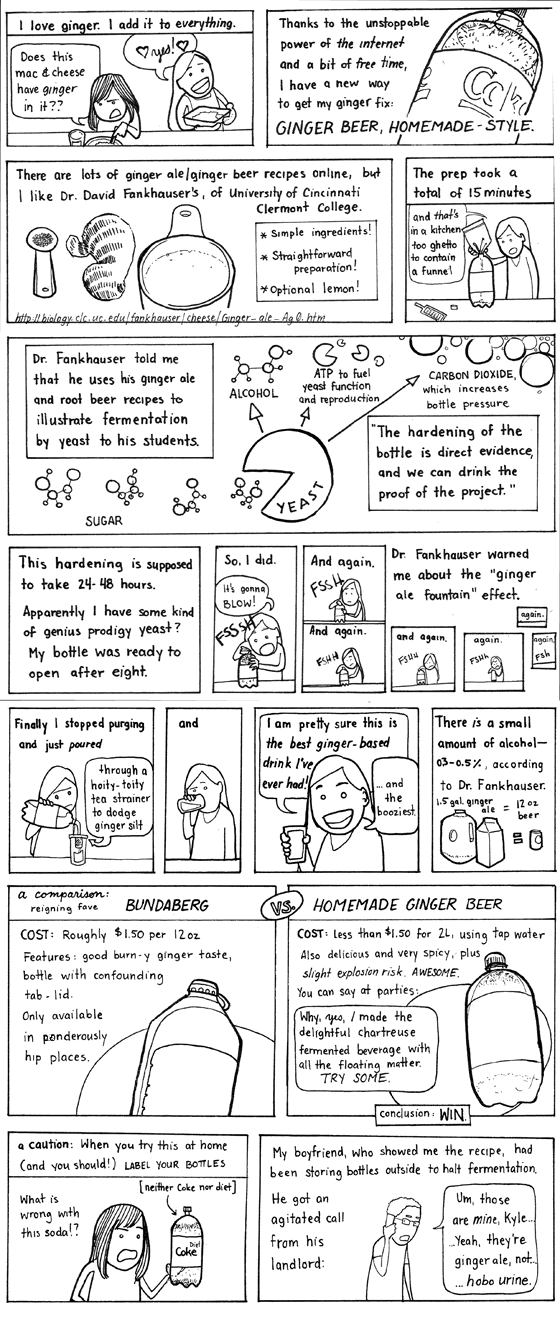
My grandfather had a special room in his cellar for the various presses and casks he used to make his notoriously mouth-wrenching red wine.  I have friends whose microbrew apparatus takes up the entire spare bedroom of their house, like a permanently boozy-smelling houseguest.  Accordingly, I thought that fermenting was best left to the hardcore hobbyists-- too complicated a pursuit for the average partly-stocked kitchen.  Turns out, it's pretty simple. I recently made ginger ale with only items I had laying around my kitchen. 
Teams of scientists from Australia and the United States have used yeast and mammalian cells to discover a connection between genetic and environmental causes of Parkinson's disease. 

Yeasts are single cell organisms, used widely in biological research because their structure resembles that of cells found in animals and humans. Yeasts share many genes, or their functional equivalents, with humans and offer the ability to screen or test thousands of genes and analysing their effects. 
The detailed structure of a protective 'jacket' that surrounds cells of the Clostridium difficile superbug, and which helps the dangerous pathogen stick to human host cells and tissues, is revealed in part in the 1 March issue of Molecular Microbiology

Scientists hope that unravelling the secrets of this protective layer's molecular structure might reveal possible targets for new drugs to treat C. difficile infections.

The 'jacket' is a surface layer, or 'S-layer', made of two different proteins, with half a million of each covering every C. difficile cell. The S-layer is believed to help C. difficile cells colonise the human gut, where they release sickness-causing toxins. 
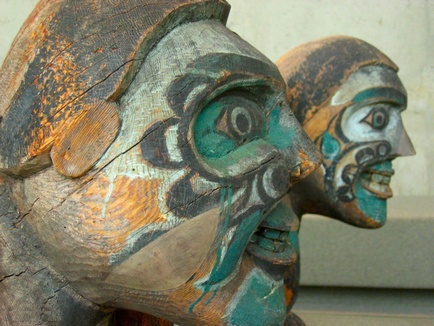
When Evo Morales, Bolivia's first president of Indian origin, was appointed in 2006 he initiated a "decolonising revolution."   Now, in a new thesis in social anthropology at the University of Gothenburg, Anders Burman examines how the government policy for decolonization has been interwoven with the rituals and cosmology of the indigenous population.

For the indigenous population in the Bolivian Andes, colonialism was not something that was consigned to history when Bolivia was founded. Their exploitation and marginalization simply took on new forms. 
Mendel solved the logic of inheritance in his monastery garden with no more technology than Darwin had in his garden at Down House, so why couldn't Darwin have done it too? A Journal of Biology article argues that Darwin's background, influences and research focus gave him a viewpoint that prevented him from interpreting the evidence that was all around him, even in his own work. 

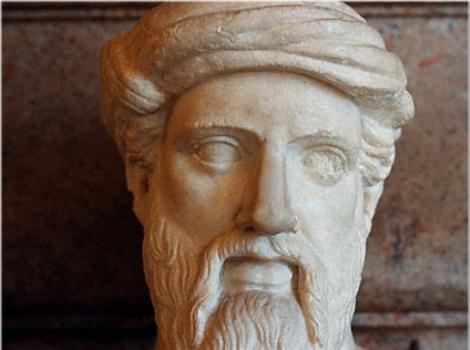
Moravian priest and scientist Gregor Mendel (1822 - 1884) studied clear-cut, inherited traits in pea plants, which he grew in the monastery gardens in Brno. Mendel showed that trait inheritance follows simple laws, and 'Mendels Laws Of Inheritance' (1) were later named after him. Mendel's work was rediscovered at the beginning of the 20th century, and laid the foundations for genetics.
In times of starvation, cells tighten their belts: they start to digest their own proteins and cellular organs. The process - known as autophagy - takes place in special organelles called autophagosomes. It is a strategy that simple yeast cells have developed as a means of survival when times get tough, and in the course of evolution, it has become a kind of self-cleaning process. In mammalian cells, autophagosomes are also responsible for getting rid of misfolded proteins, damaged organelles or disease-causing bacteria.


