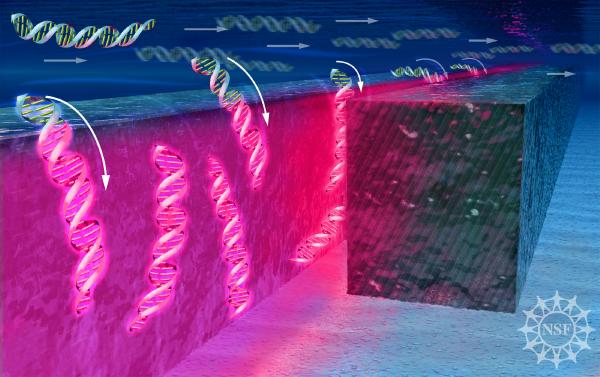
Using a beam of light shunted through a tiny silicon channel, researchers have created a nanoscale trap that can stop free floating DNA molecules and nanoparticles in their tracks. By holding the nanoscale material steady while the fluid around it flows freely, the trap may allow researchers to boost the accuracy of biological sensors and create a range of new 'lab on a chip' diagnostic tools.
Light has been used to manipulate cells and even nanoscale objects before, but the new technique allows researchers to manipulate the particles more precisely and over longer distances.
Did you make a resolution? Most people do, consciously or not. The end of one year and the beginning of a new one is a built-in time for reflection. You may resolve to go to the gym or learn a musical instrument but often something will come up that interrupts the routine, progress is lost and the resolution loses its ... resolve.
John O’Neill, LCSW, LCDC, CSAT, director of Addiction Services for The Menninger Clinic in Houston, says all is not lost if you plan your resolution, including planning for setbacks. And his 5-step program is not just for New Years, you can resolve to make positive changes at any time.
There was a big development in science this year, yet most people missed it. It wasn't
induced pluripotent stem cells or
global warming or Barack Obama securing 99% of the scientist vote despite his belief that vaccines cause autism, which caused even heterosexual scientists to disregard
Jenny McCarthy. No, it was an alarming decrease in available clichés to describe what scientists think about new discoveries.
Despite the regular onslaught of mixed messages from those in scientific research land, I still take a multivitamin most days. (Thanks, Mom, for starting me off young with those delicious Flinstone Kids niblets of nutrition.)
Placebo effect? I don't know. I do know that I feel better when I remember to take my multivitamin, iron and vitamin D supplements, and the occasional fish oil horse pill. But will it help me in the long run with any aspect of my health?
Well, it's now a merry Christmas for everyone except Nicholas Cage. The U.S. Army Chemical Materials Agency (CMA) announced Monday that as of Christmas Eve, 2008, they've completed the destruction of all munitions carrying VX gas in the possession of the U.S. Army. Unfortunately for Mr. Cage, this means that he's far less likely to be called upon to save San Francisco from rockets armed with the deadly gas by breaking into the former prison on Alcatraz Island aided by Sean Connery, as he proved he could do in Micheal Bay's 1996 film, The Rock.
New computer visualization technology developed by the Harvard Initiative in Innovative Computing has helped astrophysicists understand that gravity plays a larger role than previously thought in deep space's vast, star-forming molecular clouds.
The insight is being illustrated in Nature's online version through new three-dimensional Portable Document Format (PDF) technology that will allow readers to view the article's key graphics using free PDF software already commonly found on computers.
An extract from grape seeds forces laboratory leukemia cells to commit cell suicide, according to researchers from the University of Kentucky. They found that within 24 hours, 76 percent of leukemia cells had died after being exposed to the extract.
The investigators, who report their findings in the January 1, 2009, issue of Clinical Cancer Research, a journal of the American Association for Cancer Research, also teased apart the cell signaling pathway associated with use of grape seed extract that led to cell death, or apoptosis. They found that the extract activates JNK, a protein that regulates the apoptotic pathway.
Antibiotics may be overprescribed in kids because of concern by
helicopter parents and worries about malpractice lawsuits, but in at least one instance they are saving a lot of lives - as a preventive measure to patients in intensive care units (ICUs).
This from a study involving nearly sixthousand Dutch patients in thirteen hospitals. Researchers at University Medical Center (UMC) Utrecht have published their findings in an article in
The New England Journal of Medicine.
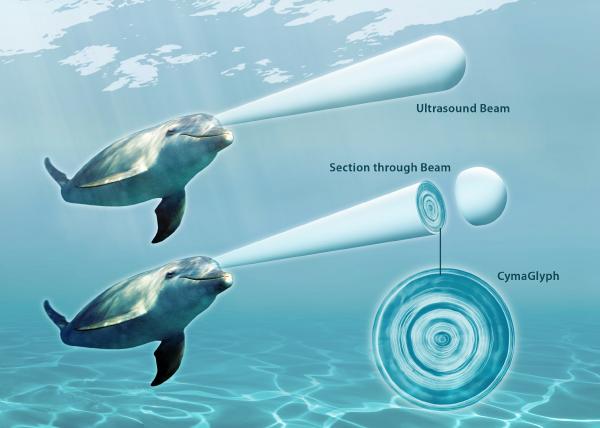
Researchers in Great Britain and the United States have imaged the first high definition imprints that dolphin sounds make in water. They consider it a real breakthrough in deciphering dolphin language.
Certain sounds made by dolphins have long been suspected to represent language but the complexity of the sounds has made their analysis difficult. Previous techniques, using the spectrograph, display cetacean (dolphins, whales and porpoises) sounds only as graphs of frequency and amplitude.
Religious people have more self-control than non-religious counterparts, says a study by University of Miami professor of Psychology Michael McCullough and he says this is why religious people may be better at pursuing and achieving long-term goals and also might help explain why religious people tend to have lower rates of substance abuse, better school achievement, less delinquency, better health behaviors, less depression, and longer lives.