As ice melts away from Antarctica, parts of the continental bedrock are rising in response -- and other parts are sinking, scientists have discovered, and the finding will give much needed perspective to satellite instruments that measure ice loss on the continent, and help improve estimates of future sea level rise.
"Our preliminary results show that we can dramatically improve our estimates of whether Antarctica is gaining or losing ice," said Terry Wilson, associate professor of earth sciences at Ohio State University. Wilson reported the research in a press conference Monday, December 15, 2008 at the American Geophysical Union meeting in San Francisco. These results come from a trio of global positioning system (GPS) sensor networks on the continent.
A carbon nanotube-coated "smart yarn" that conducts electricity could be woven into soft fabrics that detect blood and monitor health, engineers at the University of Michigan have demonstrated.
"Currently, smart textiles are made primarily of metallic or optical fibers. They're fragile. They're not comfortable. Metal fibers also corrode. There are problems with washing such electronic textiles. We have found a much simpler way---an elegant way---by combining two fibers, one natural and one created by nanotechnology," said Nicholas Kotov, a professor in the departments of Chemical Engineering, Materials Science and Engineering and Biomedical Engineering.
You can't stop cancer. The nature of mutations is that they aren't predictable so they can't be vaccinated against or prevented in any way we understand those terms today. Stopping cancer from killing people is another matter. Metastasis is the ability of cancer cells to move from a primary site to form more tumors at distant sites and it's how cancer spreads and eventually kills. It is a complex process in which cell motility and invasion play a fundamental role.
Essential to our understanding of how metastasis develops is identification of the molecules, and characterisation of the mechanisms that regulate cell motility. These mechanisms have been poorly understood.
The Journey of Man: A Genetic Odyssey, Spencer Wells
Random House, 2002
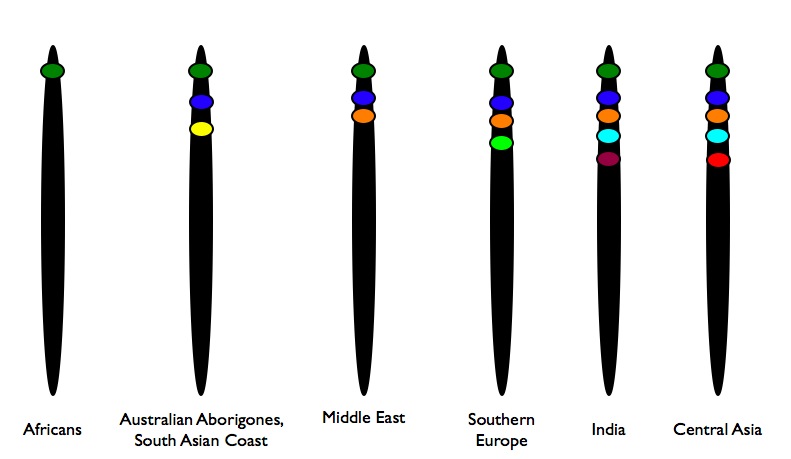
Spencer Wells, in his short, accessible book designed to accompany a similarly titled documentary film, describes the deep history of humans as it has been inscribed in Y chromosomes. This history has only recently become decipherable through modern genetic tools, and the results have settled some centuries-old controversies about how humans in different parts of the world have become so diverse. The biggest surprise is that our differences are recent: the dramatic differences that distinguish Kenyans, Swedes, Han Chinese, and Polynesians all arose less than 50,000 years ago.
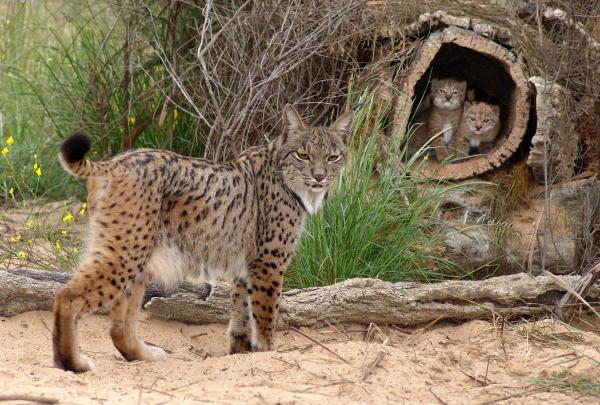
The Iberian Lynx is now the most endangered cat in the world with only about 160 animals remaining in the wild and, despite extensive research and millions of Euros spent in decades of protection, nothing seems capable to stop this decline.
I’m used to some American media outlets shamelessly feeding crap to the public. Think Fox so-called News, for instance. But the Los Angeles Times? That’s supposed to be one of the most highly respectable papers in the country, on par with the New York Times, the Washington Post, the Chicago Tribune or the Boston Globe. Well, once again I was wrong. David Klinghoffer published an opinion piecein the LA Times that argued that belief in the paranormal is not just, well, normal, but actually good for you.
This week I participated in a Social Media Day at NIST. During
my talk I provided an overview of our current work in using Web2.0 tools for doing
Open Notebook Science in fields related to chemical synthesis and drug discovery.
This week I participated in a Social Media Day at NIST. During
my talk I provided an overview of our current work in using Web2.0 tools for doing
Open Notebook Science in fields related to chemical synthesis and drug discovery.
During my talks I generally try to place our work in context and give the audience a sense of where I see science evolving. I often start with the increasingly important role of openness and at some point follow up with this slide showing the shift of scientific communication from human-to-human to machine-to-machine.
So says an
article in the Sunday Telegraph, following the death of
Oliver Postgate, creator and writer of some of Britain’s most popular children’s television programmes, namely
Pingwings,
Pogles’ Wood,
Noggin the Nog,
Ivor the Engine,
Clangers and
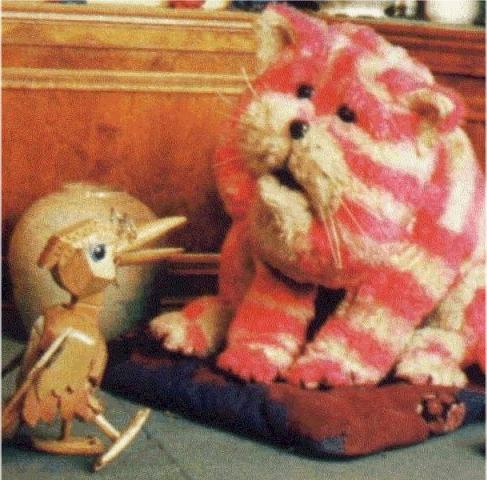
Bagpuss, of which the last was voted in a 1999 poll to be the most popular children’s television programme of all time.
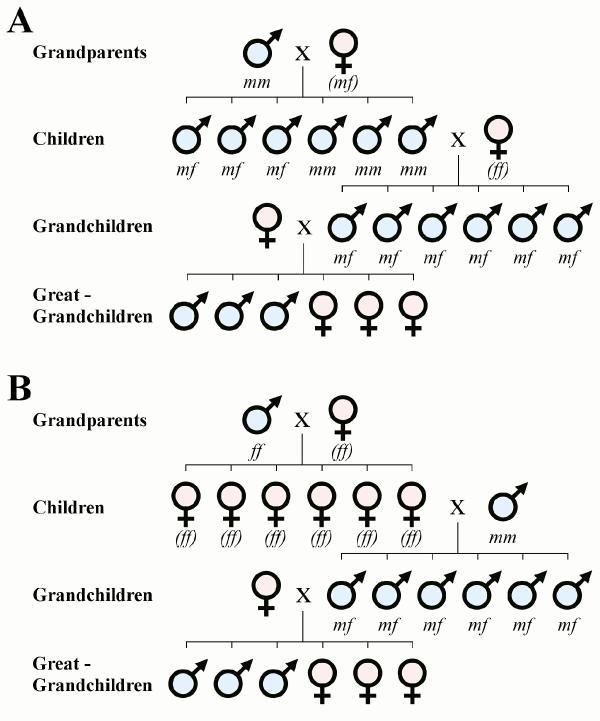
Men determine the sex of a baby depending on whether their sperm is carrying an X or Y chromosome. An X chromosome combines with the mother's X chromosome to make a baby girl (XX) and a Y chromosome will combine with the mother's to make a boy (XY).
A Newcastle University study suggests that an as-yet undiscovered gene controls whether a man's sperm contains more X or more Y chromosomes, which affects the sex of his children. On a larger scale, the number of men with more X sperm compared to the number of men with more Y sperm affects the sex ratio of children born each year.