After it's conception and development during World War I, sonar is finally finding use in an unlikely medium: space. Astronauts on the International Space Station will soon be able to conduct experiments in zero gravity with no container contamination using beams of sound to control a sample.
Space-DRUMS, or the Space Dynamically Responding Ultrasonic Matrix System, uses a dodecahedron container armed with twenty ultrasonic beams that use sound to control the volume occupied by a sample inside.
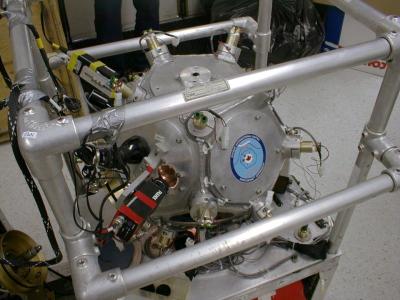 The SpaceDRUMS 12-sided reactor is able to keep a baseball-sized sample from touching its walls. Photo Credit: University of Bath.
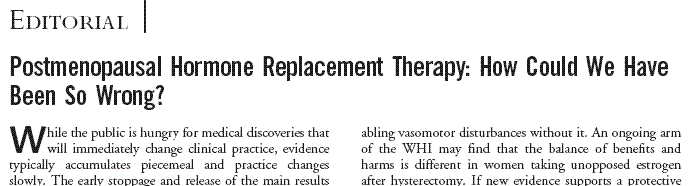
Not 10 years ago, most doctors agreed that estrogen supplements for post-menopausal women reduced the risk of heart attacks. Millions were paying extravagantly for “hormone replacement therapy”, and drug companies were making a killing. However, a comprehensive study conducted by the Women’s Health Initiative was stopped early, in 2002, because the dangers to healthy women taking estrogen were deemed excessive. Estrogen therapy, it turned out, actually increased the risk of heart attack, strokes, and breast cancer. The medical community was shocked. The Annals of Internal Medicine ran an editorial “How Could We Have Been So Wrong?” The National Institutes of Health hosted a special seminar on “methodology” and “medical evidence”.
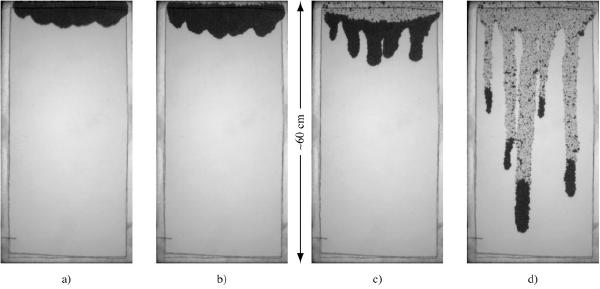
Researchers at MIT recently found an elegant solution to a sticky scientific problem in basic fluid mechanics: why water doesn't soak into soil at an even rate, but instead forms what look like fingers of fluid flowing downward.
Scientists call these rivulets "gravity fingers," and the explanation for their formation has to do with the surface tension where the water—or any liquid—meets the soil (or other medium). Knowing how to account for this phenomenon mathematically will have wide-ranging impact on science problems and engineering applications, including the recovery of oil from reservoirs and the sequestration of carbon underground.
Throughout history, human beings have used the whistle for everything from hailing a cab to carrying a tune. Now, an orangutan's spontaneous whistling is providing scientists at Great Ape Trust of Iowa new insights into the evolution of speech and learning.
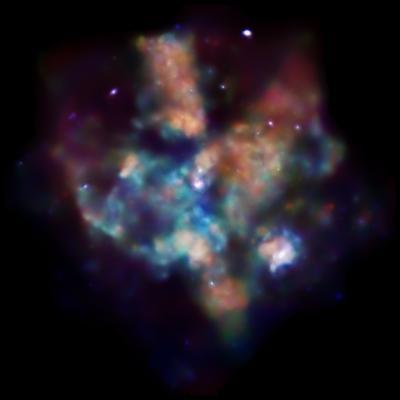
Found in the nearby Large Magellanic Cloud, 30 Doradus is one of the largest massive star forming regions close to the Milky Way. Enormous stars in 30 Doradus, also known as the Tarantula Nebula, are producing intense radiation and searing winds of multimillion-degree gas that carve out gigantic bubbles in the surrounding cooler gas and dust. Other massive stars have raced through their evolution and exploded catastrophically as supernovae, expanding these bubbles into X-ray-brightened superbubbles. They leave behind pulsars as beacons of their former lives and expanding supernova remnants that trigger the collapse of giant clouds of dust and gas to form new generations of stars.
Insufficient vitamin D can stunt growth and foster weight gain during puberty, according to a new study published in the Journal of Clinical Endocrinology&Metabolism. Even in sun-drenched California, where scientists from the McGill University Health Centre (MUHC) and the University of Southern California conducted their study, vitamin D deficiency was found to cause higher body mass and shorter stature in girls at the peak of their growing spurt.
A new study reveals that humans use different neural mechanisms for determining criminal responsibility and assigning an appropriate punishment. The research, published in the December 11th issue of the journal Neuron, provides fascinating insight into brain systems that may explain how thousands of years of reliance on human sanctions to enforce social norms gave rise to our current criminal justice system.
Moons outside our Solar System with the potential to support life have just become much easier to detect, thanks to research by an astronomer at University College London (UCL).
David Kipping has found that such moons can be revealed by looking at wobbles in the velocity of the planets they orbit. His calculations, which appear in the Monthly Notices of the Royal Astronomical Society today, not only allow us to confirm if a planet has a satellite but to calculate its mass and distance from its host planet factors that determine the likely habitabiliity of a moon.
More than five million people die every year from infectious diseases, despite the availability of numerous antibiotics and vaccines. The discovery of penicillin to treat bacterial infections, along with the development of vaccines for previously incurable virus diseases such as polio and smallpox, achieved great reductions in mortality during the mid-20th century.
A new study from the psychology department at Tufts University shows that when dieters eliminate carbohydrates from their meals, they performed more poorly on memory-based tasks than when they reduce calories, but maintain carbohydrates. When carbohydrates were reintroduced, cognition skills returned to normal.
While the brain uses glucose as its primary fuel, it has no way of storing it. Rather, the body breaks down carbohydrates into glucose, which is carried to the brain through the blood stream and used immediately by nerve cells for energy. Reduced carbohydrate intake should thus reduce the brain's source of energy. Therefore, researchers hypothesized that diets low in carbohydrates would affect cognitive skills.