Eating saturated fats from butter, cream and meat, as well as trans fats found in hydrogenated oils can boost our risk of cardiovascular disease, while consuming mono-unsaturated fat can be good for our heart.
Yet what's the effect of all these fats on our weight? Are some better than others?
"Research on animals and some clinical trials show that not all fats have the same effect on weight," says Nadiah Moussavi, a Master's student from the Université de Montréal Department of Nutrition. "Few epidemiological studies exist on the subject and the results of those are contradictory."
New data from The Kinsey Institute at Indiana University demonstrate that many women think condoms undermine sexual pleasure, but those who use both hormonal contraception and condoms report higher overall sexual satisfaction.
The study authors suggest that this inconsistency reflects how women think about their contraceptive method when asked questions about two different aspects of sexuality -- sexual enjoyment and overall sexual satisfaction.
When considering overall sexual satisfaction, which goes beyond the immediate sexual moment and includes factors such as sexual self-esteem and relationship satisfaction, women who used both condoms and hormonal methods reported the highest levels of sexual satisfaction.
Having kids believe there's a jolly man in a red suit who visits on Christmas Eve doesn't turn out to be very detrimental, according to a new analysis by Serge Larivée, although some parents can feel they're outright lying to their children and a small percentage of kids feel that way toward their parents.
"When they learn the truth, children accept the rules of the game and even go along with their parents in having younger children believe in Santa," says Larivée, a psycho-education professor at the Université de Montréal. "It becomes a rite of passage in that they know they are no longer babies."
Every living thing is composed of cells and, via receptor proteins on their outer surface, cells communicate with each other and with the outside world. Receptors are found on skin cells (pain and pressure receptors, for example) as well as on the cells of other tissues and organs.
A new genome-wide study examines genetic variants associated with nine metabolic traits and is the first to draw out novel variants from a population unselected for current disease. The traits are indicators for common disease such as cardiovascular disease, type 2 diabetes, blood pressure, inflammation and lipid levels.
Cohorts are followed throughout their lives, gathering lifelong information about their health: these data will help researchers to dissect the complex causes of common disease, whether genetic or environmental. The current study might indicate genetic variants that influence early development of disease, informing public health measures.
A new study presages a real aim of genetics: to look at whole populations to in order determine the significance of individual genetic variants for individual health. A research team says they found six novel genetic variants that are associated with lipid levels, a common indicator of heart or artery disease.
The power of 'genetic microscopes' has increased because the methods are in place to study many thousands of DNA samples. This study, involving over 20,000 samples and researchers from a dozen European countries, is the first to find such lipid–gene links by looking at the general population, rather than patients.
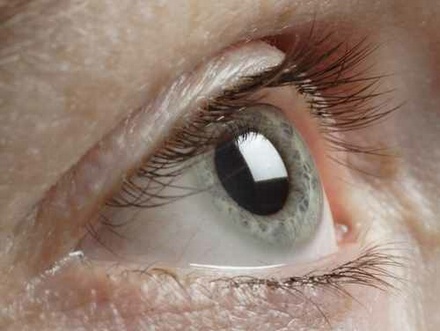
A future episode of CSI or your favorite crime drama may have an interesting new way to establish time of death, thanks to the work of a team of researchers from the University of Santiago de Compostela. Based on the analysis of several substances from the vitreous humour of the eye of cadavers, they write in the journal Statistics in Medicine, they have developed a piece of software that makes it possible to establish precisely the post mortem interval (PMI), information that will make the work of the police and the courts of justice easier.
The wild pea pod is big and heavy, with seemingly little prayer of escaping the shade of its parent plant.
And yet, like a grounded teenager who knows where the car keys are hidden, it manages – if it has a reasonable chance of escape.
University of Florida researchers working at the world's largest experimental landscape devoted to wildlife corridors – greenways that link woods or other natural areas — have discovered the pea and similar species share, given a clear shot, a mysterious ability for mobility. Though their seeds are neither dispersed by birds nor borne by the wind, they are nevertheless far more likely to slalom down corridors than slog through woods.
For the first time in Australia, scientists at Sydney's Centenary Institute have filmed an
immune cell becoming infected by a parasite and followed the infection as it begins to spread throughout the body.
Professor Wolfgang Weninger, head of the Immune Imaging program at the Centenary Institute, says the discovery was made possible using high powered multi-photon microscopy which allows real cells to be viewed in real time.
Speaking of science and religion, I got significantly annoyed by a short piece in Nature magazine by Michael Bond (13 November 2008). Bond reviews two recent books on Buddhism and science: “Mind and Life: Discussions with the Dalai Lama on the Nature of Reality,” by Pier Luigi Luisi, and “Buddhism and Science: A Guide for the Perplexed,” by Donald S. Lopez.