









A gene contained in laboratory yeast has helped an international team of researchers uncover new findings about the process by which protein molecules bind to control sequences in genes in order to initiate gene expression, says a new study.

Previously thought to be inert carriers of the genetic instructions from DNA, so-called non-coding RNAs turn out to reveal a novel mechanism for creating access to DNA required by transcriptional activation proteins for successful gene expression, according to Boston College Biology Professor Charles Hoffman, a co-author of the study in Nature with researchers from two Japanese universities.

Researchers in Greece report design of a new material that almost meets the U.S. Department of Energy (DOE) 2010 goals for hydrogen storage and could help eliminate a key roadblock to practical hydrogen-powered vehicles. Their study on a way of safely storing hydrogen, an explosive gas, is scheduled for the Oct. 8 issue of ACS' Nano Letters.

Georgios K. Dimitrakakis, Emmanuel Tylianakis, and George E. Froudakis note that researchers long have sought ways of using carbon nanotubes (CNTs) to store hydrogen in fuel cell vehicles. CNTs are minute cylinders of carbon about 50,000 times thinner than the width of a human hair. Scientists hope to use CNTs as miniature storage tanks for hydrogen in the coming generation of fuel cell vehicles.

White people, even children as young as 10, avoid talking about race because any opinion may appear prejudiced, according to new research, but that approach often backfires as blacks tend to view that approach as evidence of prejudice, especially when race is clearly relevant.

These results are from two separate sets of experiments led by researchers from Tufts University and Harvard Business School. Their findings are reported in the October issue of the Journal of Personality and Social Psychology(1) and the September issue of Developmental Psychology(2).

“Efforts to talk about race are fraught with the potential for misunderstandings,” said the studies’ lead author, Evan Apfelbaum, a PhD candidate at Tufts University. “One way that whites try to appear unbiased is to avoid talking about race altogether, a tendency we refer to as strategic colorblindness.”

Efforts to make furniture less flammable have given residents of California higher blood levels of potentially toxic flame retardants called PBDEs (polybrominated diphenyl ethers) - nearly twice the national average, scientists from Massachusetts and California are reporting. Their study, the first to examine regional variations in PBDE levels in household dust and blood within the U.S., is published in Environmental Science & Technology.

In the new study, Ami Zota and colleagues note that PBDEs (polybrominated diphenyl ethers) are widely used as flame retardants in upholstered furniture and electronics. The materials are released into the environment as dust particles, where they can accumulate in homes as well as human blood and tissue. Although their exact effects in humans are unclear, studies in animals suggest that PBDEs may cause thyroid, developmental, and reproductive problems. Since California has among the most stringent furniture flammability standards, the researchers suspected that state residents may have higher levels of PBDE dust exposure than others in the United States.

Researchers in Iran are publishing what they describe as the first study on a fungus that can remove sulfur, a major source of air pollution, from crude oil more effectively than conventional refining methods. The finding could help reduce air pollution and acid rain caused by the release of sulfur components in gasoline and may help oil companies meet tougher emission standards for fuel, the scientists say. Their study is scheduled for the Oct. 1 issue of Industrial & Engineering Chemistry Research.

Jalal Shayegan and colleagues point out that existing processes for refining so-called "heavy," or high-sulfur, crude oil convert sulfur to hydrogen sulfide gas at high temperatures and pressures. However, they leave behind some kinds of sulfur-based compounds, which wind up in gasoline and other fuels. Scientists long have known that certain microbes can remove sulfur from oil. But nobody had tried using these microbes in so-called biodesulfurization of heavy crude oil until now, they indicate.

After several years of research and development on the promising idea of an intelligent writing tool for correcting and enhancing a user's text, WhiteSmoke 2009 says thet can deliver it. Featuring a grammar checking engine that detects a wider range of errors than any other commercial grammar checker, and a range of other tools to create an all-in-one writing solution, WhiteSmoke 2009 says it is the ideal software application for writers, copy editors and at-home Internet users who are concerned with creating error-free texts.

Community is the Key

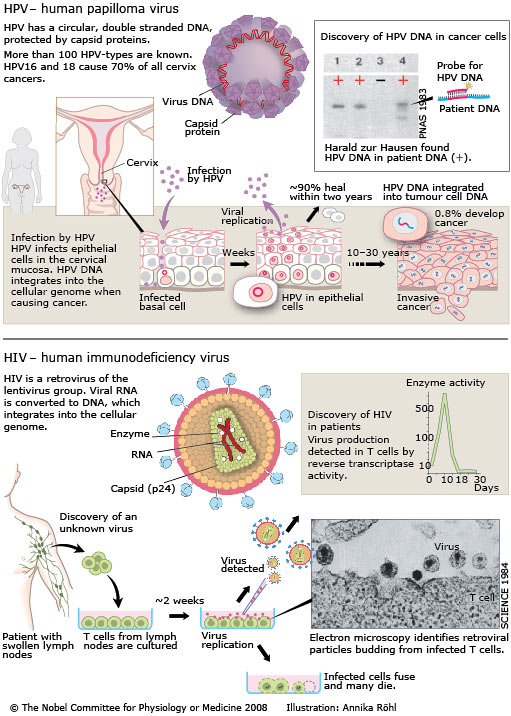
The Nobel Assembly at Karolinska Institutet has today decided to award The Nobel Prize in Physiology or Medicine for 2008 with one half to Harald zur Hausen for his discovery of "human papilloma viruses causing cervical cancer" and the other half jointly to Françoise Barré-Sinoussi and Luc Montagnier for their discovery of "human immunodeficiency virus."

Harald zur Hausen went against current dogma and postulated that oncogenic human papilloma virus (HPV) caused cervical cancer, the second most common cancer among women. He realized that HPV-DNA could exist in a non-productive state in the tumours, and should be detectable by specific searches for viral DNA. He found HPV to be a heterogeneous family of viruses. Only some HPV types cause cancer. His discovery has led to characterization of the natural history of HPV infection, an understanding of mechanisms of HPV-induced carcinogenesis and the development of prophylactic vaccines against HPV acquisition. 

Afraid to fly? It may not be rational, since airplanes are quite safe, but to people who have that phobia, it defies rationality. Researchers from the Center for Obesity Research and Education and the department of kinesiology at Temple University say the same psychological barrier may inhibit some obese women from exercising.

Much like a crippling worry that arachnophobes have about spiders, the research presented at the Obesity Society's Annual Meeting on October 5th says some obese women face a barrier when it comes to exercise that normal weight women do not.

Chemicals used in the environment to kill bacteria could be making them stronger, according to a paper published in Microbiology. Low levels of these chemicals, called biocides, can make the potentially lethal bacterium Staphylococcus aureus remove toxic chemicals from the cell even more efficiently, potentially making it resistant to being killed by some antibiotics.

Biocides are used in disinfectants and antiseptics to kill microbes. They are commonly used in cleaning hospitals and home environments, sterilizing medical equipment and decontaminating skin before surgery. At the correct strength, biocides kill bacteria and other microbes. However, if lower levels are used the bacteria can survive and become resistant to treatment.

Anorexia nervosa generates a lot of interest, but advances in treatment have been slow and disappointing - especially in drug interventions.

In recent years a drug often used as an anti-psychotic in the treatment of schizophrenia has drawn more attention as an aid to the anxiety and obsessional thinking that can increase when nutrition is being re-stabilized and weight gain is under way.

Some research out of The Ottawa Hospital Regional Centre for the Treatment of Eating Disorders in Canada is adding to a growing interest in olanzapine during anorexia recovery. The Ottawa study was small, but confirms findings by others and a growing off-label use for this difficult to treat condition.


