








Self-recognition, it has been argued, is a hallmark of advanced cognitive abilities in animals. It was previously thought that only the usual suspects of higher cognition—some great apes, dolphins, and elephants—were able to recognize their own bodies in a mirror. In a PLoS Biology article, psychologist Helmut Prior and colleagues show evidence of self-recognition in magpies — a species with a brain structure very different from mammals.

The researchers subjected the magpies to a mark test, wherein a mark is placed on the subject's body in such a way that it can only be seen in a mirror. When the magpies engaged in activity that was directed towards the mark (e.g. scratching at it), the researchers were able to conclude that these birds recognized the image in the mirror as themselves, and not another animal.

Cells obtained from menstrual blood, termed 'endometrial regenerative cells' (ERCs), are capable of restoring blood flow in an animal model of advanced peripheral artery disease, according to a study published today in Journal of Translational Medicine. When circulation-blocked mice were treated with ERC injections, circulation and functionality were restored.

Critical limb ischemia, an advanced form of peripheral artery disease, causes approximately 150,000 amputations per year in the US. Currently there are no medical or surgical interventions that are effective in the advanced stages of the disease. ERCs are cells taken from menstrual blood that are capable of forming into at least 9 different tissue types, including heart, liver and lung. Their discovery won the 'Medicine Research Award of the Year' award for BioMed Central's Research Awards in 2007.

Knowing the words for numbers is not necessary to be able to count, according to a new study of aboriginal children by UCL (University College London) and the University of Melbourne. The study of the aboriginal children from two communities which do not have words or gestures for numbers found that they were able to copy and perform number-related tasks.

The findings suggest that we possess an innate mechanism for counting, which may develop differently in children with dyscalculia, a lessor-known learning disability that affects mathatical calculations.

Whether a family attends religious services has as much of an impact on a teen's grade point average as whether the student's parents earned a college degree, a University of Iowa study indicates.

Researchers found that on average, students whose parents received a four-year college degree average a GPA .12 higher than those whose parents only completed a high school education. Students who attend religious services weekly average a GPA .144 higher than those who never attend services, said Jennifer Glanville, a sociologist in the UI College of Liberal Arts and Sciences who led the study.

Other studies have noted a link between religious service attendance and positive educational outcomes, but this is one of the first to look at why.

Cocoa flavanols may increase blood flow to the brain, according to new research published in the Neuropsychiatric Disease and Treatment journal. The researchers suggest that long-term improvements in brain blood flow could impact cognitive behavior, offering future potential for debilitating brain conditions including dementia and stroke.

In a Mars, Inc. study of healthy, older adults ages 59 to 83, Harvard medical scientists found that study participants who regularly drank a cocoa flavanol-rich beverage made using the Mars Cocoapro process had an eight percent increase in brain blood flow after one week, and 10 percent increase after two weeks.

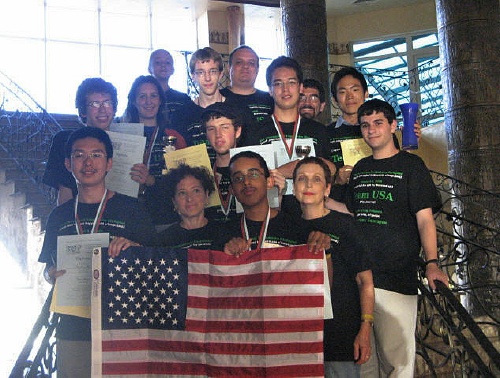
The summer games in Beijing are not the only place where the United States can claim gold medal bragging rights. The sixth International Linguistics Olympiad ended Friday in Slanchev Bryag, Bulgaria, and U.S. high school students captured 11 out of 33 awards, including gold medals in individual and team events. This was only the second time the U.S. has ever competed in the event. Their achievement brings a new focus on computational linguistics.

This year's Olympiad featured 16 teams from around the world, including Bulgaria, Estonia, Germany, Latvia, the Netherlands, Poland, Russia, Sweden, South Korea and Slovenia. Each problem presented clues about the sounds, words or grammar of a language the students had never studied, such as Micmac, a Native American language spoken in Canada, the New Caledonia languages of Drehu and Cemuhi, as well as several historical Chinese dialects. They were then judged by how accurately and quickly they could untangle the clues to figure out the rules and structures of the languages to solve the problem.

Tetra-Amido Macrocyclic Ligands (TAMLs) are environmentally friendly catalysts with a host of applications for reducing and cleaning up pollutants, and a prime example of "green chemistry."

Carnegie Mellon University's Terry Collins, the catalyst's inventor, believes that the small-molecule catalysts have the potential to be even more effective than previously proven. Collins will discuss how iron-TAMLs (Fe-TAMLs) work and areas for further research, citing evidence from mechanistic and kinetic studies of the catalyst on Monday, Aug. 18 at the 236th national meeting of the American Chemical Society in Philadelphia.

An international team of researchers led by Monash University has used chemicals found in plants to replicate a key process in photosynthesis paving the way to a new approach that uses sunlight to split water into hydrogen and oxygen.

The breakthrough could revolutionise the renewable energy industry by making hydrogen – touted as the clean, green fuel of the future – cheaper and easier to produce on a commercial scale.

Professor Leone Spiccia, Mr Robin Brimblecombe and Dr Annette Koo from Monash University teamed with Dr Gerhard Swiegers at the CSIRO and Professor Charles Dismukes at Princeton University to develop a system comprising a coating that can be impregnated with a form of manganese, a chemical essential to sustaining photosynthesis in plant life.

Part 2 on The Plausibility of Life

How does evolution shape living things? The fact that evolutionary forces, such as natural selection, can shape living creatures is well-established, but how malleable those creatures are, and what the increments of change are is less well established. We have a fairly good idea of how genes can change, but how does that genetic change translate into physical changes in the shape and functioning of the organism itself - that is, how does genetic change translate into changes in the organism's phenotype?

The authors of The Plausibility of Life, Marc Kirschner and John Gerhart, argue that this issue has been ignored in evolutionary theory (although they go on to say that it was justifiably ignored for a long time - before modern molecular and cell biology, there was no way to effectively address this question):

What if evolutionary biologists were wrong to think of phenotypic variation as random and unconstrained? How much would it matter if we really understood how genetic variation leads to phenotypic variation, and in particular, how facile or difficult is it to achieve a specific phenotype?

These questions get to the heart of the evolution of complexity.

Every day is a historic day, as this column will attest. In the world of science, what has happened on this day? Here’s just a glimpse of some of the milestones, big and small, that have occurred on this date.

To start things off, here’s a little quiz:
What common item found in any toolbox, was patented by Solymon Merrick on August 17 in 1835? Don’t let it drive you “nuts”, the answer will appear at the end of the article.

In the meantime, here are some other happenings from this day in science history:


